
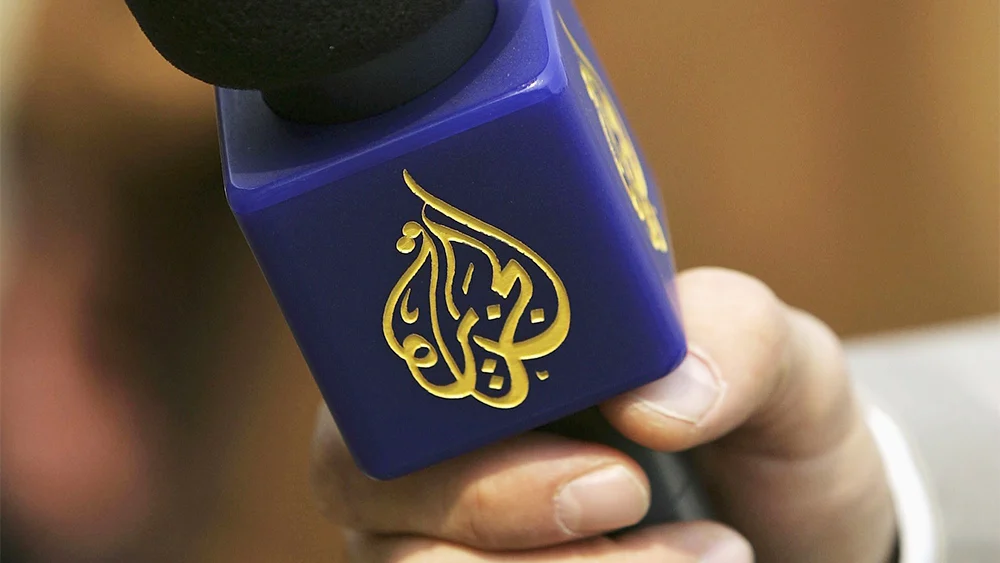
Escalation in Cairo: Al Jazeera Launches International Legal Offensive Against Egyptian Authorities
The media landscape in Egypt has reached a critical breaking point. Al Jazeera, the Qatar-based global news network, has officially announced that it is pursuing robust legal action against Egyptian authorities. This move, confirmed by the network’s London-based legal representatives, marks a significant escalation in the ongoing battle over press freedom, state control, and the narrative surrounding the turbulent political transition in Cairo.
Citing a pattern of arbitrary arrests, physical harassment, and systemic intimidation of its reporting staff, the network is seeking recourse through international courts and the United Nations. This development represents one of the most high-profile confrontations between a major international media conglomerate and a sovereign state in recent years.
The Core Conflict: A Campaign of Silencing
The tension between Al Jazeera and the Egyptian military-backed government has been festering since the July overthrow of President Mohammed Morsi. According to the network’s official statement, a "large number" of its journalists have been detained by security forces. The network maintains that these arrests are either entirely without charge or based on politically motivated allegations intended to cripple the network’s ability to cover the post-Morsi reality in Egypt.
Beyond the physical detention of personnel, Al Jazeera has accused the Egyptian military and police apparatus of actively targeting its infrastructure. This includes the forced closure of regional offices and the deliberate jamming of satellite transmissions—a tactic intended to shroud the country’s political crackdown in a localized information blackout.
"Al Jazeera cannot permit this situation to continue," a spokesperson for the network stated via its legal counsel. "The right of journalists to report freely in situations of this kind is protected by international law and is reaffirmed by UN Security Council Resolution 1738."
Chronology of a Deteriorating Relationship
The relationship between Al Jazeera and the Egyptian authorities did not collapse overnight; it is the culmination of months of friction following the Arab Spring’s aftermath.
- July 2013: The military intervention that deposed President Mohammed Morsi serves as the catalyst. Al Jazeera’s Arabic service, notably distinct from other Gulf-based outlets, begins broadcasting coverage that heavily emphasizes the state’s crackdown on pro-Morsi demonstrators.
- Late July 2013: Internal dissent surfaces within the network. Over twenty Cairo-based staffers resign in protest, citing what they describe as "biased coverage." Anchor Karem Mahmoud becomes a focal point of this internal revolt, accusing the network of abandoning objective journalism in favor of a pro-Morsi agenda.
- August 2013: As street protests intensify and the death toll from security crackdowns rises, the Egyptian government labels the network’s output as "incitement" and "propaganda."
- September 2013: Al Jazeera reports that its satellite signals are being systematically blocked. The network issues formal complaints to international telecommunications regulators.
- October 2013 (Present): Al Jazeera retains the London-based law firm Carter-Ruck, specialists in international law, to initiate formal proceedings before international tribunals and the United Nations, signaling that the "soft" diplomatic approach has failed.
Supporting Data: The Anatomy of the Crackdown
The conflict is not merely one of rhetoric; it is supported by documented instances of obstruction. The jamming of satellite signals, which Al Jazeera identifies as a state-sponsored interference, is a sophisticated technical maneuver designed to prevent the Egyptian public—and the international community—from witnessing the scale of the military’s actions.
The network argues that the arrests of its journalists are part of a broader strategy to ensure that "only the voices of state-controlled media" reach the public. By eliminating independent reporting, the authorities seek to manufacture a singular, state-sanctioned narrative that frames the current military-led government as the sole guarantor of stability.
However, the validity of Al Jazeera’s claims is complicated by the accusations leveled against them by local Egyptian media and government officials. The charge of "biased reporting" is not limited to the internal resignations of July; it is a sentiment shared by a significant portion of the Egyptian public who view the Qatar-funded network as an extension of the former Morsi administration’s foreign policy.
Official Responses and Perspectives
The Egyptian government has consistently maintained that its actions are directed not at journalism, but at national security. In the eyes of Cairo’s military leadership, Al Jazeera is not an impartial news organization but an active participant in the country’s political instability, accused of fomenting unrest through slanted coverage.
Local media outlets in Egypt, which are largely supportive of the current transitional government, have frequently characterized Al Jazeera as a "foreign-backed agitator." This narrative suggests that the network’s legal threats are a distraction from its own alleged ethical failures.
Conversely, international press freedom organizations have largely rallied behind the principle of journalistic immunity. The invocation of UN Security Council Resolution 1738 is a calculated legal move. This resolution mandates that journalists in armed conflicts be treated as civilians and protected from violence. Al Jazeera’s legal team is betting that the international community will view the Egyptian government’s actions as a violation of these established norms, thereby compelling the UN to intervene.
The Implications: A Geopolitical Chess Match
The legal action against Egypt carries far-reaching implications for the region. Firstly, it highlights the influence of Qatar, the network’s benefactor. As a major supporter of Morsi’s Muslim Brotherhood government, Qatar’s involvement in the narrative—via its ownership of Al Jazeera—has turned the network into a proxy battlefield for regional power. The legal offensive is, in effect, a confrontation between the current Egyptian state and the Qatari political establishment.
Secondly, the move sets a significant legal precedent. If Carter-Ruck succeeds in garnering support from international courts, it could create a blueprint for media organizations to hold states accountable for "media suppression" under international law. This could fundamentally alter how authoritarian regimes manage news coverage during periods of political volatility.
However, the path forward is fraught with obstacles. International courts often struggle to enforce rulings against sovereign nations, especially those claiming national security exemptions. Egypt is likely to frame its defense around the "sovereignty of the state," arguing that foreign entities have no jurisdiction over its internal security operations.
Conclusion: The Future of Reporting in the Middle East
The standoff between Al Jazeera and Cairo serves as a grim reminder of the vulnerability of the free press in an era of intense political polarization. As the network prepares to take its case to the global stage, the outcome will likely hinge on the international community’s willingness to prioritize the protection of journalists over the preservation of regional political alliances.
The network’s commitment to "take all steps necessary worldwide" to ensure its journalists can operate without fear is a bold declaration of intent. Yet, the deep-seated skepticism regarding the network’s own neutrality suggests that the battle for the Egyptian narrative will not be won in a courtroom alone. As the legal filings progress, the world watches to see if these efforts will provide a shield for the press or if they will merely exacerbate the polarization that currently defines the Egyptian political landscape.
Ultimately, the case underscores a universal truth: in the heart of political upheaval, the first casualty is often the truth, and the primary target is the one holding the camera. Whether Al Jazeera’s legal offensive will restore a semblance of press freedom in Egypt remains an open, and increasingly urgent, question.