From Amravati to Tokyo: How Two Indian Brothers Cracked the Global Manga Industry
NEW DELHI – In the bustling city of Amravati, situated in the heart of central India, the dream of becoming a professional manga artist is often stifled by a lack of formal infrastructure and resources. Yet, for Jivan, 22, and his 18-year-old brother, Yash, the vast distance between their home and the hallowed halls of Japan’s publishing industry proved to be an bridgeable gap.
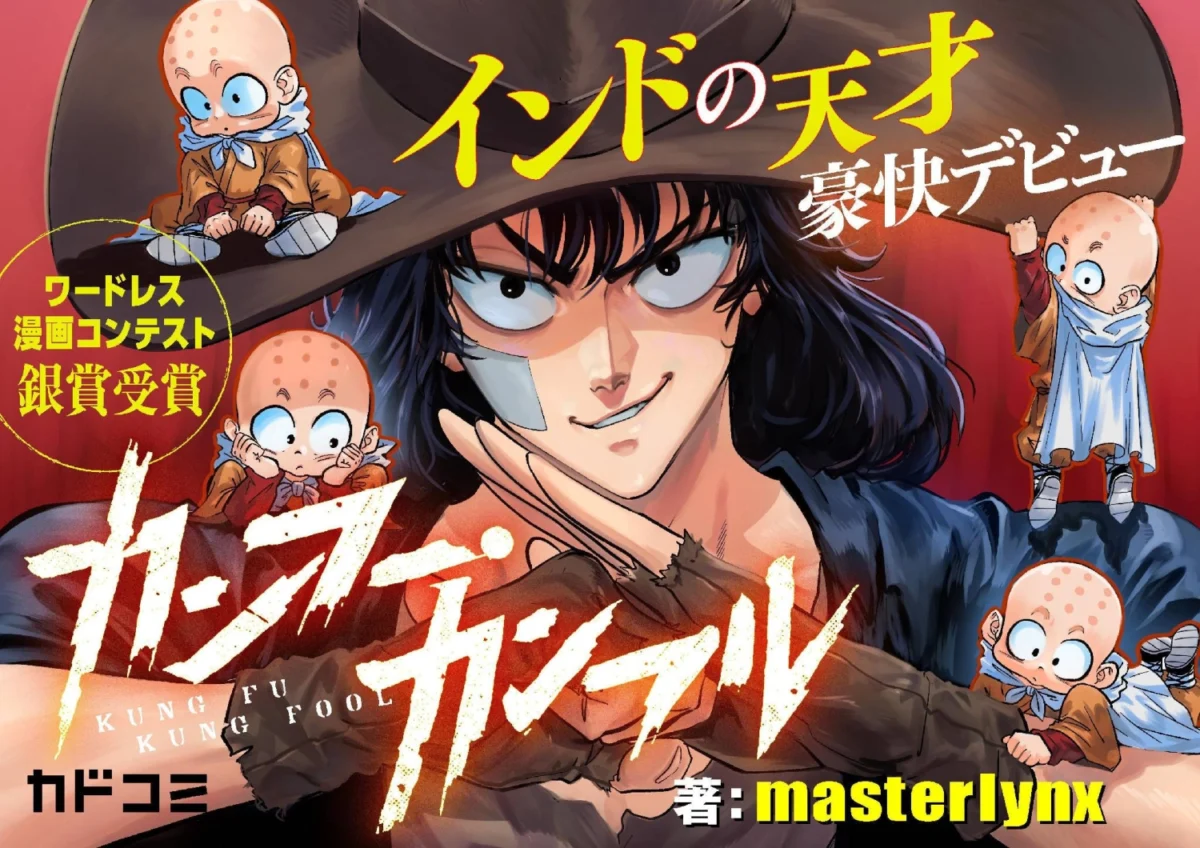
Operating under the creative moniker "Masterlynx," the sibling duo has achieved a feat few international artists ever manage: a successful commercial debut with Kadokawa, one of Japan’s most prestigious publishing giants. Their action-comedy series, Kung Fu Kung Fool, began its serialization in May, marking a historic moment for Indian creators in the Japanese market.
This accomplishment is more than just a success story for two ambitious brothers; it is a testament to the democratizing power of the digital age and a signal of shifting tides in the global entertainment industry.
The Genesis of Masterlynx: A Childhood Obsession
The journey of the Masterlynx brothers began long before they were picked up by a Japanese conglomerate. Like millions of children worldwide, Jivan and Yash were captivated by the high-octane energy and emotional depth of Dragon Ball, the legendary series created by the late Akira Toriyama.
For the brothers, Toriyama was more than an artist; he was an architect of their imagination. Without formal art schools in their region that specialized in the nuanced craft of Japanese storytelling, the pair turned to self-education. They spent countless hours meticulously tracing and copying the anatomy and kinetic action sequences of their favorite anime characters, slowly internalizing the "language" of manga.
"Actually, in India, there aren’t enough resources for us to learn," Jivan explained in an online interview. "We had to find our own way through trial and error."
As they grew older, the internet became their primary classroom. Yash, in particular, spent his formative teenage years scouring YouTube for tutorials and masterclasses from industry veterans like Naoki Urasawa, the visionary behind psychological thrillers like 20th Century Boys. By dissecting Urasawa’s paneling techniques and pacing, the brothers began to move beyond mere imitation, developing a distinct stylistic identity that merged the vibrancy of their Indian roots with the technical precision of Japanese manga.
Chronology of a Breakthrough
The path to Kadokawa was not instantaneous. It was the result of a deliberate, multi-year evolution of their skills.
- 2020–2022: The brothers operated as freelance illustrators, taking on commissions for clients in the United States and Europe. This work allowed them to hone their digital painting skills and gain discipline, though it lacked the creative fulfillment of long-form storytelling.
- 2023: The turning point arrived when the brothers discovered an international contest for silent manga (manga without dialogue) hosted by Kadokawa. With a desire to create something purely for the love of the craft—regardless of monetary gain—they entered the competition.
- Late 2023: Their submission, a testament to their visual storytelling prowess, secured a silver prize. This victory caught the eye of Kadokawa’s editorial department, which was actively searching for international talent to address a global surge in manga demand.
- May 2024: Kung Fu Kung Fool officially launched on Kadokawa’s digital portal. The series, which follows the escapades of a notorious thief named Goemon and a spirited young boy named Bao, was an immediate hit with editors for its kinetic energy and clear narrative structure.
Overcoming the Language Barrier: The Technical Challenges
While the brothers mastered the visual grammar of manga, they faced a unique hurdle: the cultural nuance of Japanese onomatopoeia. In manga, sound effects—the thwack of a punch or the rustle of leaves—are treated as visual elements that are drawn into the frame, rather than just written as text.
Translating these sounds from English to Japanese requires more than just a dictionary; it requires an understanding of how sound affects the "vibe" of a panel. To ensure the authenticity of their work, Kadokawa assigned a specialized editorial team to work with the brothers. This team translates and adapts the brothers’ original English expressions into Japanese, ensuring that the sound effects maintain the impact intended by the creators.
This collaborative process highlights the logistical complexity of publishing cross-border manga. It is a symbiotic relationship: the brothers provide the fresh, global perspective, while the editors provide the cultural scaffolding that makes the work resonate with a domestic Japanese audience.

Official Responses and Industry Implications
The success of the Masterlynx duo has not gone unnoticed by the Japanese publishing industry. In an official statement, Kadokawa praised the brothers for their unique combination of ambition and humility.
"Their appeal lies in their ambition as artists, pursuing their own unique styles while showing deep respect for Japanese manga," a representative from Kadokawa stated. "They have the potential to win fans around the world, not only in India and Japan."
The Strategic Shift in Publishing
Kadokawa’s decision to scout talent in India is a strategic response to a supply-demand imbalance. In recent years, the manga market has exploded globally, leading to a shortage of professional creators who can keep pace with the voracious appetites of international readers.
To combat this, the publisher established an "Overseas Manga Editorial Section" last year. This division is specifically tasked with scouting, supporting, and cultivating talent from outside Japan. The hiring of the Masterlynx brothers serves as a flagship case study for this initiative.
Industry analysts suggest that this shift marks the beginning of "Manga 2.0," a period where the medium is no longer exclusively Japanese in origin, but rather a global language of storytelling. As businesses continue to enter the manga market, the competition for talent will only increase, potentially opening doors for more artists from India, Southeast Asia, and the West.
Looking Ahead: The Future of Masterlynx
For Jivan and Yash, the debut is only the beginning. When asked about their long-term vision, Jivan remained focused on the work itself: "Our goal going forward is to just make a lot of works."
The brothers have moved from being remote fans to active participants in the industry that shaped their childhood. Their story has resonated deeply within the Indian artistic community, where many young creators look to them as proof that geographic boundaries can be dismantled by talent and perseverance.
As Kung Fu Kung Fool continues its serialization, the brothers are already working on new concepts. They remain grounded, working out of their home studio in Amravati, a city that—thanks to them—now holds a small, but significant, place on the map of world manga culture.
The success of the Masterlynx brothers serves as a powerful reminder that while the path to global recognition is arduous, the passion for storytelling is a universal currency. Whether in the bustling streets of Tokyo or the suburbs of central India, the ability to put pen to paper and craft a compelling narrative remains one of the most potent ways to connect with the world.
As the industry continues to evolve, the brothers stand at the vanguard of a new, globalized era of manga—a future where the next great hit could come from anywhere, as long as the artist has the drive to dream, the discipline to study, and the courage to send their work out into the world.