A Love Letter in 4K: How Douglas Keeve and Isaac Mizrahi’s Romance Forged ’90s Fashion Masterpiece ‘Unzipped’
NEW YORK — In the delicate intersection of journalism, documentary filmmaking, and personal intimacy, treading ethical lines is par for the course. For documentary makers, romantic involvement with a subject can either compromise journalistic objectivity or unlock a uniquely vulnerable, generously personal perspective.
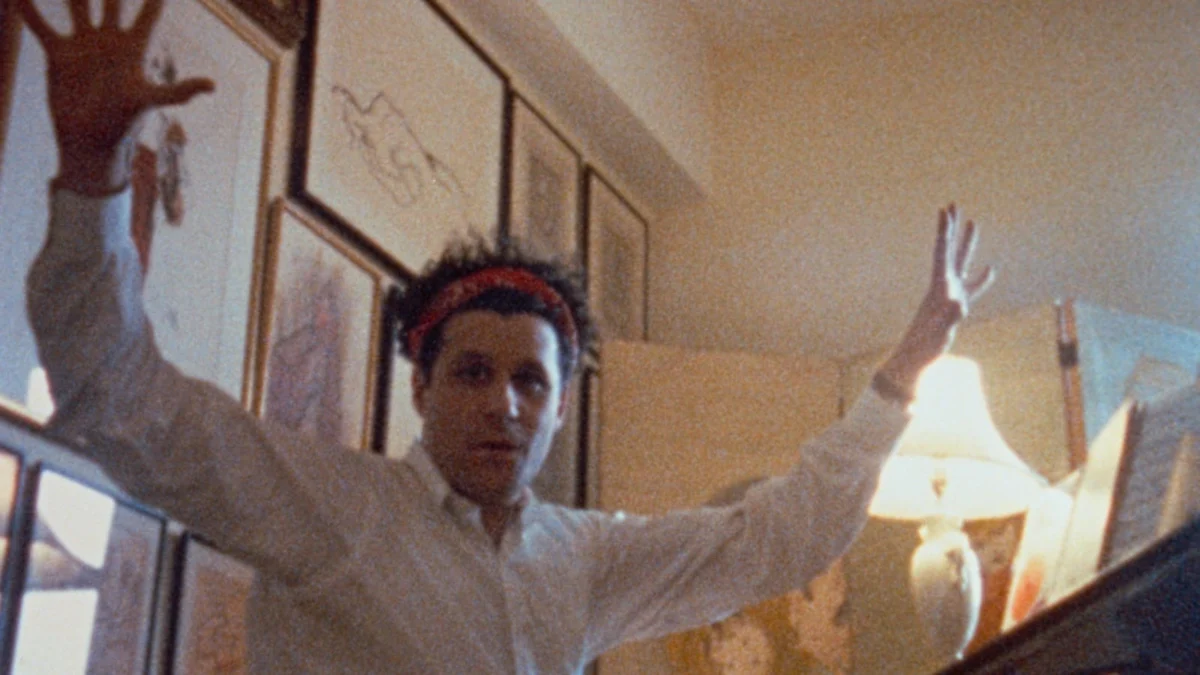
Thirty years after its initial release, Douglas Keeve’s seminal 1995 documentary Unzipped is returning to theaters in a pristine 4K restoration courtesy of Janus Films. The film—which captures a charmingly frenetic, high-stakes chapter in the life of fashion designer Isaac Mizrahi—arrives back on the big screen bearing all the hallmarks of a bygone era. Yet, beneath its black-and-white cinematic sheen lies a deeply personal artifact: a love story between the director and his subject, and a time capsule of a New York fashion scene that no longer exists.
Main Facts: The Return of a ’90s Cultural Touchstone
Restored meticulously by the Sundance Institute and the UCLA Film & Television Archive, Unzipped offers a transportive chronicle of early-1990s New York fashion in miniature. The vérité portrait follows Mizrahi as he meticulously mounts his 1994, Nanook of the North-inspired collection during Paris Fashion Week.
At the time, the fashion landscape was radically different. Chanel owned a majority financial stake in the Isaac Mizrahi fashion house, which was churning out sensibly chic haute couture. This was a decade before Mizrahi became a household name recognized not only for his outré personality and Eraserhead-like shock of dark hair, but also for his mass-market ready-to-wear diffusion line sold in Target stores.
The documentary features an enviable, star-studded roster of supermodels in various states of high-fashion exhaustion, playfulness, and on-camera savvy, including Naomi Campbell, Christy Turlington, Linda Evangelista, Cindy Crawford, and Kate Moss. For younger generations currently fixated on ’90s New York nostalgia—fueled by cultural artifacts like Love Story: John F. Kennedy & Carolyn Bessette and its aesthetic panoply of Parliament cigarettes and Calvin Klein denim—Keeve’s partly in-color, mostly monochrome documentary serves as holy writ.
Crucially, as director Douglas Keeve readily admits, he and Mizrahi were romantically involved throughout the filmmaking process. While their relationship ultimately dissolved shortly after Unzipped premiered at the 1995 Sundance Film Festival—where it won the Audience Award—Keeve maintains that the camera was never the wedge that drove them apart.
Chronology: From Runway Chaos to Sundance Triumph
The Genesis of a Relationship and a Film
In the early 1990s, Douglas Keeve was a working filmmaker and photographer carving out a space in New York’s hyper-accelerated creative scene. Isaac Mizrahi was a rising star in the fashion firmament, known for his infectious wit, unapologetic theatricality, and immense design talent. The two began dating, embedding Keeve directly into the inner sanctum of Mizrahi’s professional and personal life.
When the time came to document Mizrahi’s preparation for his pivotal Fall/Winter 1994 collection, Keeve brought a unique brand of access. Eschewing traditional, detached reporting, Keeve operated as an intimate chronicler.

The Creative Process and the Editing Room
Despite their relationship, Keeve maintained a strict boundary when it came to the actual assembly of the film. He famously kept Mizrahi entirely out of the editing room.
"I wouldn’t show Isaac the movie when we were editing it at all," Keeve recalled. "Only when I was happy with it, I brought it to him."
This creative autonomy allowed Keeve to capture unvarnished, authentic moments. Whether filming Mizrahi in the bathtub casually chatting on the phone with his mother—oblivious to the lens—or capturing backstage pandemonium, the director operated with the instinct of a partner who understood his subject’s intrinsic rhythm.
The 1995 Sundance Premiere and the Aftermath
Unzipped debuted at the 1995 Sundance Film Festival to critical acclaim, culminating in a prestigious Audience Award win. However, the external pressures of Hollywood, the grueling demands of the fashion industry, and the couple’s diverging lifestyles began to take their toll. Shortly after the festival, Keeve and Mizrahi’s romance curdled.
Decades later, the two men have come full circle. Having supervised the new 4K restoration alongside his ex-partner, Keeve speaks of Mizrahi with enduring affection, proving that their evolution from lovers to "frenemies" has only deepened their shared legacy.
Supporting Data: Behind the Scenes of a Cult Classic
The texture of Unzipped derives largely from its vibrant cast of characters, ranging from the designer himself to his sharp-tongued inner circle and legendary supermodels.
The Mizrahi Dynamic
Mizrahi’s portrayal in the film is delightfully complex. He is a burst of benign volatility—not driven by malice, but by an absolute certainty in his artistic vision. In one memorable sequence, Mizrahi becomes deeply distressed upon discovering that a rival fashion house is launching an "Eskimo"-inspired line uncomfortably close to his own. Simultaneously, he models his show’s hair and makeup after Loretta Young in the 1935 film The Call of the Wild, reimagining a character near death as a glamorous icon awaiting rescue.
Sarah Mizrahi: The Classic Matriarch
No discussion of Unzipped is complete without mentioning Mizrahi’s mother, Sarah. Affably looming and perpetually eager to inject her opinions into her son’s creative process, she provides some of the documentary’s most grounded and humorous moments.
Reflecting on their dynamic, Keeve noted, "They had that typical Jewish mother relationship, which is incredibly close, probably mama’s-boy close, and yet incredibly fraught… Fran Leibowitz says that stereotypes tend to be true. So she said it, not me, but she was a wonderful woman, and I liked her very much."

Linda Evangelista and the Supermodel Persona
The supermodels in the film traverse the emotional spectrum from docile professionalism to full diva mode. Linda Evangelista, in particular, anchors several unforgettable backstage sequences where she cycles through a series of theatrical huff-and-puff moments.
"There are a lot of people who say that Linda is the greatest fashion model who ever lived, and it’s arguable," Keeve said. "But Linda in the show, where she’s having a hissy fit, and then another hissy fit… to me, I can see that she knows exactly what to do. She’s turning it on for the camera." Keeve marveled at Evangelista’s self-awareness: "She just turns to the camera, and she gives this look like she’s just staring at the camera like, I dare you to judge me, and then she turns away. For me, that’s an incredible moment."
Official Responses: Douglas Keeve on Love, Art, and the Breakup
In interviews promoting the 4K re-release, Keeve has opened up candidly about the intersection of his romance with Mizrahi and the creation of the film.
Addressing the persistent question of whether the documentary caused their split, Keeve is nuanced:
"Did the movie break us up? I’m not sure I know how to answer that because relationships are so complicated. Isaac is complicated, I’m complicated. So you have two complicateds, plus a complicated world. Our lives were so different, and in some ways I couldn’t quite keep up with his."
He detailed the sheer physical exhaustion of trying to match Mizrahi’s social stamina:
"Isaac goes to two cocktails at dinner and an after-hours party in one night, every night. And I just couldn’t do that. I had my own working life, and it was busy. He wanted a partner who could share those things, which I think is correct."
Ultimately, Keeve views the film not as an exposé or a journalistic hit piece, but as an affectionate tribute:

"The movie came in, and the movie had nothing to do with our breakup at all. There was pressure around finishing the movie because we had a deadline, but I was so in love with Isaac and in love with just who he is. The movie is—I hate to say it because when you make a movie like that, it just becomes utter rubbish—but it is a love letter to him, I think, because he’s just so extraordinary."
Summarizing their current dynamic, Keeve added with a smile: "We’ve always been frenemies, and I still love Isaac. He’s amazing."
Implications: The Legacy of Unzipped in Modern Cinema
The theatrical re-release of Unzipped in 4K arrives at a fascinating cultural juncture. As contemporary audiences experience a renaissance of interest in 1990s minimalism, tabloid culture, and high-fashion history, Keeve’s film provides a masterclass in how documentary filmmaking can achieve unprecedented intimacy when the filmmaker has skin in the game.
The Ethics of Intimate Filmmaking
While traditional journalism demands strict detachment, documentary filmmaking frequently blurs these boundaries to powerful effect. Unzipped demonstrates that a filmmaker romantically entangled with their subject can bypass the performative guards that public figures typically put up. Because Mizrahi trusted Keeve—or was simply too engrossed in his creative zone to mind the lens—viewers were granted a rare, unfiltered look at the anxieties and joys of high-fashion creation.
Preserving Cinematic Heritage
The collaboration between the Sundance Institute and the UCLA Film & Television Archive to restore Unzipped underscores the growing importance of preserving ’90s indie cinema. As digital distribution models threaten to swallow older analog treasures, 4K restorations ensure that texture-rich works shot on 16mm and 35mm film retain their grain, depth, and emotional resonance for modern audiences.
For Keeve, watching the restored print isn’t merely an exercise in technical appreciation:
"When I’m watching the movie, I’m not really looking at the technical part of the film about how the diamond has been polished even more. I’m really seeing those moments and feeling those feelings."
“Unzipped” is currently playing at Film Forum in New York, with a theatrical expansion to follow, including a Los Angeles opening on October 9.