
A New Frontier: Skyroot Aerospace Ushers in the Private Era of Indian Space Exploration
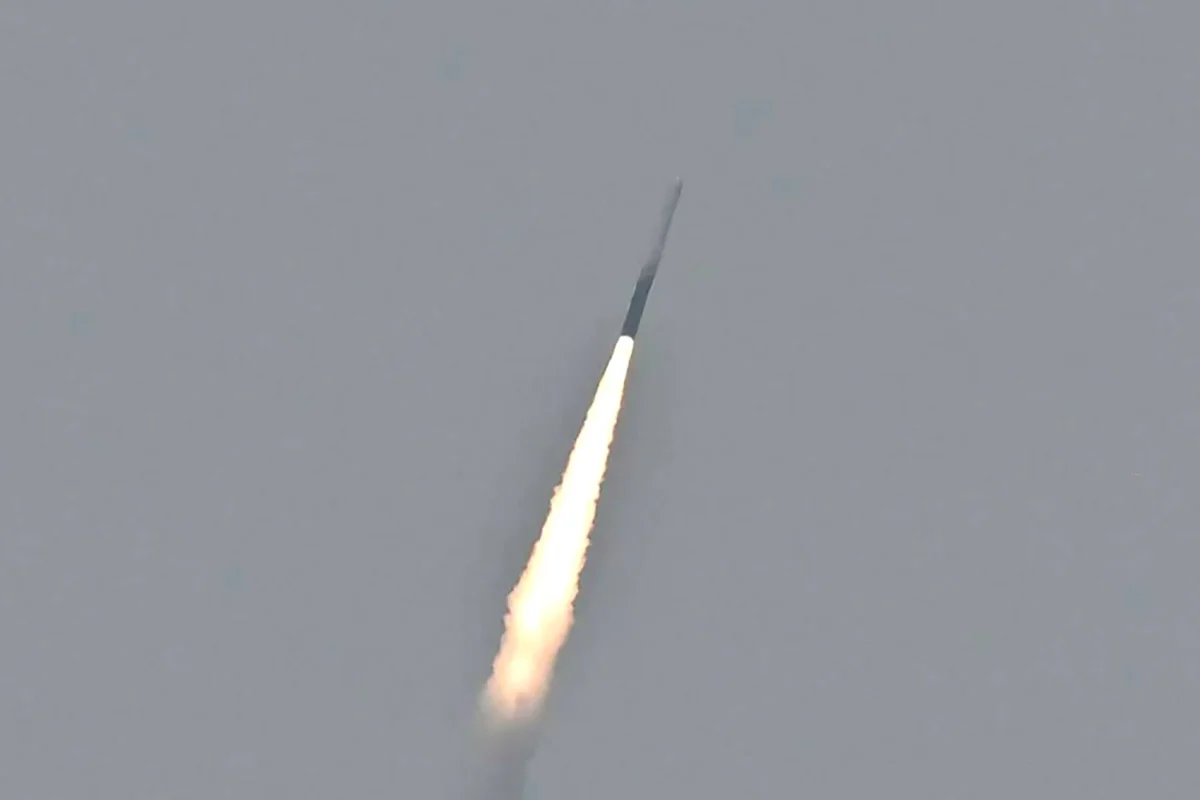
SRIHARIKOTA, INDIA – The silence of the Satish Dhawan Space Centre was shattered on Saturday by the thunderous roar of the Vikram-1 rocket, a moment that will be etched in the annals of history as India’s definitive entry into the commercial orbital launch market. Developed by Skyroot Aerospace, the maiden flight of this privately built rocket marks a monumental shift in a sector historically dominated by state-run agencies, signaling that India is ready to capture a significantly larger share of the burgeoning global space economy.
As the rocket ascended into the clear skies above Sriharikota, the cheers of engineers, policymakers, and space enthusiasts echoed the sentiment that the nation’s technological prowess had reached a new, competitive threshold.
The Main Facts: A Landmark Launch
The Vikram-1 launch is not merely a successful flight test; it is the culmination of years of rigorous engineering, policy lobbying, and the democratization of space access. Skyroot Aerospace, a Hyderabad-based startup, has successfully executed the first-ever orbital-class mission by a private Indian entity.
The vehicle itself, a marvel of modern engineering, stands roughly the height of a seven-story building. It is purpose-built to cater to the small satellite market, a segment that has exploded in demand as global telecommunications and Earth-observation needs continue to climb. With a payload capacity of up to 350 kilograms (771 pounds) to low-Earth orbit (LEO), Vikram-1 is positioned as a cost-effective, rapid-response launch vehicle.
The mission, dubbed "Test Flight-1," was a triumph of execution. Within hours of the launch, Skyroot Aerospace took to the social media platform X, confirming the success: "Hello space, we have arrived! Vikram-1’s Test Flight-1 has completed its mission. The first-ever Indian private sector launch has been successfully completed."
A Chronology of Ambition
The journey to this Saturday’s launch began long before the engines ignited on the pad. The path to private spaceflight in India can be categorized into three distinct phases:
1. The Era of Monopoly (1969–2019)
For decades, the Indian Space Research Organisation (ISRO) held sole responsibility for India’s space endeavors. From the early sounding rockets to the triumphant missions to the Moon and Mars, ISRO established India as a space superpower on a shoestring budget. However, as the global space industry began to transition toward commercialization, the limitations of a purely state-run model became evident.
2. The Policy Pivot (2020)
Recognizing the need to foster innovation and agility, the Indian government made a historic decision in 2020 to open the space sector to private players. The creation of the Indian National Space Promotion and Authorisation Centre (IN-SPACe) served as the regulatory bridge, allowing private startups to access ISRO’s infrastructure, technology, and launch facilities. This opened the floodgates for companies like Skyroot to move from design boards to the launchpad.
3. The Flight Path (2022–2024)
Following initial sub-orbital tests, Skyroot Aerospace refined the architecture of the Vikram series. The development cycle was marked by rigorous testing of solid-fuel propulsion systems and avionics. By early 2024, the focus shifted to the orbital launch vehicle, leading to the successful integration and final countdown on Saturday.
Supporting Data: Payloads and Purpose
What made this mission particularly unique was the diverse range of payloads it carried, serving as a testament to the versatility of the Vikram-1 platform. Among the cargo were:
- Technological Demonstrators: Robotic arms designed for the removal of space debris, a critical concern as the orbital environment becomes increasingly crowded.
- Scientific Tributes: A miniature 18-karat gold rocket, carrying intricate sculptures of three giants of Indian science: Vikram Sarabhai (the father of the Indian space program), C.V. Raman (Nobel laureate), and A.P.J. Abdul Kalam (the "Missile Man" and former President).
- Industrial Innovation: A lab-grown diamond, representing the intersection of advanced manufacturing and space research.
These payloads were not just symbolic; they underscored that the Vikram-1 is capable of supporting sophisticated, multi-purpose scientific missions, setting a precedent for future commercial clients.
Official Responses: A Defining Moment
The successful launch triggered an outpouring of support from the highest levels of government, highlighting the strategic importance of this achievement.
Prime Minister Narendra Modi, a vocal proponent of the "Atmanirbhar Bharat" (Self-Reliant India) initiative, hailed the launch as a "defining moment in India’s space journey." In his official statement, he noted, "The growing participation of our private sector is opening new frontiers and accelerating innovation. This achievement will encourage countless youngsters to dream bigger and innovate fearlessly."
Pawan Goenka, chairman of IN-SPACe, offered a technical perspective, noting that the performance exceeded expectations. "This is way beyond expectation for the very first orbital launch ever taken by an Indian private company," Goenka remarked, praising the precision and stability of the launch.
Foreign Minister S. Jaishankar echoed these sentiments, stating, "India’s space ambitions soar to new heights!" His comment reflects the broader geopolitical objective: using space technology to enhance India’s diplomatic and economic standing on the global stage.
Implications: Changing the Global Landscape
The success of Skyroot Aerospace carries profound implications for both the domestic and international space markets.
A Catalyst for the Startup Ecosystem
Since the 2020 policy reforms, India has become home to more than 400 space startups. The success of Vikram-1 provides the necessary "proof of concept" that venture capitalists and global partners have been waiting for. It validates the potential of the Indian private space industry to produce hardware that is not only functional but competitive with established global players like SpaceX or Rocket Lab.
Boosting India’s Reputation
Former ISRO chairman K. Sivan provided a candid assessment of the global impact. "If an Indian startup can make one of the most challenging things in the space industry, then it gives a huge boost to India’s reputation globally," he said. He described the current climate as the "fruits of the seeds sown" when the sector was liberalized, emphasizing that the Vikram-1 is one of the most complex technological achievements a private entity can undertake.
The Economic Horizon
Currently, India’s space economy is valued at approximately $8.4 billion. However, with the entrance of private players, analysts predict this figure could grow exponentially as India captures a larger share of the global small-satellite launch market. By providing affordable, reliable, and frequent access to space, companies like Skyroot are essentially lowering the barrier to entry for international clients who have traditionally been restricted by high launch costs.
A Future of Collaborative Exploration
The success of Saturday’s launch suggests a future where ISRO focuses on deep-space exploration, planetary science, and human spaceflight (such as the Gaganyaan mission), while private companies like Skyroot manage the commercial logistics of the LEO economy. This symbiotic relationship—state-led research paired with private-led commercialization—is the blueprint for the next century of space exploration.
Conclusion
The Vikram-1 launch is a testament to what is possible when government vision aligns with entrepreneurial grit. As the rocket reached its intended trajectory, it carried with it the hopes of a nation that is rapidly transforming into a global technology powerhouse.
The "Test Flight-1" was more than just a successful mission; it was the starting gun for a new race. In the coming decade, as constellations of small satellites are deployed to provide internet to the remotest corners of the globe and robotic arms begin the essential work of cleaning up our orbit, the name "Vikram-1" will be remembered as the vessel that broke the ceiling of the old space order.
India has not only arrived in the commercial space market; it has arrived with a roar that will be heard for years to come. The message is clear: the frontier of space is no longer the exclusive domain of governments. It is open for business, and India is leading the charge.