Breaking Borders: How Indigenous, Romani, and Digital Networks Are Redrawing the Map of Global Cinema
Main Facts
The landscape of international cinema has long been dictated by traditional geographic boundaries, historic geopolitical centers, and Western-centric funding models. However, a profound shift is underway, driven by independent creators and community-led collectives who refuse to let borders define their storytelling.
On May 15, Film Comment Editor Devika Girish moderated a high-profile panel at Cannes Docs—the premier industry sidebar dedicated to documentary filmmaking at the Cannes Film Festival. Titled “Breaking Borders,” the conversation brought together three visionary leaders who are actively dismantling exclusionary production infrastructures.
The panel featured:
- Jason Ryle, Chief Executive Officer of the Arctic Indigenous Film Fund (AIFF), representing creators across the circumpolar Arctic.
- Mark Mushiva, a creative technologist and Research Fellow with Forensic Architecture, who bridges the gaps between digital technology, spatial analysis, and non-fiction filmmaking.
- Lisa Smith, a founder of the Romani Filmmakers Network (RFN), which champions a historically marginalized, transnational diaspora of storytellers.
The core thesis of the discussion challenged the modern myth of a fully globalized film market. While digital distribution and international co-productions have theoretically opened up the world, the underlying power dynamics, distribution gatekeepers, and funding networks remain stubbornly tethered to nationalist paradigms. The “Breaking Borders” panel served as a manifesto for reimagining cinema through transnational, community-first alliances that prioritize cultural sovereignty over commercial homogenization.
Chronology of a Paradigm Shift
To understand how the documentary ecosystem arrived at this critical juncture at Cannes 2026, it is essential to trace the evolution of independent and transnational filmmaking over the past decade.
Phase One: The Limits of Globalization (Early 2010s)
As digital cameras democratized production and streaming platforms began searching for global content, a false narrative emerged that the world film market was inherently borderless. Yet, Indigenous filmmakers, Romani artists, and creators from the Global South quickly realized that digital democratization did not equal institutional power. Major funding bodies, international film funds, and sales agents continued to operate via rigid nation-state categories. A filmmaker could shoot a documentary anywhere, but getting it financed, insured, and distributed still required navigating bureaucratic gatekeepers who often demanded that non-Western stories fit neatly into exoticized, colonial tropes.
Phase Two: The Rise of Autonomous Collectives (Mid-to-Late 2010s)
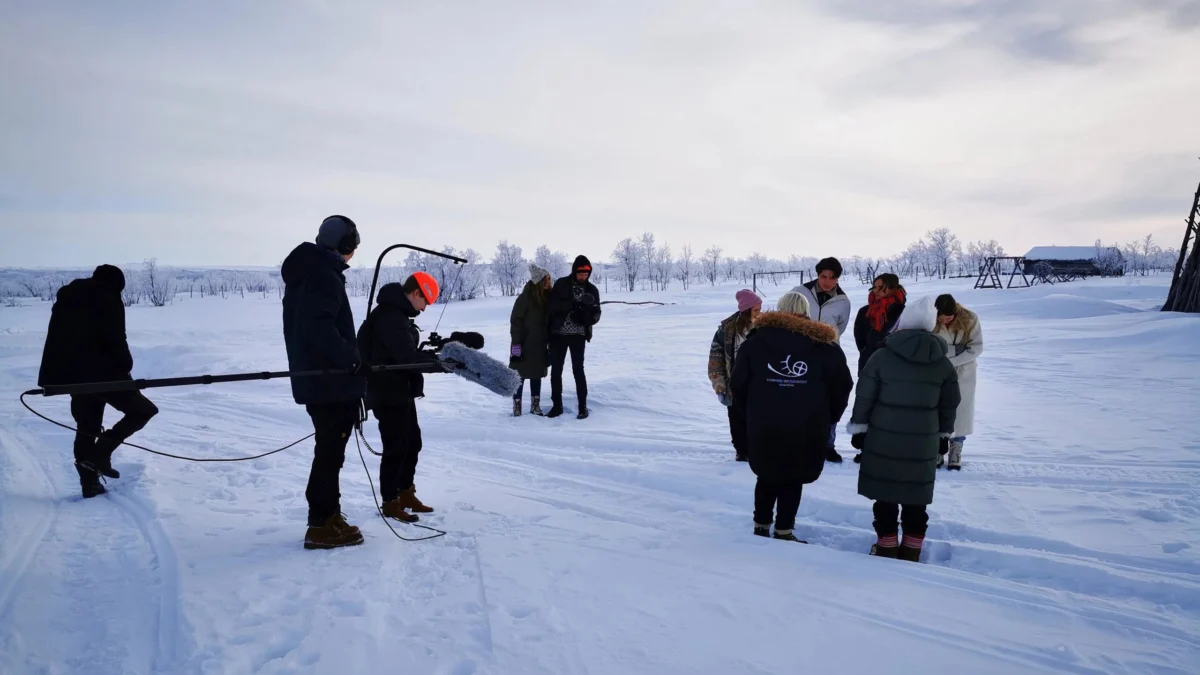
Recognizing that traditional systems were not designed to serve them, marginalized creators began building their own infrastructure. This era saw the genesis of grassroots networks designed to pool resources, share technical expertise, and advocate for institutional change. Organizations like the Arctic Indigenous Film Fund were conceptualized to connect isolated creators across national borders—uniting Inuit, Saami, and other circumpolar artists who share cultural ties that predate modern nation-states. Similarly, digital technologists began utilizing open-source tools to map and document human rights violations and environmental degradation independently of traditional studio mandates.
Phase Three: Institutional Reckoning and the Cannes Docs Showcase (May 15, 2026)
The culmination of these grassroots efforts took center stage at Cannes Docs 2026. Rather than asking traditional industry players for a seat at the table, leaders like Ryle, Mushiva, and Smith demonstrated that they had built entirely new tables. The panel marked a turning point where alternative networking models were no longer viewed as peripheral or niche, but as essential blueprints for the future of non-fiction cinema. By gathering at one of the world’s most traditional film markets, these leaders underscored that transnational, community-led networks are now powerful enough to challenge the very architecture of global film production.
Supporting Data and Context: The Architecture of Exclusion
To grasp the significance of the "Breaking Borders" panel, one must examine the systemic challenges facing the communities represented by the panelists.
The Arctic Indigenous Film Fund (AIFF) and Circumpolar Sovereignty
The Arctic is divided by the borders of several nation-states—including Canada, the United States (Alaska), Russia, Norway, Sweden, and Finland. Historically, Indigenous filmmakers operating within these regions had to seek funding through separate national arts councils, often pitted against one another for scarce resources, despite sharing deep cultural, linguistic, and environmental bonds.
- Geographic Scope: AIFF spans the entire circumpolar north, supporting creators from multiple Indigenous groups.
- Economic Impact: By pooling resources and negotiating collective training initiatives, AIFF has helped circumvent the high costs of northern production while ensuring that intellectual property rights remain strictly with Indigenous communities.
- Cultural Preservation: Unlike standard foreign-language funding, AIFF prioritizes storytelling rooted in traditional ecological knowledge and local languages, protecting narratives from being diluted by southern or western producers.
Romani Filmmakers Network (RFN) and Transnational Visibility
The Romani people constitute Europe’s largest ethnic minority, yet they lack a historic "homeland" in the Westphalian nation-state sense. This has historically made it nearly impossible for Romani filmmakers to access national cultural funds, which typically require applicants to represent a specific country.
- The Transnational Dilemma: Lisa Smith and her co-founders established the RFN to combat systemic exclusion across European film boards. Because Romani populations are scattered across Eastern and Western Europe, a diaspora-led network provides the only viable umbrella for collaborative cinematic projects.
- Countering Stereotypes: Mainstream European cinema has historically relegated Romani characters to flat, exoticized, or criminalized tropes. The RFN provides a vital ecosystem for Romani directors, producers, and writers to reclaim self-representation on their own terms.
Forensic Architecture and Creative Technology
Mark Mushiva’s work with Forensic Architecture introduces a different dimension to breaking borders: the weaponization of advanced digital tools for truth-seeking and counter-forensics.
- Spatial and Technological Equity: Operating at the intersection of architecture, journalism, and filmmaking, Forensic Architecture uses open-source investigation, 3D modeling, and spatial analysis to investigate human rights abuses.
- Data Sovereignty: By integrating creative technology into non-fiction storytelling, Mushiva and his colleagues bypass traditional journalistic gatekeepers, establishing transnational networks of activists, scientists, and filmmakers who can verify evidence across state-imposed media blackouts.
Official Responses and Perspectives from the Panel
The insights shared by Devika Girish, Jason Ryle, Mark Mushiva, and Lisa Smith highlighted a shared philosophy: that true globalization in cinema requires decentralizing power away from traditional Western capitals.
Redefining Place and Belonging
Discussing the intersection of geography and storytelling, the panelists emphasized that borders are artificial constructs that frequently interrupt organic cultural expression.
“When we talk about building cinematic networks that nourish connections across borders, we are not just talking about international co-productions in the corporate sense,” themes from the panel suggested. “We are talking about repairing historical fractures and recognizing that communities do not stop at the edge of a map.”
The Role of Technology in Liberation
Mark Mushiva elaborated on how creative technology allows non-fiction filmmakers to bypass legacy gatekeepers. In an era where state censorship and corporate media consolidation threaten independent documentary integrity, digital networks act as invisible bridges. By utilizing open-source platforms and shared digital archives, filmmakers across the Global South and diaspora communities can collaborate in real time, sharing research, footage, and funding strategies without needing approval from legacy institutions in Los Angeles, London, or Paris.
Institutional Resistance and Resilience
Lisa Smith addressed the uphill battle of convincing traditional funding boards to recognize transnational, stateless identities. For the Romani Filmmakers Network, success has meant creating parallel institutions that can validate projects before knocking on the doors of major European funds. By fostering internal mentorship and peer-to-peer accountability, these networks build structural resilience that protects artists from burnout and tokenization.
Implications for the Future of Non-Fiction Cinema
The discussions at Cannes Docs 2026 carry profound implications for the broader film industry. As the documentary community looks toward the future, the models pioneered by AIFF, the RFN, and Forensic Architecture offer a roadmap for industry-wide reform.
1. The Decentralization of Financing
National film funds and legacy commissioners are increasingly being forced to adapt to decentralized funding models. As collectives like AIFF demonstrate the efficacy of circumpolar resource-pooling, major festivals and funding bodies are beginning to realize that supporting grassroots transnational networks yields more authentic, innovative, and culturally resonant cinema.
2. Ethical Co-Productions and Intellectual Property
The era of parachute journalism—where Western filmmakers enter a marginalized community, extract a story, and retain all commercial rights—is facing aggressive pushback. Networks like those discussed at Cannes enforce strict ethical standards, ensuring that communities retain copyright, creative control, and downstream financial benefits from their own stories.
3. A New Vocabulary for Film Criticism
As Film Comment’s engagement with these topics illustrates, film criticism and journalism must also evolve. Reviewers and curators can no longer rely on lazy shorthand that categorizes films strictly by their country of origin. Understanding a documentary in 2026 requires an appreciation of the complex transnational networks, digital solidarities, and Indigenous sovereignties that brought the work to the screen.
Conclusion
The "Breaking Borders" panel at Cannes Docs 2026 was more than just a festival sidebar; it was a glimpse into the future of cinema. By championing networks rooted in mutual aid, cultural sovereignty, and technological equity, leaders like Jason Ryle, Mark Mushiva, and Lisa Smith are proving that the most vital cinematic stories of our time are being forged precisely where traditional borders break down.