Deconstructing the Myth: Film Comment Analyzes Christopher Nolan’s Divisive Cinematic Take on Homer’s The Odyssey
Main Facts: A Blockbuster Epic Meets Critical Scrutiny
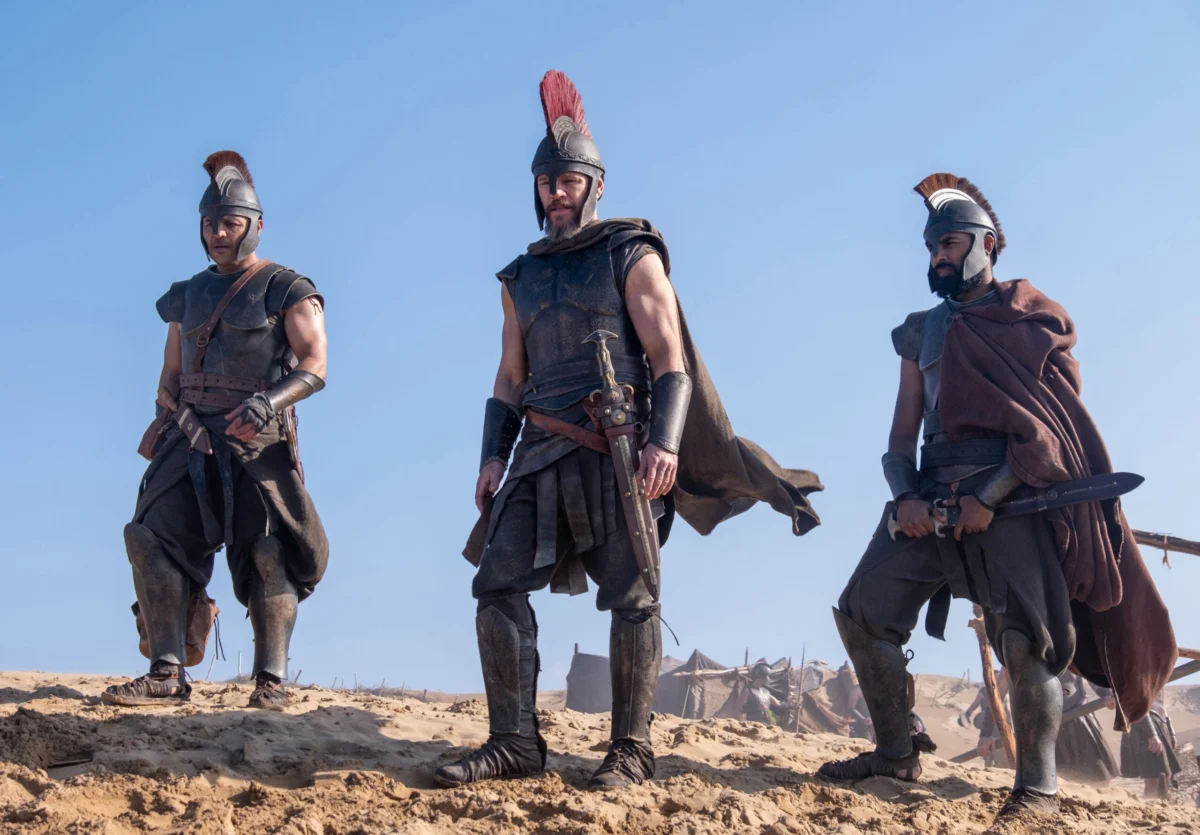
Christopher Nolan’s The Odyssey has dominated global box offices and cultural conversations since its theatrical release, positioning itself as the defining cinematic event of 2026. Boasting an unprecedented, star-studded ensemble cast featuring Matt Damon as the legendary Greek hero Odysseus, alongside Anne Hathaway, Tom Holland, Robert Pattinson, Zendaya, and a sprawling roster of Hollywood’s most elite talent, the picture represents the absolute pinnacle of studio scale and auteur-driven spectacle. Yet, beneath the staggering technical achievements, IMAX cinematography, and immense box office returns lies a deeply polarizing artistic achievement.
In the latest episode of the Film Comment podcast, Editor Clinton Krute sat down with Contributing Editors Genevieve Yue and Inney Prakash to dissect the monumental picture. The conversation follows Yue’s widely discussed, critical review for the publication, titled "There Is No Ithaca," in which she boldly characterizes Nolan’s interpretation of Homer’s foundational epic poem as a "strangely bloodless" endeavor.
Rather than celebrating the vibrant, mythic adventures of ancient Greek mythology, Nolan’s The Odyssey transposes the director’s signature stylistic austerity onto the Mediterranean seas. The result is a grim, hyper-serious cinematic landscape stripped of the vibrant humor, divine mischief, and vitality that defined Homer’s original text. As Film Comment explores, the collision between Nolan’s trademark cerebral dourness and the timeless framework of classical literature has sparked a much-needed critical debate over how contemporary blockbuster filmmaking engages with antiquity.
Chronology: From Ancient Epic to 2026 Blockbuster
To fully understand the cultural footprint of Christopher Nolan’s The Odyssey, it is essential to trace the journey of the material from ancient oral tradition to modern cinematic adaptation, as well as the immediate timeline surrounding the film’s release and critical reception.
- Circa 8th Century BCE: Homer composes The Odyssey, the seminal epic poem chronicling the grueling ten-year journey of Odysseus, King of Ithaca, as he attempts to return home to his wife Penelope and son Telemachus following the fall of Troy.
- The 20th and Early 21st Centuries: Filmmakers across generations attempt to adapt the episodic, sprawling narrative of The Odyssey to varying degrees of success. Notable attempts range from early Italian silent epics to Andrei Konchalovsky’s acclaimed 1997 television miniseries starring Armand Assante, though a definitive, major Hollywood feature adaptation has historically eluded the medium.
- Mid-2024 to 2025: Christopher Nolan officially enters pre-production on his follow-up to his Academy Award-winning Oppenheimer. Casting announcements roll out in waves, confirming a blockbuster ensemble featuring Matt Damon, Anne Hathaway, Zendaya, Robert Pattinson, and Tom Holland, instantly making it the most anticipated film of the decade.
- Early Summer 2026: The Odyssey premieres globally in IMAX theaters, backed by massive marketing campaigns and unprecedented audience turnout.
- Mid-Summer 2026: Film Comment publishes Genevieve Yue’s review, "There Is No Ithaca," critiquing the film’s severe tone and stylistic solemnity.
- Late Summer 2026: Film Comment releases its Summer 2026 issue alongside a dedicated podcast episode featuring Clinton Krute, Genevieve Yue, and Inney Prakash, diving deep into the aesthetic, philosophical, and historical implications of Nolan’s adaptation.
Supporting Data: Examining the Nolan Aesthetic in The Odyssey
To grasp why Nolan’s The Odyssey has elicited such intense critical fascination, one must examine the specific stylistic choices that separate it from both previous cinematic adaptations and Homer’s original text. During the Film Comment podcast, the panel meticulously broke down how the film’s tonal rigidity alters classic narrative beats.
1. The Erasure of Levity and Humor
In Homer’s epic, the world of mortals and immortals is defined by a delicate balance of suffering and terrestrial joy, divine comedy and tragedy. In Nolan’s cinematic universe, however, that duality is entirely collapsed. Genevieve Yue points out in her review that the film is "shrouded in Nolan’s characteristic dourness, so that Homer’s lively world of men and gods is purged of lightness and humor."
2. Emotional Subversion of Iconic Moments
The podcast panel highlighted several narrative inflection points where Nolan deliberately subverts traditional expectations of emotion:
- The Homecoming: While Odysseus’s eventual return to Ithaca brings structural relief to the narrative arc, the film purposefully denies the audience a sense of cathartic joy.
- Grief Over Laughter: Throughout the runtime, weeping is ubiquitous among the characters, yet genuine laughter is strictly quarantined. The only figures who find amusement are the antagonistic suitors, whose sport relies entirely on insulting helpless beggars.
- The Sirens’ Song: Perhaps the most radical departure discussed by the Film Comment editors involves the legendary Sirens. In mythology, their song is irresistible because of its seductive beauty and promise of divine knowledge. In Nolan’s film, the music—or the manifestation of it—causes Odysseus to wail in profound, inconsolable grief rather than succumb to rapturous temptation.
Table: Homeric Text vs. Christopher Nolan’s 2026 Adaptation
| Narrative Element | Homer’s The Odyssey (Source Text) | Christopher Nolan’s The Odyssey (2026) |
|---|---|---|
| Tone | Epic, adventurous, deeply human, blending tragedy with earthy humor and vitality. | Solemn, cerebral, relentlessly dour, and atmospheric. |
| The Homecoming | A moment of triumphant, emotional restoration and ultimate poetic justice. | Characterized by relief, but conspicuously lacking in joy or warmth. |
| Emotional Spectrum | High highs and low lows; features feasting, song, laughter, triumph, and mourning. | Heavy focus on sorrow, crying, and psychological weariness; zero communal joy. |
| The Sirens | A seductive, beautiful allure that promises wisdom and tempts sailors to their doom. | A source of intense agony, causing Odysseus to wail in profound grief. |
Official Responses and Critical Dialogue
The discourse surrounding The Odyssey has transcended traditional box-office reporting, sparking an intellectual debate across film criticism circles. Speaking on the Film Comment podcast, Editor Clinton Krute framed the discussion around how Nolan’s authorship interacts with pre-existing, canonical myths.
Inney Prakash expanded on this, evaluating how Nolan stacks up against cinematic history. Adapting Homer has always been considered a poisoned chalice for filmmakers due to the episodic nature of the journey—spanning monsters, sorcerers, island goddesses, and political intrigue back in Ithaca. Rather than smoothing over these disparate episodes into a standard action-adventure template, Nolan leans into a disjointed, heavy psychological portrait of a man unmoored by war.
While mainstream audiences have praised the film for its uncompromising scale, practical effects, and Matt Damon’s grueling physical and emotional performance, high-brow film critics have grappled with the director’s totalizing seriousness. As Yue noted during the podcast, Nolan’s refusal to allow moments of breath, irony, or classical romance creates an immersive yet suffocating environment. The director has effectively transformed an ancient Mediterranean adventure into a modern psychological thriller about trauma, obsession, and the impossibility of true return.
Implications: What Nolan’s Adaptation Means for Blockbuster Cinema
The polarized reception of Christopher Nolan’s The Odyssey carries profound implications for the future of high-budget filmmaking, intellectual property adaptation, and auteur cinema in the mid-2020s.
1. The Tonal Monoculture of Auteur Blockbusters
Nolan’s career has established a distinct cinematic brand: high-concept premises treated with maximum gravity, non-linear or intellectually demanding structures, and an aversion to traditional sentimentalism. By applying this exact framework to Greek mythology, the film demonstrates both the strength and the limitation of modern studio auteurism. Studios are increasingly willing to hand massive budgets to directors who refuse to compromise their personal style, yet this can result in classical texts being warped to fit a singular, rigid artistic worldview.
2. The Re-evaluation of Myth in Modern Cinema
The Odyssey forces audiences and critics to ask how ancient myths should be handled on the modern screen. Should filmmakers attempt to modernize or sanitize them for contemporary palates, or should they filter them through intense psychological lenses? Nolan’s choice to strip away the humor and warmth of the original text suggests a cynical or deeply melancholic view of heroism—one where surviving a war and returning home does not bring healing, but rather permanent spiritual damage.
3. Sustaining Critical Film Culture
Discussions of this magnitude underscore the vital role played by publications like Film Comment. By moving past simple binary metrics of "good" or "bad" box-office reviews, deep-dive podcasts and critical essays allow cinephiles to unpack why a film feels unsettling, even when it succeeds on a technical level. As Film Comment notes in its Summer 2026 issue, movies that provoke fierce disagreement are often the ones that leave the most lasting mark on cinematic history.
To hear the full conversation between Clinton Krute, Genevieve Yue, and Inney Prakash, listeners can stream the latest episode of the Film Comment Podcast, and read Genevieve Yue’s full review, "There Is No Ithaca," in the Summer 2026 issue of Film Comment.