The Billion-Dollar Playbook: Inside the Class-Action Battle Over Sports Rights and Cable Bundling
The Core Conflict: Forced Subscription or Market Necessity?
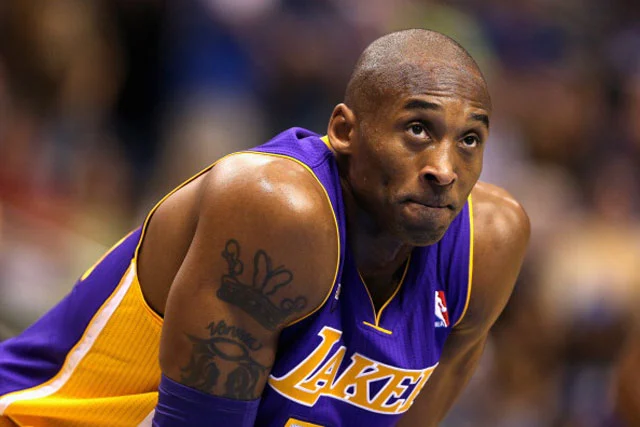
In a legal challenge that strikes at the very heart of the modern cable television business model, a group of Southern California pay-TV subscribers has launched a class-action lawsuit against Time Warner Cable (TWC), along with the Los Angeles Lakers and the Los Angeles Dodgers. The core of the dispute rests on a simple, yet economically explosive premise: the massive multi-billion-dollar investments made by cable operators to secure exclusive regional sports broadcasting rights are being unfairly subsidized by the general subscriber base, regardless of whether those subscribers actually watch the games.
Filed in the Los Angeles Superior Court, the lawsuit represents a growing tide of consumer frustration with the "bundling" model—a system where high-cost sports channels are tucked into basic or enhanced cable tiers, forcing non-sports fans to pay a premium for content they never access. The plaintiffs, representing a broad cross-section of Southern California residents, argue that Time Warner Cable’s acquisition of broadcast rights for the Lakers and Dodgers has effectively created a tax on every cable bill in the region, an "unfair method of competition" that they contend violates state business and professional codes.
Chronology of a Financial Titan
The legal complaint brings into sharp focus the timeline of aggressive sports media acquisition that transformed the regional landscape.
- February 2011: Time Warner Cable sent shockwaves through the sports and media industry by announcing a landmark deal to secure the broadcast rights for the Los Angeles Lakers. The reported price tag was a staggering $3 billion, a move that fundamentally altered the cost structure of regional sports networks (RSNs).
- January 2013: Building on the momentum of the Lakers deal, Time Warner Cable secured the rights to the Los Angeles Dodgers in a deal reported to be worth $8 billion. Together, these two deals placed an $11 billion burden on the company’s balance sheet, a cost that the lawsuit alleges is being recouped through the pockets of everyday viewers.
- April 2013: The legal action is filed in Los Angeles Superior Court, marking a turning point in the consumer-rights movement against cable conglomerates. The timing coincides with broader national debates regarding the "a la carte" cable model, which has been championed by various political figures, including Sen. John McCain.
Supporting Data: The Anatomy of a Monthly Surcharge
The plaintiffs’ case hinges on hard economic data regarding the redistribution of costs. The lawsuit outlines a granular breakdown of how these multi-billion-dollar rights deals manifest on a monthly cable bill.
According to the complaint, the $3 billion Lakers deal resulted in an estimated $4 increase per month for subscribers. With the addition of the $8 billion Dodgers deal, the plaintiffs anticipate that the company will pass along additional costs, estimated between $4 and $5 per subscriber per month, beginning in the next fiscal cycle.
The lawsuit’s economic modeling is stark: "In sum, Time Warner Cable will extract from its customer base, primarily in Southern California, at least $11 billion to recoup its investment." The plaintiffs allege that approximately 60% of this revenue—a total of $6.6 billion—is being effectively "extracted" from individuals who have zero interest in professional basketball or baseball. By tethering these channels to mandatory subscription tiers, the plaintiffs argue that TWC is ignoring market demand in favor of forced subsidization.
Crucially, the lawsuit extends its reach beyond Time Warner Cable’s own subscribers. The complaint asserts that customers of rival providers like DirecTV and Verizon are also victims of this model. Because TWC dictates the terms of carriage for these sports networks to other providers, they require that the channels be included in "enhanced basic packages" without the option for the competitor to offer an opt-out mechanism. This, the plaintiffs claim, creates a regional market where the consumer has no escape regardless of which provider they choose.
The Legal and Philosophical Argument for "A La Carte"
The lawsuit, spearheaded by attorneys Maxwell Blecher and Courtney Palko of the firm Blecher, Collins, Pepperman & Joye, posits that there is no technological or economic justification for the current bundling structure.
"There is no legitimate business, legal, technological, or economic reason why [Time Warner Cable] cannot offer these Lakers and Dodgers games on a standalone channel basis," the filing states. The attorneys argue that a "standalone" or "a la carte" model would restore consumer sovereignty, allowing those who want the games to pay for them, while allowing those who do not to opt out.
This legal maneuver is the latest skirmish in a long-standing war against the "bundling" status quo. Senator John McCain has been a vocal proponent of legislative action to force the cable industry toward a la carte pricing, specifically citing the exorbitant costs of sports-heavy networks like ESPN. The senator argues that the current system is an anti-consumer construct that inflates household expenses.
However, the industry has historically pushed back with vigor. Cable operators and media conglomerates argue that an a la carte model would actually harm the diversity of the television landscape. Their argument, often repeated by industry lobbyists, is that bundling allows for the existence of niche, educational, and smaller entertainment channels that would never survive on their own. They claim that if viewers only paid for what they wanted, the most popular channels—like sports and major broadcast networks—would become prohibitively expensive, while smaller networks would be forced off the air.
Official Responses and Industry Nuance
In the wake of the filing, the response from the defendants has been characteristically guarded. A spokesperson for Time Warner Cable issued a brief statement confirming the company had "no comment" on the pending litigation. This silence is typical of high-profile, high-stakes litigation, though it leaves the public to rely solely on the plaintiffs’ assertions until the discovery phase of the trial.
Despite the firm stance of the industry, there are cracks in the foundation of the traditional bundle. During the 2013 Cable Show, an annual industry event, Time Warner Cable CEO Glenn Britt made comments that hinted at a potential shift in strategy. Britt suggested that the industry might need to move toward a more flexible selection of "tiers" for consumers. While not a full endorsement of a la carte, it was a rare acknowledgment that the status quo is increasingly untenable in an era where consumers are accustomed to the personalized, on-demand nature of digital streaming services.
The Broader Implications: A Future for Cable?
The outcome of this lawsuit could set a dangerous precedent for the media industry. If the courts find that forcing subscribers to pay for unwanted sports content constitutes an "unfair method of competition," it could trigger a domino effect of similar litigation across the United States.
Beyond the courtroom, the case highlights the growing friction between traditional linear television and the shifting habits of the digital consumer. As cord-cutting becomes a mainstream phenomenon, the cost of the "bundle" is frequently cited as the primary reason for canceling cable subscriptions. By holding these massive sports contracts accountable, the plaintiffs are essentially acting as a vanguard for a new era of media consumption—one where the consumer, rather than the conglomerate, dictates the value of the programming.
The four plaintiffs—Sherry Fischer of Los Angeles, Stewart R. Graham of Pasadena, Todd Crow of Orange County, and Gavin McKiernan of Long Beach—represent a diverse cross-section of the market. Their differing service providers (TWC, Charter, DirecTV, and Verizon) underscore the fact that this is not merely a dispute with one company, but a critique of an entire distribution infrastructure.
As the case proceeds through the Los Angeles Superior Court, the industry will be watching closely. If the court agrees that these rights fees are being passed on in an anticompetitive manner, the cable industry may be forced to abandon the bundled model that has sustained it for decades. Conversely, if the court upholds the current model, it will reinforce the industry’s ability to use "must-have" sports content to anchor their subscription tiers for years to come.
Regardless of the verdict, the $11 billion question remains: in a world of infinite choice and digital accessibility, can the old-world cable bundle survive the mounting pressure of a consumer base that is increasingly unwilling to pay for what they do not watch?