
The Emmy Conundrum: Can ‘Beef’ Defy History to Secure a Rare Limited Series Repeat?
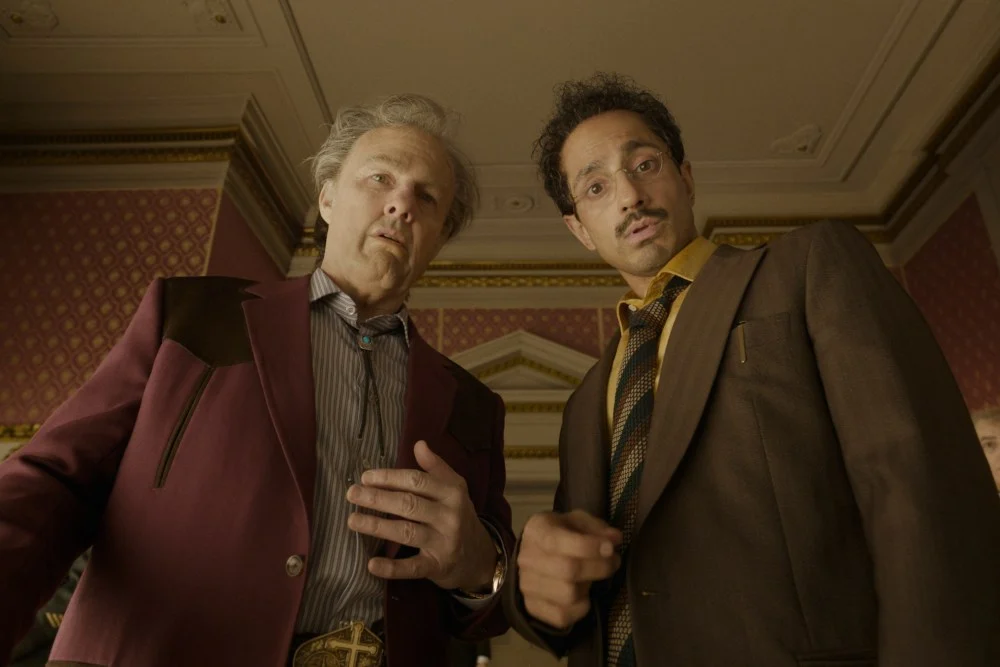
With 16 nominations, the second season of Netflix’s Beef enters this year’s Primetime Emmy race as the most-nominated limited series, signaling both its continued cultural resonance and its dominance in the eyes of the Television Academy. According to Gold Derby’s expert racetrack, the anthology sensation is the current odds-on favorite to claim the top prize.
However, beneath the surface of these favorable statistics lies a historical reality that has haunted previous winners: Emmy voters are notoriously fickle when it comes to returning champions. While the show’s first season swept the 2023 ceremony with eight trophies, including the top honor, securing a repeat victory in the Best Limited Series category is a feat that has rarely been accomplished in the history of the awards.
The Weight of Expectation: A Season of High Stakes
When a show achieves the level of critical and commercial success that Beef experienced in its inaugural run, the expectations for its sophomore outing are astronomical. For the creators and the cast, this season is not merely about replicating a narrative formula; it is about justifying the transition into an anthology format that maintains the intensity and artistic integrity of the original.
The 16 nominations—spanning technical craft, writing, directing, and acting—suggest that the Academy still holds the show in the highest regard. Yet, the history of the Primetime Emmys reveals a distinct pattern: voters are frequently "distracted" by the allure of the new. While voters are often comfortable rewarding consecutive seasons of Best Comedy or Drama Series, the Limited Series category is frequently treated as a showcase for fresh storytelling, often leaving even the most beloved returning shows out in the cold.
A Chronological Look at Repeat Attempts
To understand the challenge facing Beef, one must look at the historical precedent of series attempting to secure multiple wins in the Limited Series category. The track record is sparse, revealing just how difficult it is to sustain momentum in the eyes of the Academy.
The Rarities of Success
The most successful modern example is the American Crime Story anthology. It made a thunderous debut in 2016, winning nine prizes for The People v. O.J. Simpson. It followed up with seven more in 2018 for The Assassination of Gianni Versace. However, even this powerhouse faltered, with the third installment, Impeachment, failing to capture the same level of enthusiasm from voters.

The record for most wins in this category remains held by Prime Suspect. Helen Mirren’s iconic performance anchored the series to wins for its second (1993), third (1994), and fifth (1997) installments. Interestingly, the first installment of Prime Suspect failed to receive a single nomination, highlighting that early snubs do not necessarily dictate the long-term legacy of a show.
The "Fargo" Factor
Perhaps the most cautionary tale is Fargo. After winning the top prize for its first season in 2014, the show struggled to replicate that success. It came up short for its second (2016), third (2017), and fifth (2024) installments, and was completely overlooked for its fourth season in 2021. This trajectory demonstrates that even when a show maintains its creative quality, the voters’ appetite for "the next big thing" can lead to a cooling of support.
The Historical Precedent
Further back in television history, Roots: The Next Generations (1979) managed to follow in the footsteps of its 1977 predecessor. While technically a sequel, it was viewed as a continuation of the Roots phenomenon. Similarly, shows like Upstairs, Downstairs and Columbo navigated the awards in an era when the lines between Limited and Drama series were far more fluid, making direct comparisons difficult by modern standards.
Supporting Data: The Current Field of Contenders
While the weight of history hangs over Beef, the current math remains firmly in its corner. To determine if Beef can break the cycle, one must analyze the strength of the competition.
Currently, DTF St. Louis sits in the second-place spot with 13 nominations. Crucially, it has secured bids in the most prestigious categories: writing, directing, and acting. In an awards landscape where the "prestige" of a nomination often translates into a win, DTF St. Louis represents the kind of fresh, compelling narrative that historically tempts voters away from established favorites.
Other notable challengers include The Beast in Me (nine nominations), All Her Fault (seven nominations), and Love Story (six nominations). While none of these shows currently boast the raw nomination count of Beef, their concentration in key categories makes them dangerous spoilers. If the Academy feels that Beef has already had its "moment," they may be inclined to spread the wealth to these newer contenders.

The Structural Evolution of the Genre
A significant complicating factor in the "repeat" debate is the evolving definition of the Limited Series. Many shows that begin as limited series—such as The White Lotus, Downton Abbey, and Big Little Lies—eventually transition into the Drama Series category.
This transition is often a double-edged sword. While it allows for longer-form storytelling, it also forces these shows to compete against established, multi-season juggernauts, often resulting in losses for their subsequent seasons. Beef has chosen to remain in the Limited Series category, which theoretically keeps its path to victory clearer, provided it can overcome the "newness" bias of the voters.
Implications for the Future of Anthology Television
The outcome of this year’s Emmy race will have significant implications for the future of anthology television. If Beef succeeds, it reinforces the idea that high-quality, recurring anthology brands can maintain a long-term hold on the Academy’s attention, regardless of the "shiny object" syndrome.
If it fails, it may signal a return to the status quo: a cycle where limited series are expected to be singular events, and any attempt to extend their run is met with increasing skepticism by the voting body.
What the Experts Say
Industry analysts suggest that the "Beef" brand is uniquely positioned to handle this pressure. Because the anthology format allows for entirely new stories, settings, and characters while maintaining a consistent "vibe" or production standard, it effectively bridges the gap between a new show and a returning series.
However, the Academy’s voting body is comprised of thousands of industry professionals with diverse tastes. Their preference for novelty is often a reaction against the stagnation of long-running series. Beef must prove that its second season is not just a retread of the first, but a meaningful expansion of the anthology’s potential.

Conclusion: A Test of Merit vs. Habit
As the ceremony approaches, the narrative surrounding Beef is one of defiance. Can a show that already reached the pinnacle of the mountain climb it again?
While the historical data is stacked against a repeat victory, the sheer volume of nominations and the depth of the creative work suggest that Beef is not just another show fighting for a second chance—it is a production that continues to set the bar for the industry. Whether the voters choose to honor that consistency or look toward the fresh promise of DTF St. Louis remains the central mystery of this year’s Emmy cycle.
History might not be on Beef‘s side, but as any seasoned awards prognosticator will tell you, the numbers rarely tell the whole story. In the final accounting, the quality of the performances and the audacity of the storytelling will be the only things that truly matter when the envelopes are opened.