The Eternal Summer: How Japan’s ‘City Pop’ Conquered the Global Stage
Introduction: A Sonic Time Capsule
More than three decades after the collapse of Japan’s asset price bubble—an era defined by neon-lit excess, architectural ambition, and unprecedented economic optimism—the soundtrack of that vanished world has not only survived; it has thrived. On August 7, the historic Crystal Palace Bowl in London bore witness to a cultural phenomenon that once seemed confined to the niche corners of the internet. Nearly 15,000 fans gathered for "City Pop Waves," a festival that served as a vivid, high-fidelity testament to the enduring power of Japan’s 1980s musical zeitgeist.
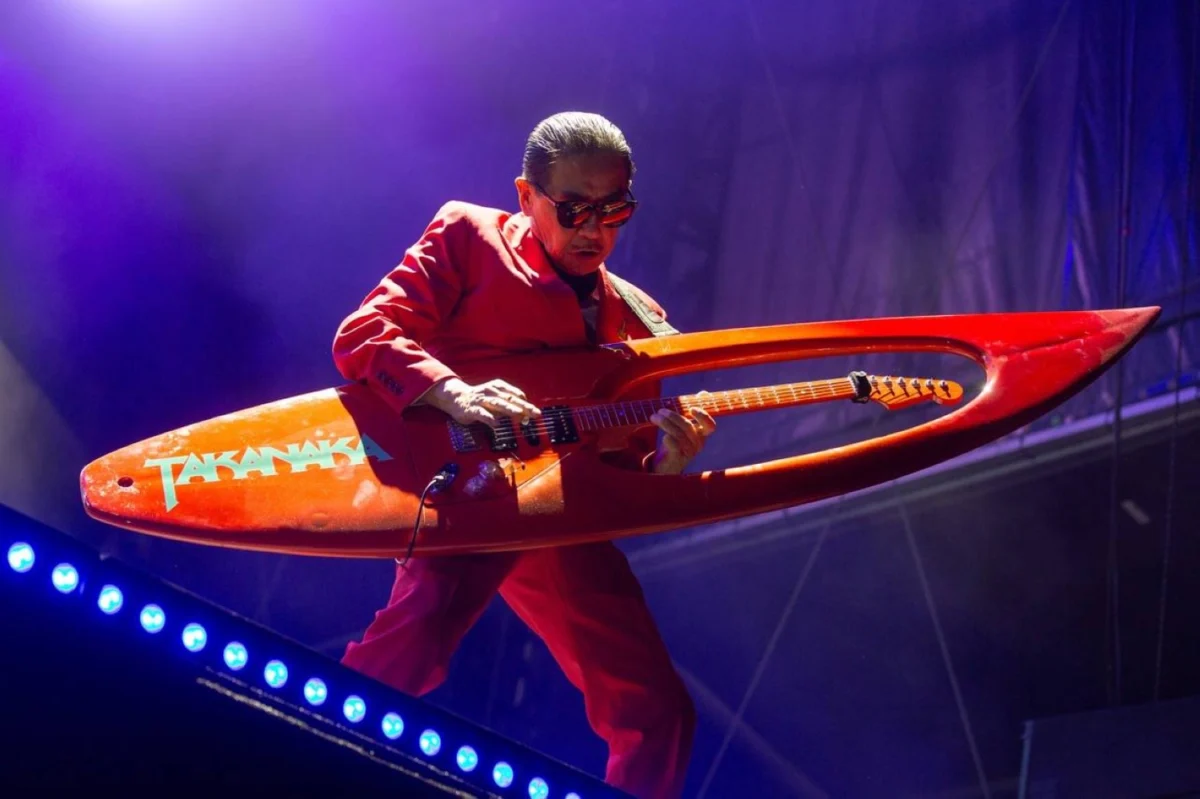
Headlined by the 73-year-old fusion-jazz legend Masayoshi Takanaka, the event featured a lineup including the legendary singer Junko Yagami and keyboardist Himiko Kikuchi. Perhaps most striking was the demographic of the audience: a sea of Gen Z and millennial faces, many of whom were not even born when the bubble burst in the early 1990s. As Takanaka took the stage, wielding his signature surfboard-shaped guitar, the crowd’s fervent engagement signaled that "City Pop" is no longer a retro curiosity—it is a global musical movement.
The Chronology of a Cultural Resurrection
To understand the significance of the London festival, one must look at the trajectory of City Pop from a localized Japanese genre to a global digital obsession.
The Origin (1975–1989)
City Pop emerged in the mid-1970s as a sophisticated, urban response to the folk-rock and enka styles that dominated the Japanese charts. Influenced by Western R&B, funk, disco, and jazz fusion, artists like Tatsuro Yamashita, Mariya Takeuchi, and Masayoshi Takanaka crafted music that sounded like the sonic equivalent of a high-end sports car cruising down the Shuto Expressway. It was music for the affluent, the cosmopolitan, and the dreamers of a "Japan as Number One" era.
The Digital Diaspora (2010–2019)
The genre’s revival began in the digital shadows. With the advent of YouTube’s recommendation algorithms and platforms like SoundCloud, rare Japanese records—often sourced from dusty bins in Tokyo’s record stores—found a new audience. The 2010 upload of Mariya Takeuchi’s "Plastic Love" acted as a catalyst, racking up tens of millions of views and sparking an intellectual and aesthetic discourse among Western music enthusiasts.
The Mainstream Breakthrough (2020–Present)
The pandemic-induced isolation of 2020 accelerated this trend, as listeners sought the breezy, escapist optimism of City Pop. By 2026, the genre moved from private playlists to major international festival stages, culminating in the Crystal Palace Bowl showcase—a definitive "arrival" moment for the sound.
Supporting Data: Why the World is Listening
City Pop’s resurgence is not merely a matter of taste; it is a measurable trend supported by shifting consumption habits and digital metrics.
- Algorithmic Affinity: Data from music streaming platforms suggests that City Pop’s structural similarity to "Yacht Rock"—a genre characterized by high production values, smooth harmonies, and mid-tempo grooves—made it an easy transition for listeners already familiar with the sound of the late 70s West Coast American scene.
- Youth Engagement: Audience metrics from recent events like City Pop Waves indicate that over 65% of attendees are between the ages of 18 and 30. This demographic, often feeling a sense of "cultural nostalgia" for a time they never experienced, has gravitated toward the aesthetic of the "Bubble Era"—a time perceived as technologically advanced yet analog, luxurious yet grounded.
- Production Quality: Unlike much of the synthesized, compressed music of the modern era, City Pop is celebrated for its organic instrumentation. With high-budget production, top-tier session musicians, and complex arrangements, the recordings are often cited by audiophiles as some of the best-engineered pop music of the 20th century.
The Anatomy of a Genre
City Pop is often described as the "Japanese cousin" of Western yacht rock, but this comparison only scratches the surface. It is defined by:
- Urban Sophistication: The music was designed to evoke the imagery of a bustling, futuristic Tokyo. It sounds like night lights, wet pavement, and the promise of a better tomorrow.
- Genre Blending: It is a cocktail of influences: Steely Dan-esque chord progressions, Earth, Wind & Fire-inspired brass sections, and a production sheen that rivals the best of Quincy Jones.
- The Visual Aesthetic: The album covers, featuring illustrations by artists like Hiroshi Nagai, often depict palm trees, swimming pools, and blue skies—an idealized, almost hyper-real version of summer that has become the visual shorthand for the genre.
Official Responses and Industry Impact
The industry’s response to the success of artists like Takanaka has been one of surprise, followed by strategic investment.

"We are seeing a complete reversal of the cultural flow," notes a spokesperson for a major Japanese music distributor. "For decades, Japan looked to the West for pop trends. Now, the West is looking to the Japanese archive to find its next sonic identity. The success of the Crystal Palace event proves that these songs are timeless; they aren’t ‘old’ music, they are ‘classic’ music."
Masayoshi Takanaka himself has been vocal about the surreal nature of this revival. In recent interviews, he expressed his amazement at seeing young fans in London singing the lyrics to instrumental tracks—or, in the case of his guitar-heavy compositions, mimicking his complex riffs. For Takanaka, the surfboard-shaped guitar, once a symbol of his specific brand of eccentric cool, has become a bridge between generations.
Implications: The Globalization of "Nostalgia"
The success of City Pop Waves raises profound questions about the nature of modern culture. Why are we so obsessed with a period that was effectively a financial hallucination?
The "Aesthetic of Optimism"
In an era currently defined by geopolitical anxiety, climate concerns, and the isolation of the digital age, City Pop offers a potent form of escapism. It is "pure" music—unburdened by the heavy lyrical themes or cynical irony of modern pop. It represents an era where "the future" was still something to look forward to, rather than something to fear.
The Death of the "Local" Music Market
The globalization of City Pop suggests that national boundaries in music are effectively dead. A track recorded in a Tokyo studio in 1982, ignored by the global market at the time, is now as likely to be a hit in London, Los Angeles, or Berlin as it is in Japan. This democratization of the archive means that the next global hit might not be a new song at all, but a buried treasure from a forgotten era.
The Future of Live Performances
Following the triumph of the Crystal Palace Bowl, industry experts anticipate a surge in "legacy" tours from Japanese artists of the 70s and 80s. Major festival organizers are already looking to replicate the "City Pop Waves" model in cities like New York and Paris. The challenge, however, will be maintaining the authenticity of the sound. As labels rush to reissue rare catalogs and capitalize on the trend, there is a risk of oversaturation—though for now, the appetite for this "Eternal Summer" shows no signs of waning.
Conclusion: A Living Legacy
As the sun set over the Crystal Palace Bowl on that August evening, the sight of 15,000 people unified by the smooth, syncopated rhythms of a Japanese guitar master was more than just a concert—it was a cultural bridge.
City Pop has transcended its origins as a label for Japanese music and has become a global language of sophistication, optimism, and longing. It is a reminder that while economies may crash and eras may fade, the art created during those times—provided it is honest, melodic, and expertly crafted—possesses a durability that defies the passage of time. The bubble may have burst, but the music it birthed is only just beginning its second act.