The Lido’s Resilience: Alberto Barbera Navigates a Shifting Cinematic Landscape at the 2026 Venice Film Festival
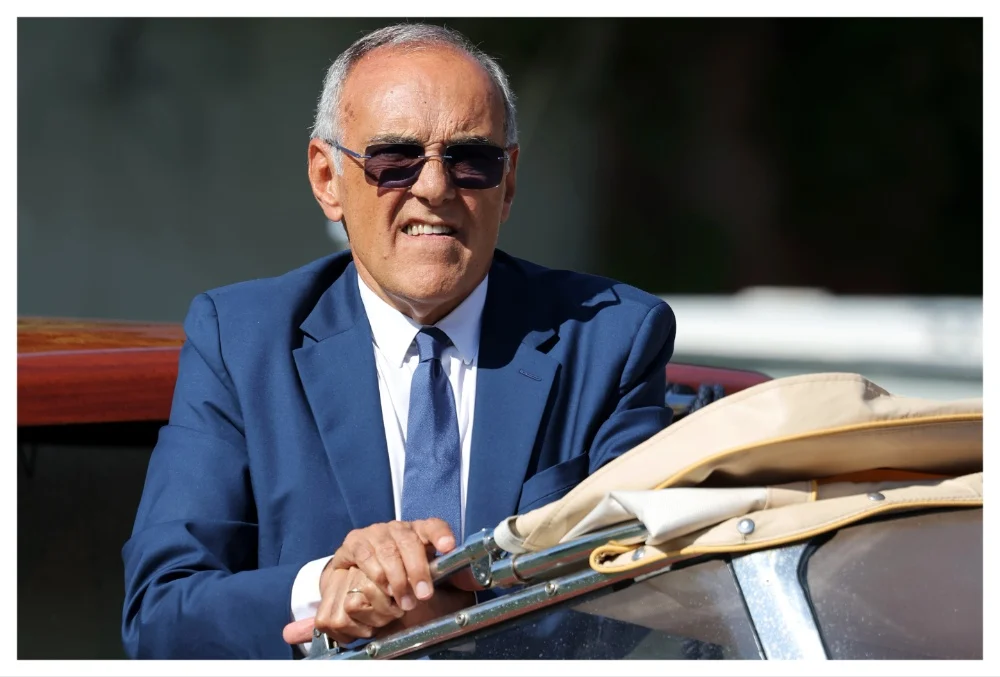
The Venice Film Festival, the world’s oldest and one of its most prestigious cinematic gatherings, is once again preparing to transform the Lido into the center of the film universe. Despite a palpable reduction in the presence of major U.S. studios and streamers, Festival Director Alberto Barbera has successfully curated a lineup that remains both vital and undeniably star-studded. As the industry grapples with an identity crisis fueled by corporate consolidation and shifting promotional paradigms, Venice stands as a bellwether for the future of auteur-driven cinema.
A Lineup Defying the Odds
The 2026 selection is a testament to Barbera’s curatorial prowess, focusing on international prestige rather than relying solely on the Hollywood machine. The roster includes highly anticipated projects from visionary directors such as Martin McDonagh, Florian Zeller, Danny Boyle, Werner Herzog, Lance Oppenheim, Nanni Moretti, Hirokazu Kore-eda, and Lee Chang-dong.
Perhaps the most electric addition to the program is the world premiere of Don’t Look Back in Anger, a documentary chronicling the reunion of the legendary British rock band Oasis. The presence of Liam and Noel Gallagher on the Lido is expected to generate a level of media frenzy rarely seen outside of major blockbuster premieres. This blend of high-art cinema and pop-culture phenomena highlights a strategic pivot: if the studios aren’t providing the volume, the festival will find the cultural gravity elsewhere.
The Anatomy of the Studio "Stalemate"
In a wide-ranging interview, Barbera addressed the elephant in the room: the noticeable dearth of U.S. studio and streaming service participation. Contrary to industry rumors suggesting that Hollywood is turning its back on the festival circuit, Barbera insists that the absence is driven by cold, hard logistics rather than a change in philosophy.
"We shouldn’t jump to hasty conclusions," Barbera noted. "The studios are in a state of stalemate, struggling and redefining themselves through mergers. They are experiencing an identity crisis, and as a result, the auteur-driven films that are traditionally destined for festival platforms simply aren’t being produced in the same numbers."
Barbera points to the "marketing vacuum" currently plaguing the industry. The traditional tools used to generate buzz for films are increasingly viewed as ineffective, leaving studios in a state of paralysis. Some, like Warner Bros. with Alejandro González Iñárritu’s Digger starring Tom Cruise, have opted to bypass festivals entirely in favor of direct theatrical releases, hoping that the surprise factor will drive box office revenue. However, Barbera suggests this is a specific marketing choice for a powerhouse project, not a broader indictment of the festival circuit.
Chronology of Production Hurdles
The perceived "snub" by Hollywood is, according to the festival chief, largely a matter of timing. Several films that were widely tipped to appear in Venice simply weren’t ready due to the unpredictable nature of modern production.
- The Sorkin Factor: Aaron Sorkin’s The Social Reckoning was still in production as late as early August, making a premiere in late summer an impossibility.
- The Fincher Delay: David Fincher’s The Adventures of Cliff Booth was initially a lock for the festival but was forced to halt production due to personal and family matters, pushing its completion date beyond the festival’s window.
- The Dune 3 Reality: While fans clamored for a Dune 3 reveal, Denis Villeneuve remains deep in the post-production process. According to Barbera, Villeneuve confirmed that the sheer volume of special effects required means the film will not be finished until its late-December release date.
These delays highlight a broader, systemic issue: the lead time for major studio projects has become increasingly volatile, making it difficult for festivals to secure the "sure things" that defined the 2010s.
The A24 Paradox and the "Primetime" Surprise
The relationship between festivals and studios remains complex, as evidenced by the case of A24. Following the disappointing box office performance of Smashing Machine—which launched at Venice last year—some speculated that the studio might be wary of the "festival curse." Yet, A24 is returning this year with the Robert Pattinson-led Primetime.
Barbera remains steadfast in his defense of the festival’s role in a film’s life cycle. "It’s not the festival’s fault if a film doesn’t produce the box office results one might have hoped for," he argues. The success of securing Primetime was a down-to-the-wire affair. With Pattinson shooting in London, his availability was the primary obstacle. Once the schedule cleared, the actor and his team committed to the festival immediately, underscoring that when the content is strong, the commitment to the festival experience remains intact.
The Gender Parity Debate
One of the more contentious points of the 2026 lineup is the inclusion of only one female director, May El-Toukhy, in the main competition. This has sparked a renewed conversation regarding Venice’s commitment to gender parity. Barbera, however, rejects the notion of a quota system.
"The only rigid criterion we follow is the quality of the films," he stated. "We are absolutely opposed to selecting films based on gender because we don’t believe it’s beneficial. It’s humiliating for women if they are thought to have been chosen because they are women rather than because they made a good film."
Barbera points to the festival’s track record, noting that since 2000, Venice has awarded top prizes to more female directors than its competitors in Cannes or Berlin. Furthermore, he highlighted that the three main juries this year are chaired by women. He notes that the decline in female representation in the lineup is a direct reflection of a decline in the number of female-directed films submitted (a drop from 30% to 24% year-over-year) and, in the view of the selection committee, a corresponding dip in the quality of those specific submissions.
Implications for the Future
The 2026 Venice Film Festival serves as a microcosm for the broader motion picture industry. The era of the "guaranteed studio presence" is in flux, replaced by a more fragmented landscape where festivals must act as talent scouts and agile partners.
The takeaway from Barbera’s assessment is that the festival ecosystem is not dying; it is evolving. The reliance on massive studio tentpoles is being replaced by a diverse mix of international auteurs, documentaries, and boutique studio projects that are willing to take the risk of a festival premiere.
Looking ahead to 2027, Barbera remains optimistic. He suggests that the current year is a "contingency factor," and that the next cycle, which appears richer in promising studio projects, may see a return to normalcy. Whether or not the industry returns to the old model of using festivals as the primary launchpad for fall cinema remains to be seen. However, as Barbera points out, "when the films are there, they come."
For now, the Lido continues to serve its primary purpose: providing a world-class stage for the stories that matter, whether they come from the inner sanctums of Hollywood or the creative hubs of international cinema. The 2026 edition of Venice is not a signal of decline, but rather a robust defense of the cinematic arts in an age of uncertainty. As the red carpet is rolled out, the focus remains where it should be: on the screen, and on the enduring power of the film festival as the ultimate arbiter of quality.