Reimagining Terror: Mike Flanagan’s Complex Vision for Prime Video’s ‘Carrie’
The landscape of horror cinema is defined by its icons, and few figures loom as large—or as tragically—as Margaret White. The devout, fanatical mother of the telekinetic teenager Carrie White has served as the gold standard for cinematic villainy since Stephen King’s 1974 debut novel first hit shelves. However, as Mike Flanagan, the acclaimed auteur behind The Haunting of Hill House and Midnight Mass, prepares to bring his long-gestating Carrie series to Prime Video, the industry is buzzing over a significant narrative shift: Flanagan’s intention to portray Margaret White not as a one-dimensional monster, but as a deeply sympathetic, albeit misguided, figure.
The Core Transformation: A Shift in Perspective
In a recent series of interviews, Flanagan has made it clear that his Carrie will not be a beat-for-beat recreation of Brian De Palma’s legendary 1976 film or the 2013 remake. Instead, he is looking to the source material to find new emotional resonance. The central point of contention for many purists is the decision to humanize a character who has historically been defined by her fundamentalist rage and physical abuse of her daughter.
Flanagan argues that the horror of Carrie is not just in the telekinesis or the prom night massacre, but in the tragic, claustrophobic relationship between a mother and daughter trapped by fear. By shifting the focus, the series aims to explore the internal logic of a woman who believes she is saving her daughter’s soul, even as she destroys her humanity.
A Chronology of the ‘Carrie’ Legacy
To understand the weight of this creative pivot, one must look at how the character has been handled across nearly five decades of adaptation:
- 1974: Stephen King publishes Carrie, introducing a Margaret White who is a terrifying manifestation of repressed religious trauma.
- 1976: Brian De Palma releases the definitive film adaptation, starring Piper Laurie. Laurie’s performance earned an Academy Award nomination and solidified the image of Margaret White as a shrieking, knife-wielding religious zealot.
- 1999: The Rage: Carrie 2 attempts to expand the lore, though it moves away from the direct mother-daughter dynamic of the original.
- 2002: A television movie adaptation attempts to provide more backstory for the characters, though it largely maintains the established character beats.
- 2013: The Kim Peirce remake features Julianne Moore as Margaret, leaning into a more quiet, cold, and calculated form of psychological torture.
- 2024/2025: Mike Flanagan’s production enters development for Prime Video, promising a series-length exploration that allows for character growth—and potential sympathy—that a two-hour film simply cannot sustain.
Behind the Scenes: The Performance of Paranoia
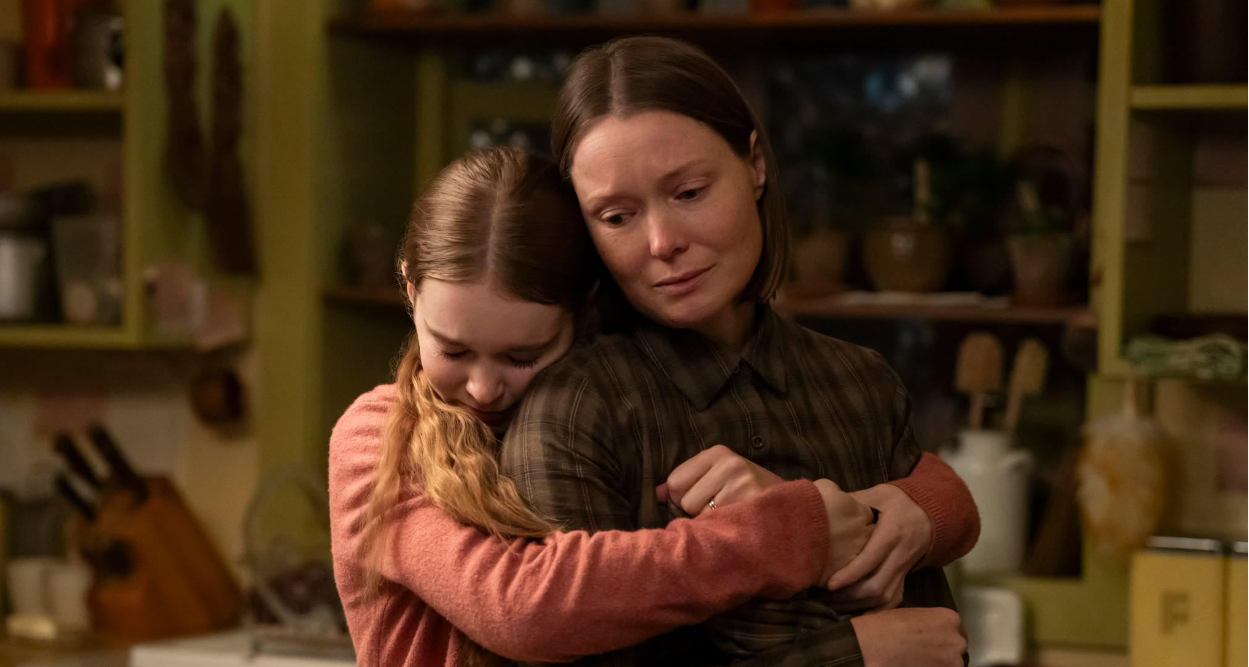
The role of Margaret White in the upcoming series will be portrayed by Samantha Sloyan, a frequent collaborator of Flanagan’s known for her ability to play characters with intense, often uncomfortable internal convictions. In a recent exclusive with Entertainment Weekly, Sloyan shed light on how she and Flanagan are approaching the character’s psyche.
"She loves Carrie more than anything in the world, but like many family members, we’re bound to each other, but we don’t exactly see the world the same way," Sloyan noted.
According to Sloyan, this iteration of Margaret is not simply a caricature of religious extremism. Instead, she is a woman who views the world through a lens of existential, even conspiratorial, dread. She believes in a "global cultural war" against her faith, a mindset that causes her to view Carrie’s emerging powers not as a divine curse, but as a vulnerability—a signal that the world is coming to claim the one thing she holds dear.
"Margaret’s reaction to fear, instead of trying to learn or to understand, is to really go to war with the world," Sloyan explained. "Margaret’s really just all suspicion and fear and hatred."
Supporting Data: Why This Approach Works
Why attempt to make a villain sympathetic in the current climate? Flanagan’s approach relies on the idea that "evil" is rarely self-aware. By framing the conflict as a clash between Carrie’s burgeoning optimism and Margaret’s entrenched, trauma-informed paranoia, the series moves from a slasher-adjacent horror to a psychological tragedy.
Flanagan has been candid about his own internal struggle with the script. "I went into this determined not to hate Margaret White," he shared in a recent roundtable. "I wanted to understand her. And part of the importance of that is Margaret’s not entirely wrong. There’s a lot she has to say in the show that I agree with, and that makes it even more complicated."
This intellectual honesty is a hallmark of Flanagan’s work. By finding common ground with the antagonist, the audience is forced to engage with the uncomfortable question: at what point does "protection" become "abuse"?
The Implications of a "Humanized" Villain
The implications for the horror genre are significant. For years, the "abusive religious parent" has been a staple trope. By deconstructing this, Flanagan is attempting to move the needle toward a more nuanced portrayal of trauma and intergenerational pain.
1. Elevating the Source Material
While the 1976 film is a masterpiece of style and tension, a series format allows for the "slow burn" of psychological manipulation. If the audience understands why Margaret is terrified, her actions—while still monstrous—become more horrifying because they are rooted in a twisted, recognizable love.
2. Shifting the Audience’s Allegiance
If the audience finds themselves agreeing with even 5% of Margaret’s worldview, the tension of the series changes. It no longer becomes a story of "good versus evil," but a tragic collision of two people who are both victims of the same environment, albeit in vastly different ways.
3. Cultural Relevance
In an era of intense political and cultural polarization, a character who believes they are fighting a "war against their beliefs" is chillingly timely. Margaret White, in this version, becomes a mirror for the modern age, reflecting the ways in which fear and misinformation can lead individuals to isolate themselves and those they love.
The Verdict: Will the "Big Swing" Land?
Taking a property as established as Carrie and fundamentally altering the core character dynamics is a "big swing" by any standard. There is a inherent risk in diluting the impact of one of horror’s most visceral villains. If the series leans too far into sympathy, it risks losing the raw, cathartic power of the original story, which was, at its heart, about the fury of the repressed.
However, if anyone is equipped to handle this delicate balance, it is Flanagan. His career has been defined by the ability to extract deep, aching humanity from the most terrifying supernatural premises. By focusing on the "why" rather than the "what," he is positioning Carrie to be less of a remake and more of a psychological autopsy of a family unit under extreme pressure.
We will find out if this bold reimagining resonates with audiences when Carrie premieres on Prime Video this coming October. If the project succeeds, it may redefine how we look at classic horror villains, moving the genre away from the binary of "good and bad" toward a more complex, unsettling reality where the most terrifying monsters are the ones who believe they are the heroes of their own stories.
Until the release, the debate remains open: can we—or should we—try to empathize with Margaret White? For Mike Flanagan, that is precisely the question that makes the story worth telling again.