From Fairytale to Nightmare: ‘Pinocchio Unstrung’ and the Evolution of the Twisted Childhood Universe
Since the public domain expiration of A.A. Milne’s Winnie-the-Pooh in 2022, a curious and controversial cinematic sub-genre has emerged: the "Twisted Childhood Universe" (TCU). Spearheaded by director Rhys Frake-Waterfield and producer Scott Chambers, this franchise has systematically taken beloved icons of youth and subjected them to the slasher-film treatment. Following the polarizing success of Winnie the Pooh: Blood and Honey and its subsequent sequel, the TCU returns with its most ambitious, visually polished, and undeniably bloody entry to date: Pinocchio Unstrung.
Moving beyond the shoestring aesthetic of the franchise’s infancy, Pinocchio Unstrung represents a tactical shift in how these independent horror projects are produced. It is a film that leans heavily into the "if it ain’t broke, don’t fix it" philosophy of the slasher genre while simultaneously demonstrating a newfound commitment to production value.
The Core Narrative: A Puppet’s Vengeful Path
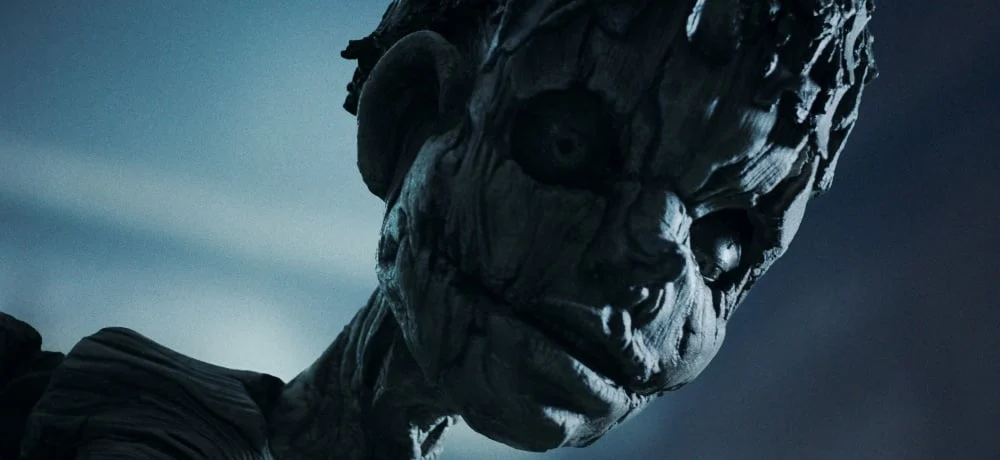
At its heart, Pinocchio Unstrung eschews the moral lessons of the Carlo Collodi classic in favor of a visceral, survivalist horror narrative. The story centers on a young boy named James (Cameron Bell), who is taken in by the eccentric and reclusive Gepetto (horror icon Richard Brake) following a tragic family loss. However, this is not the benevolent woodcarver of folklore; in this reimagining, Gepetto’s motivations are as murky as the origins of the puppet he constructs.
Accompanying the pair is a character fans will recognize, though perhaps not in a form they would expect: Cricket, voiced by the legendary Robert Englund. Unlike the wise, moral compass of the original tale, this Cricket is a cynical, hardened entity. The film wastes little time on exposition, opting instead to plunge the audience into a brisk 80-minute runtime defined by creative, practical-effect-heavy carnage.
The central conflict arises when Pinocchio (voiced by Jude-Evan Lloyd) interprets perceived threats to James through a lens of extreme, murderous violence. The film does not shy away from the darker implications of its premise, featuring a high body count that includes, notably, other children—a creative choice that will undoubtedly alienate squeamish viewers while satisfying those looking for the transgressive thrills that the TCU has built its brand upon.
Chronology of the Twisted Childhood Universe
To understand Pinocchio Unstrung, one must look at the rapid-fire evolution of the TCU. The franchise’s trajectory is a case study in modern micro-budget distribution and viral marketing:
- 2023: The Foundation. Winnie the Pooh: Blood and Honey is released. Despite critical derision, the film becomes a massive financial success, proving that there is a significant, hungry audience for "dark" deconstructions of public domain IP.
- 2024: The Expansion. The team begins production on sequels and spin-offs, signaling a transition from one-off projects to a shared universe model.
- 2025: The Refinement. With higher budgets and more experienced horror talent (such as the casting of Richard Brake and Robert Englund), the production value of the TCU begins to climb.
- 2026: The Arrival of Pinocchio Unstrung. The film serves as the current peak of the franchise, showcasing a refined visual style and a better grasp of the "slasher" pacing that the initial Pooh films struggled to maintain.
Looking ahead, the roadmap is clear: the TCU has already confirmed Winnie the Pooh: Blood and Honey 3 and the crossover event Poohniverse: Monsters Assemble. These projects aim to consolidate the brand, turning these disparate "twisted" tales into a cohesive, interconnected horror franchise.
Supporting Data: The Economics of Exploitation
The success of Pinocchio Unstrung cannot be viewed in a vacuum; it is the direct result of the financial windfalls provided by its predecessors. In the independent horror sector, the TCU is an outlier. While most indie films struggle to reach profitability, the TCU’s ability to leverage recognizable IP—even when stripped of its original charm—has generated millions in global box office and VOD revenue.
Critics of the genre often point to the "thin plot" of these films, but industry analysts note that the films are remarkably efficient. By focusing on practical effects, iconic character designs, and a "snappy" narrative structure, the production team has successfully managed to keep costs low while maximizing audience engagement. The decision to reinvest profits back into the films—as seen in the superior puppet design and digital work in Pinocchio Unstrung—is a strategic move that sets the TCU apart from the "cash grab" imitators that followed in the wake of the first Blood and Honey.
Official Responses and Creative Direction
Rhys Frake-Waterfield, returning to the director’s chair for the first time since the original Blood and Honey, has been vocal about his vision for the franchise. In various interviews, he has described the TCU as a "nihilistic approach to childhood wonder," a sentiment that is fully realized in Pinocchio Unstrung.
The casting of genre heavyweights like Richard Brake and Robert Englund is a significant signal of intent from the production team. It suggests an attempt to bridge the gap between "meme-worthy" viral content and legitimate genre cinema. While Frake-Waterfield acknowledges that his brand of humor and shock-value storytelling is not for everyone, he remains steadfast in the belief that the audience for these films is seeking a specific kind of cathartic, exploitative entertainment.
Regarding the practical effects, the team has leaned heavily into "gooey," visceral kills. The production team reports that they have prioritized physical stunt work and prosthetic makeup over reliance on CGI, a choice that has paid dividends in audience reception. The "sledgehammer" sequences and other ballistic gore effects, while sometimes defying the laws of physics, have been highlighted by fans as the standout elements of the film.
Implications for the Future of Public Domain Horror
The existence of Pinocchio Unstrung and the wider TCU has broader implications for the film industry. As more iconic characters enter the public domain, the "Twisted Childhood" model is likely to be mimicked by other studios. However, the TCU has established a "first-mover advantage" that will be difficult to replicate.
The Risks of Oversaturation
There is a tangible risk that the market for these films will hit a saturation point. When every childhood hero has been turned into a slasher villain, the novelty will inevitably fade. The challenge for Frake-Waterfield and Chambers will be to maintain the "scandalous" appeal of the films while evolving the storytelling to keep audiences engaged beyond the initial shock.
The "Shared Universe" Gamble
The upcoming Poohniverse: Monsters Assemble represents a massive gamble. Moving from individual, isolated stories to a crossover event requires a level of narrative coherence that the TCU has, until now, deliberately avoided. Whether the franchise can pivot from "quick kills and paper-thin plots" to a sustained, multi-character narrative remains to be seen.
The Verdict on Artistic Merit
While Pinocchio Unstrung currently holds a 3/5 score, reflecting its success as a piece of "junk-food cinema," it serves as a reminder that even in the world of exploitative horror, craft matters. By treating their audience with a degree of respect—by providing them with the high-quality practical effects they pay to see—the TCU has secured its place in the modern horror landscape.
Ultimately, Pinocchio Unstrung is the strongest entry in the TCU because it finally understands its own identity. It makes no pretense of being a high-minded exploration of humanity or morality. Instead, it is a self-aware, gore-filled romp that thrives on the very scandal it creates. For those who can put their analytical brains on standby and enjoy a bit of "murderous mayhem," it is a marked improvement over everything that came before it. Whether or not the franchise can sustain this momentum remains an open question, but for now, the puppet has successfully pulled his own strings—and he’s ready for more.