The Odyssey: Christopher Nolan’s Mythic Masterpiece Shatters Global Box Office Records
In a cinematic landscape often dominated by sequels, prequels, and pre-packaged intellectual property, Christopher Nolan has once again defied the odds. His latest magnum opus, The Odyssey, has stormed theaters worldwide, posting an extraordinary $264.1 million opening weekend. The performance serves as a thunderous confirmation of Nolan’s status as the industry’s premier "event" filmmaker, proving that audiences remain hungry for ambitious, original—or at least non-franchise—storytelling.
Universal Pictures, which backed the project, reported that the film earned $124.5 million domestically and $139.6 million internationally. These figures are particularly staggering when one considers the film’s profile: it is an R-rated, three-hour-long adaptation of Homer’s ancient poem, lacking the safety net of an existing cinematic universe.
The Chronology of a Blockbuster
The journey to this record-breaking weekend began years ago, as Nolan transitioned from the gritty realism of Dunkirk and the high-concept physics of Tenet to the biographical intensity of Oppenheimer. Having secured a Best Picture win and a massive global footprint with his 2023 atomic drama, Nolan leveraged his newfound capital to tackle the ultimate epic: the arduous return of King Odysseus to Ithaca following the fall of Troy.
The production cycle was marked by rigorous secrecy and the innovative use of IMAX technology. Unlike previous Nolan films that utilized a mix of formats, The Odyssey was shot entirely on IMAX cameras, creating a visual fidelity that necessitated a specialized rollout. As the marketing campaign ramped up throughout the spring and summer of 2024, the anticipation built steadily. By the time the film hit screens in 73 international markets, the critical reception had already reached a fever pitch, with early screenings generating the kind of "must-see" word-of-mouth that usually follows the release of a massive superhero tentpole.
Supporting Data: By the Numbers
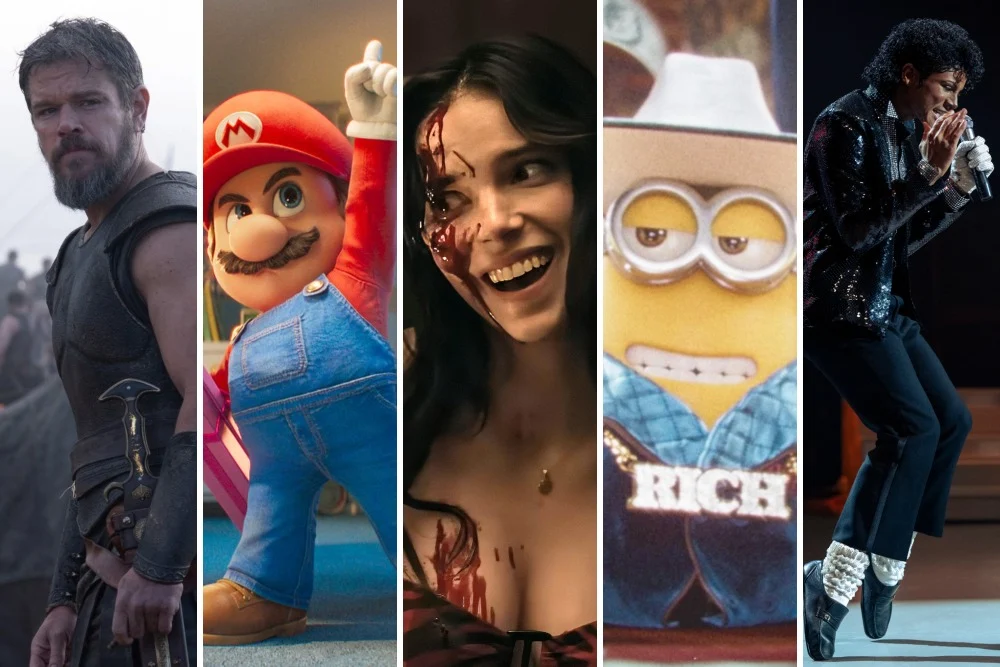
The sheer scale of The Odyssey’s debut places it in rare company. It currently stands as the third-highest opening of 2024, trailing only the juggernauts The Super Mario Galaxy Movie ($372.5 million) and Toy Story 5 ($312 million).
However, when isolating the work of a single auteur, the numbers are even more impressive. The Odyssey has officially surpassed the worldwide opening records of Nolan’s own The Dark Knight Rises ($249 million) and The Dark Knight ($198 million). While industry analysts often apply a caveat regarding inflation when comparing modern figures to those from 2009 or 2012, the raw data remains a testament to Nolan’s increasing, rather than plateauing, box office magnetism.
Regional Dominance
The international rollout proved equally robust, with the film performing as Nolan’s biggest opening in 48 territories, including France ($13.7 million) and Italy ($11.5 million). The United Kingdom and Ireland led the international charge, contributing a combined $17.4 million. Notably, these records were set despite the film having not yet premiered in key markets such as China, South Korea, and Japan, suggesting that the final global tally could reach historic heights for a non-franchise production.
The IMAX Factor
Central to the film’s financial success is its reliance on premium large formats. The Odyssey earned $51.8 million globally from IMAX alone, representing 23% of its total revenue. This is a staggering metric, especially when contrasted with Oppenheimer, which, while successful, trailed the current film’s pace by 47% in equivalent formats.
The Starry Ensemble: A Modern Epic
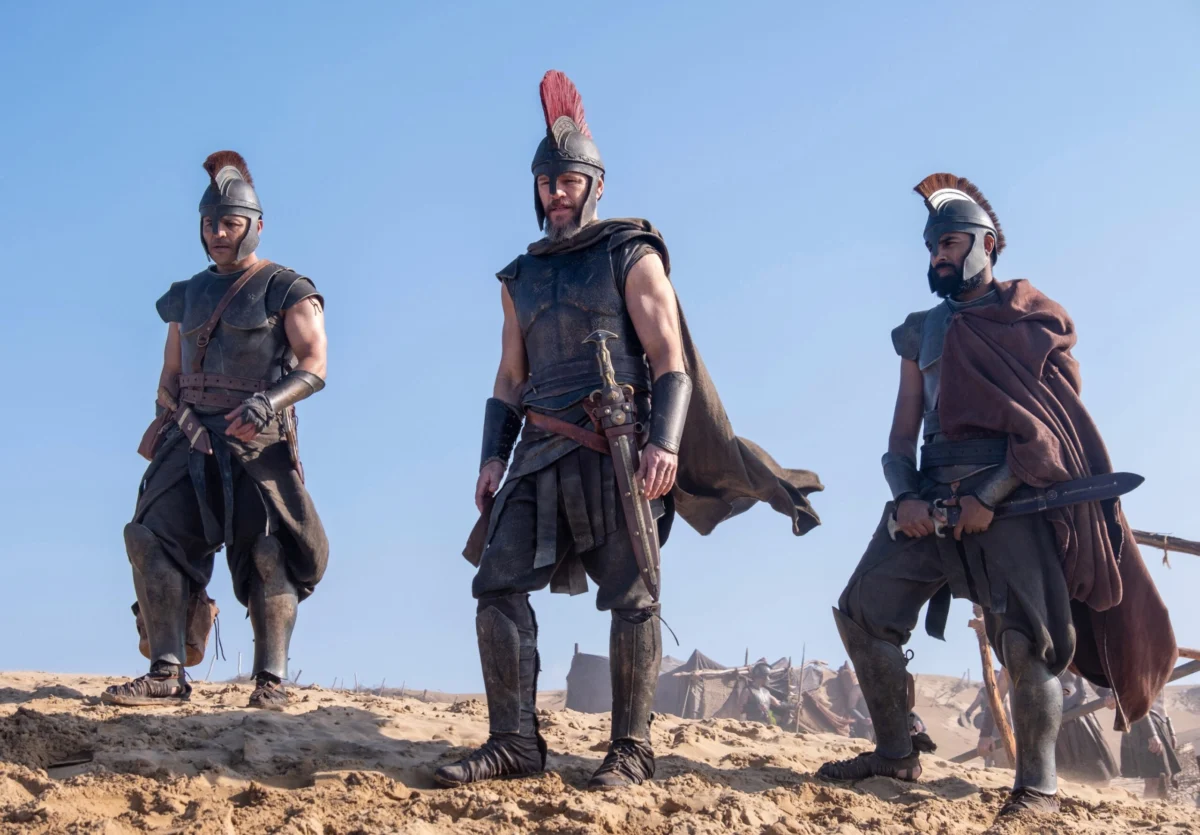
Nolan’s ability to attract top-tier talent has never been more apparent than in the casting of The Odyssey. Matt Damon anchors the film as Odysseus, delivering a performance that critics have lauded for its emotional weight and physical vulnerability. The ensemble is equally formidable, featuring Tom Holland, Anne Hathaway, Robert Pattinson, Lupita Nyong’o, Zendaya, Charlize Theron, Elliot Page, Jon Bernthal, and John Leguizamo.
By grounding such a high-concept, historical adaptation in the performances of contemporary A-list actors, Nolan successfully translated the "high-brow" nature of Homeric literature into a gripping, accessible blockbuster.
Official Responses and Industry Sentiment
The industry has responded to these numbers with a mixture of awe and relief. Veronika Kwan Vandenberg, president of distribution for Universal Pictures International, framed the success as a victory for the medium of film itself.
"With The Odyssey, we had the extraordinary opportunity to unite moviegoers worldwide around a story that has resonated across cultures for centuries," Vandenberg stated. "Christopher Nolan’s passion, vision, and unique cinematic voice consistently drive anticipation and attendance on a truly global scale. He, alongside the force that is Emma Thomas, continues to set the standard for ambitious, event filmmaking. The Odyssey is that rare kind of movie that brings audiences together across every market in a shared cultural moment."
The sentiment was echoed by Richard Gelfond, CEO of IMAX, who positioned the film as a turning point for the theater industry. "If you don’t see The Odyssey in IMAX, you aren’t seeing it in the way that Chris Nolan intended," Gelfond remarked. He characterized the weekend as a "transcendent moment" for the format, predicting that the success of the film will catalyze a new wave of theater expansion and demand for premium large-format experiences.
Implications for the Future of Cinema
The success of The Odyssey holds profound implications for Hollywood’s strategic trajectory. For years, the prevailing wisdom in studio boardrooms was that only established IP—franchises with existing fanbases—could guarantee massive global openings. Nolan has effectively dismantled this narrative, proving that the director’s own brand can be the primary engine of a blockbuster.
The "Nolan Effect"
The film serves as a case study for the value of auteur-driven projects. By refusing to compromise on the film’s length, tone, or format, Nolan has cultivated a fanbase that treats his releases as "events" in the cultural calendar. This level of brand loyalty is virtually unheard of in the modern era, outside of perhaps the most established comic book franchises.
The Return of the Long-Form Epic
Furthermore, the film’s success may signal a shift in audience tolerance for longer, more demanding cinematic experiences. In an era of short-form video consumption, the fact that audiences are flocking to a nearly three-hour R-rated drama suggests that there is a significant, untapped demand for "prestige" blockbusters. Studios that have been hesitant to greenlight high-budget, non-sequel films may now be more inclined to follow Universal’s lead, placing their bets on visionary directors rather than recycled intellectual property.
The Sustainability of Premium Formats
Finally, the IMAX performance of The Odyssey underscores the necessity of the "experience" economy. As home entertainment systems continue to improve, the theater industry has struggled to justify the cost of admission. Nolan’s insistence on IMAX-only technical standards forces audiences to prioritize the communal, high-fidelity experience, effectively turning the cinema into an indispensable venue for true film fans.
As The Odyssey continues its run, analysts expect it to maintain strong legs, fueled by positive critical consensus and the impending openings in East Asian markets. Whether or not it will ultimately challenge the all-time records remains to be seen, but one thing is certain: Christopher Nolan has once again proven that when it comes to the art of the spectacle, he is the king of his own Ithaca.