Venice 2026 Wrap-Up: Film Comment Podcast Analyzes Late-Festival Premieres NAZA, Company, and More
Main Facts
As the curtains closed on the 83rd edition of the Venice International Film Festival along the picturesque shores of the Lido di Venezia, critics and cinephiles alike reflected on an eventful fortnight of cinema. For their final dispatch of the 2026 festival season, Film Comment Co-Editor Devika Girish convened a panel of prominent international film critics—Mariona Borrull, Leonardo Goi, Luke Hicks, and Öykü Sofuoğlu—to unpack some of the most talked-about late-festival premieres.
The primary focus of this concluding podcast episode centered on three distinct, highly anticipated cinematic works: Yuval Abraham and Rachel Szor’s urgent documentary project NAZA, Casey Affleck’s narrative feature Company, and Ali Asgari’s A Bit of Light. The roundtable discussion provided a deep-dive critical analysis of these late-stage entries, exploring their thematic resonances, formal achievements, and cultural footprints within the broader landscape of contemporary filmmaking.
The episode serves as the capstone to Film Comment‘s comprehensive, multi-week on-the-ground reporting from the Lido, capturing the shifting critical consensus and standout moments of the 2026 festival circuit. Listeners and readers can access the full conversation and additional festival coverage via the Film Comment podcast feed and its Summer 2026 print and digital issues.
Chronology: The Arc of the 2026 Venice Film Festival
Weeks One and Two: On the Ground at the Lido
The 2026 Venice Film Festival commenced under typical Mediterranean splendor, drawing international auteurs, industry executives, and Hollywood stars to the historic Palazzo del Cinema and surrounding venues. From the opening days, Film Comment established a robust daily presence, publishing real-time critical reviews, filmmaker interviews, and exhaustive dispatches chronicling the competition slate and out-of-competition highlights.
As the festival progressed past its midpoint, the sheer volume of high-profile international premieres created an intensely competitive environment for critical attention. The final stretch of the festival traditionally introduces high-stakes wildcards, late-breaking additions, and provocative non-fiction projects designed to leave a lasting impression on the international jury and visiting press corps.
The Final Weekend: Wrapping Up and Recording the Podcast
Over the final weekend of the festival, the awards were deliberated, red-carpet events gave way to packing trunks, and the critical establishment began the process of synthesis. It was during this high-energy wind-down phase that Devika Girish gathered Mariona Borrull, Leonardo Goi, Luke Hicks, and Öykü Sofuoğlu in Venice to record the final podcast episode.
The recording session systematically broke down the closing days of the festival, moving chronologically through the late-breaking titles before expanding into a broader retrospective conversation regarding individual highlights of the 2026 edition.
Supporting Data: Deep-Dive Analysis of the Late-Festival Slate
The Film Comment podcast structured its critical evaluation around specific timestamps, allowing listeners to follow along with targeted discussions on individual films.
1. A Bit of Light (Directed by Ali Asgari) — Discussed at [4:30]
Kicking off the substantive review portion of the podcast at the 4-minute, 30-second mark, the critics turned their attention to Ali Asgari’s A Bit of Light. Asgari, a prominent voice in contemporary Iranian cinema known for his rigorous, socially conscious storytelling (Terrestrial Verses), brings a distinct observational eye to this project.

- Critical Consensus: The panel examined how Asgari navigates complex interpersonal dynamics and societal pressures within tight narrative frameworks.
- Aesthetic and Thematic Evaluation: The critics noted the film’s restrained pacing, naturalistic performances, and its ability to unearth profound emotional stakes from seemingly quiet, mundane domestic interactions. The discussion highlighted Asgari’s continuing evolution as a filmmaker capable of sustaining tension without relying on melodramatic crutches.
2. Company (Directed by Casey Affleck) — Discussed at [8:42]
Transitioning to North American independent cinema at [8:42], the discussion shifted toward Company, directed by Casey Affleck. Affleck, who has steadily carved out a distinct path as a director alongside his celebrated acting career, brought significant star power and critical curiosity to the Lido.
- Critical Consensus: The panel offered a nuanced assessment of Affleck’s directorial choices, interrogating the film’s atmospheric qualities and tonal consistency.
- Aesthetic and Thematic Evaluation: The conversation explored Company’s moody visual palette and its psychological underpinnings. The critics debated how well the film’s formal choices served its narrative ambitions, analyzing Affleck’s handling of character interiority and pacing. While acknowledging the film’s distinct stylistic ambitions, the panel engaged in a healthy debate over its narrative resonance and how it fits into the broader continuum of actor-turned-director projects showcased on the festival circuit.
3. NAZA (Directed by Yuval Abraham and Rachel Szor) — Discussed at [15:25]
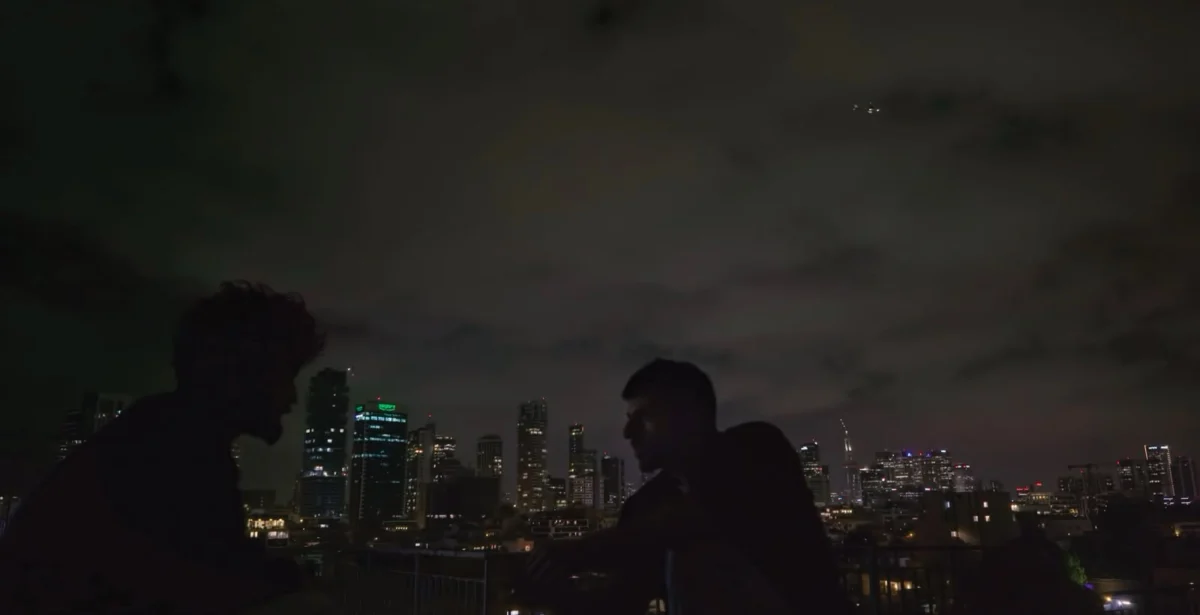
Perhaps the most politically charged and urgent discussion of the podcast occurred at [15:25], when the panel dove into NAZA, co-directed by Yuval Abraham and Rachel Szor. Coming in late in the festival schedule, the film immediately commanded the attention of journalists and programmers due to its uncompromising subject matter and documentary rigor.
- Critical Consensus: The panel united around the sheer necessity and documentary force of NAZA, praising Abraham and Szor for their unflinching journalistic integrity fused with cinematic craft.
- Aesthetic and Thematic Evaluation: The critics analyzed how NAZA transcends standard reportage to achieve lasting cinematic power. They discussed the film’s structural choices, editing rhythms, and the ethical responsibilities inherent in documenting contemporary geopolitical flashpoints. The conversation underscored the vital role that documentary cinema plays at major international festivals like Venice—acting not merely as an aesthetic showcase, but as an urgent register of historical and political reality.
Festival Highlights and Personal Favorites
Concluding the podcast episode, Girish invited each critic to step back from the specific triple-feature review and share their personal standout films and cinematic discoveries from the entire 2026 Venice lineup. This rapid-fire segment offered listeners an invaluable cross-section of critical tastes, highlighting hidden gems from the Horizons (Orizzonti) section alongside major competition heavyweights, ensuring that the final dispatch served as a comprehensive guide for upcoming theatrical viewings and streaming releases.
Official Responses and Industry Reception
The reception of the 2026 Venice Film Festival’s late-stage programming generated robust discussions across trade publications and critical roundtables alike. While festival organizers praised the global diversity and geographical breadth of this year’s selection, independent critics on the Lido emphasized the challenging, often sobering nature of the cinematic offerings.
Festival Director Alberto Barbera and the Venice programming committee have consistently championed a dual approach to the Lido lineup: balancing high-profile Hollywood and international auteur narratives with fiercely independent, risk-taking non-fiction and regional cinema. The inclusion of works like NAZA and A Bit of Light reinforced the festival’s reputation as a premier geopolitical sounding board where art and activism frequently intersect.
Filmmakers and producers associated with the discussed titles expressed gratitude for the rigorous engagement provided by critical outlets such as Film Comment. In statements released following their respective premieres, production teams emphasized the importance of international festival platforms in securing global distribution, critical discourse, and long-term cultural visibility for challenging independent cinema.
Implications: What Venice 2026 Signals for the Global Film Industry
The conclusion of the 83rd Venice Film Festival carries several major implications for the global film industry as the cinematic year moves toward its autumn and winter award seasons:
- The Ascendancy of Hybrid and Urgent Documentaries: The intense critical interest surrounding NAZA highlights a growing appetite for non-fiction cinema that addresses immediate geopolitical realities with high-level artistic craft. Distributors are increasingly recognizing that documentary features can command the same cultural urgency and critical real estate as traditional narrative fiction.
- Shifting Pathways for Indie Auteurs: The reception of films like Ali Asgari’s A Bit of Light and Casey Affleck’s Company demonstrates the enduring vitality of the international festival circuit as a vital incubator for independent and cross-border collaborations. As traditional studio financing models continue to fluctuate, festivals remain the essential launchpad for films that rely on distinct authorial voices and bold stylistic choices.
- The Critical Function in the Streaming Age: As highlighted by Film Comment‘s extensive multi-week coverage, real-time critical curation has never been more vital. In an era saturated with content, deep-dive discussions led by critics like Borrull, Goi, Hicks, and Sofuoğlu provide audiences with the necessary context, historical awareness, and analytical frameworks to navigate the increasingly complex global film ecosystem.
To explore all of Film Comment’s comprehensive coverage, reviews, and podcast episodes from the 2026 Venice Film Festival, readers are encouraged to subscribe to Film Comment and explore the Summer 2026 print and digital issues.