The Architect of Charm: George Clooney’s Enduring Legacy and the 51st Chaplin Award
As the cinematic landscape shifts with the tides of technology and changing audience tastes, few figures have remained as constant, magnetic, and evolving as George Clooney. On Monday, April 27, Film at Lincoln Center will bestow its highest honor upon the actor, director, and producer, presenting him with the 51st Chaplin Award. The gala, a hallmark event in the American cultural calendar, serves not merely as a celebration of a career, but as an interrogation of what it means to be a modern movie star in an era where the concept of the "star" itself is increasingly fragmented.
A Career Defined by Evolution
From his humble beginnings on the set of E.R.—the medical drama that transformed him from a working actor into a household name—to his recent, meditative turn in Noah Baumbach’s Jay Kelly (2025), Clooney’s trajectory is a masterclass in longevity. Unlike many contemporaries who sought to protect their "brand" at all costs, Clooney has consistently leaned into the subversive.
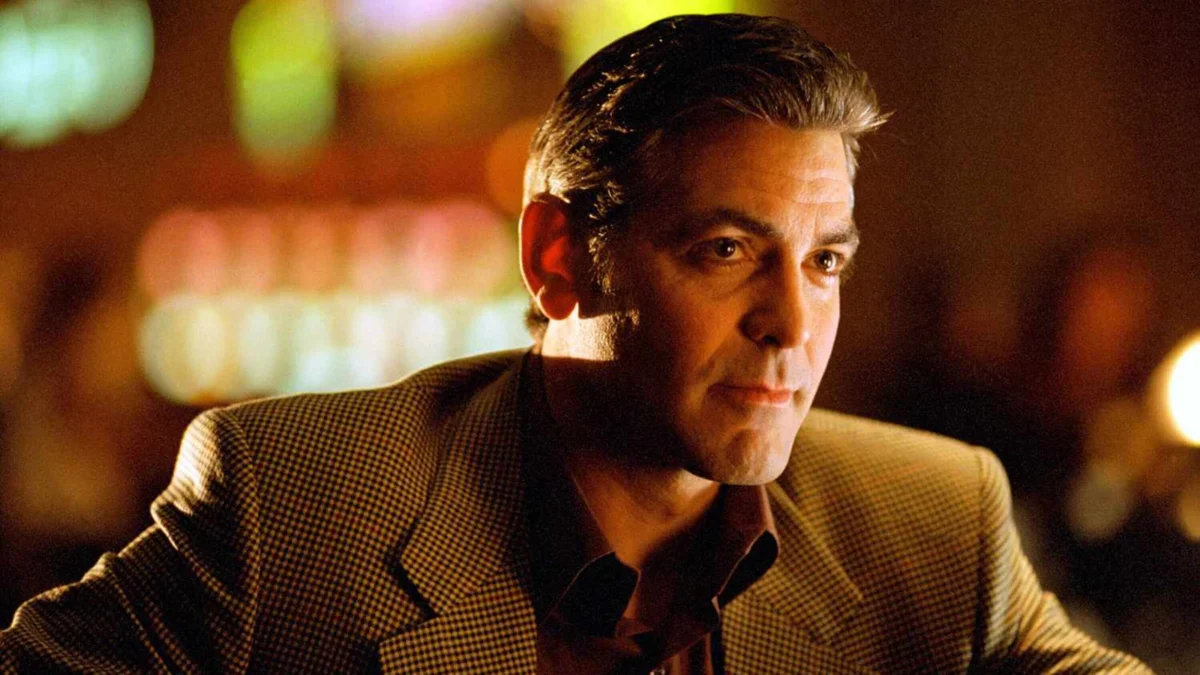
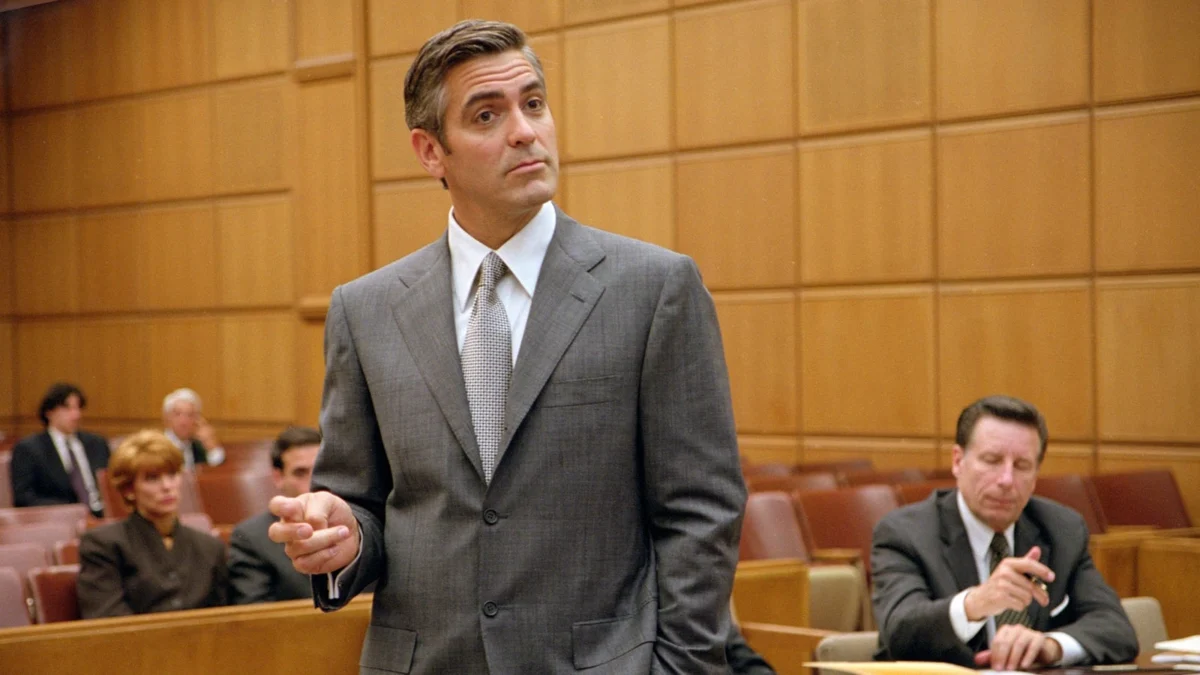
His filmography reads like a syllabus for the modern actor: the existential absurdity of O Brother, Where Art Thou? (2000), the cool, calculated camaraderie of Ocean’s Eleven (2001), and the gritty, moral turbulence of Michael Clayton (2007). Whether he is playing a bumbling convict or a corporate "fixer" grappling with his own soul, Clooney brings an unmistakable, grounded humanity to every frame. This, as film critic Adam Nayman notes, is the secret to his longevity. In an upcoming essay for The Film Comment Letter, Nayman contrasts Clooney with the old-guard icons like Cary Grant. While Grant was the "Man From Dream City"—a figure of ethereal, untouchable fantasy—Clooney is, as Nayman writes, "grounded, earthbound—not a figure of fantasy but a stickler for mischief."
Chronology: The Making of an Icon
The arc of Clooney’s professional life is marked by deliberate pivots and a refusal to remain static.
- 1994–1999: The Breakthrough. As Dr. Doug Ross on E.R., Clooney captured the public imagination. It was during this period that he transitioned from television heartthrob to a viable cinematic lead, culminating in his standout performance in David O. Russell’s Three Kings (1999). It is a role that even the formidable critic Pauline Kael noted for its unexpected depth.
- 2000–2005: The Collaborative Peak. The turn of the millennium saw Clooney become the face of the "prestige blockbuster." Working with the Coen brothers and Steven Soderbergh, he helped redefine the heist genre and the Southern epic. His ability to balance commercial viability with artistic rigor solidified his position in the industry.
- 2006–2015: The Auteur Turn. Clooney’s transition into directing (Good Night, and Good Luck, The Ides of March) proved that his interest in cinema went beyond the camera lens. He became a producer of substance, championing projects that grappled with political corruption and historical injustice, all while maintaining his status as a lead actor in works like The Descendants (2011).
- 2016–Present: The Reflexive Elder Statesman. In his most recent work, including the 2025 release Jay Kelly, Clooney has begun to deconstruct his own image. These performances—twinkling, reflexive, and deeply self-aware—suggest an actor who is not only aware of his legacy but is actively engaging in a dialogue with it.
The Craft: More Than Just a Pretty Face
What separates Clooney from the pantheon of "matinee idols" is his distinct approach to his craft. In a recent conversation with Film Comment Editor Devika Girish, the depth of his process is laid bare. Clooney is not an actor who disappears into a character through prosthetics or radical physical transformation. Rather, he absorbs the character into his own presence.
He possesses what industry insiders call "The Clooney Filter"—a unique ability to take potentially unlikable, ethically ambiguous, or "petty thief" archetypes and make them inherently watchable. He does not hide his screen persona; he uses it as a tool to bridge the gap between the audience and the narrative. Whether he is playing a swindler or a grieving father, there is a consistent, relatable moral gravity at play. He is a craftsman who understands that the "movie star" is a vessel for the audience’s projections, and he manages those projections with a mixture of humility and razor-sharp wit.
Supporting Data: A Statistical Snapshot of Excellence
While awards and box office receipts are rarely the sole measure of artistic merit, they provide a quantitative framework for understanding the scale of Clooney’s impact:
- Academy Recognition: Clooney is one of the few individuals in history to have been nominated for Academy Awards in six different categories: Best Picture, Best Director, Best Actor, Best Supporting Actor, Best Original Screenplay, and Best Adapted Screenplay.
- Global Reach: His films have grossed billions worldwide, but more importantly, they have consistently maintained a "fresh" rating on aggregate review platforms, signaling a high level of critical satisfaction that rarely accompanies such sustained commercial output.
- Collaborative Consistency: A significant portion of his success can be attributed to long-term partnerships—notably with Steven Soderbergh and the Coen brothers—highlighting the importance of creative stability in an industry defined by flux.
Official Responses and Industry Sentiment
The announcement of his selection for the 51st Chaplin Award has been met with universal praise from peers and critics alike. Film at Lincoln Center, in their official statement, highlighted his "vision of the world which he brings to every performance and work."
Industry veterans note that Clooney’s influence extends far beyond the screen. His work behind the scenes, particularly in advocating for fair labor practices and his involvement in humanitarian efforts, has given him a stature that transcends the entertainment industry. He is viewed not just as a star, but as a stabilizing force in Hollywood, a mediator who understands the mechanics of the business as well as he understands the nuances of a script.
Implications: The Future of the "Star"
As we approach the gala, it is worth considering the implications of honoring Clooney at this specific juncture. We are currently living in the "Content Age," where the star-system that produced Clooney—the studio-backed, personality-driven engine of the 20th century—is being replaced by algorithmic curation.
Clooney represents perhaps the final generation of the "Movie Star" in the traditional sense: a figure whose presence alone is enough to define the tone of a film. His ability to navigate the transition from traditional theatrical distribution to the streaming era, while maintaining the "aura" of a cinema icon, is a roadmap for future generations.
He proves that the "star" is not an obsolete concept, but one that must adapt. By embracing the reflexive, the humorous, and the ethically complex, Clooney has managed to keep the spotlight on himself without ever casting a shadow over the art form.
As Film Comment notes in their Winter-Spring 2026 issue, his legacy is not just the roles he has played, but the space he has carved out for the actor-as-intellectual. As he accepts the Chaplin Award, the industry isn’t just celebrating a career of hits; it is celebrating the survival of the individual in an age of mass production. George Clooney remains, as he has always been, a beacon of what is possible when talent meets conviction, and when a star chooses to light the way rather than simply shine.
This article is featured in the Winter-Spring 2026 issue of Film Comment. For more insights on cinema, join The Film Comment Letter today.