
The Provocateur’s Mirror: Inside Gregg Araki’s Audacious New Film ‘I Want Your Sex’
In the landscape of modern independent cinema, few directors possess a voice as distinct—or as intentionally disruptive—as Gregg Araki. With a career defined by the neon-soaked, angst-ridden aesthetics of the "New Queer Cinema" movement, Araki has never shied away from the visceral intersection of desire, power, and identity. His latest feature, I Want Your Sex, continues this tradition, offering a provocative, darkly comic exploration of art, ego, and the shifting dynamics of modern romance.
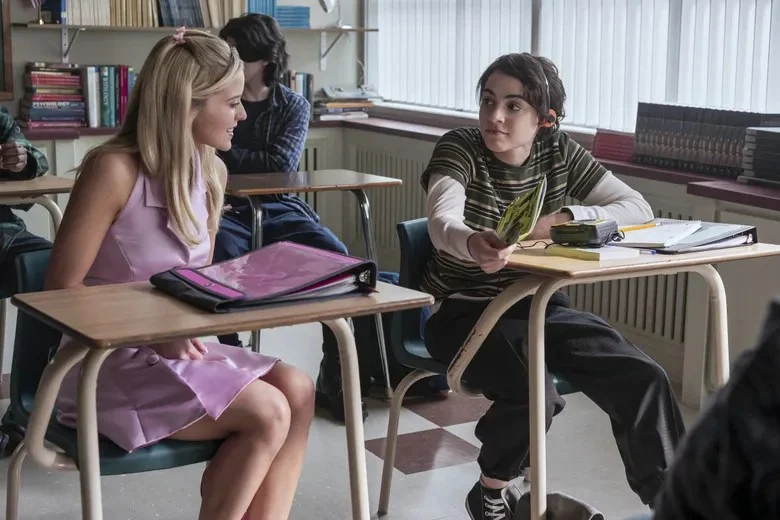
The film stars Olivia Wilde as Erika Tracy, a polarizing artist whose work is as erotically charged as it is unapologetically outrageous. As she embarks on a complex and often hilarious sexual relationship with her younger assistant, Elliot—played with a grounded, bewildered charm by Cooper Hoffman—the film forces audiences to confront a central, uncomfortable question: Is Erika a visionary mentor or a calculating predator? Or, perhaps, is the line between the two entirely subjective?
The Anatomy of a Provocation: Understanding Erika Tracy
At the heart of I Want Your Sex lies the character of Erika Tracy, a woman designed to act as a Rorschach test for the viewer. Every gesture, glance, and biting remark in Wilde’s performance is calibrated for maximum comedic and dramatic impact. However, the film resists the urge to provide a moral verdict. Instead, it invites the audience to project their own experiences—their age, sexual history, and political sensibilities—onto the screen.
Erika is an artist who demands attention, both through her creative output and her personal conduct. Her relationship with Elliot is fraught with professional and personal power imbalances that the film neither condemns nor fully endorses. This ambiguity is precisely what Araki intended.
"I’m not interested in lecturing anybody, but I really want to open that conversation," Araki noted in a recent appearance on the Filmmaker Toolkit podcast. "The movie is a wild and crazy ride—it’s meant to be entertaining and fun and pop. But at the same time, it does have a lot of things on its mind. I hope people will have a good time, but also leave the theater and start to talk about it, argue about it, get into fights about it."
A Chronology of Concept: From #MeToo to Artistic Subversion
The journey of I Want Your Sex from concept to screen reflects a significant evolution in how Araki approaches the power dynamics of his narratives. Interestingly, the script’s genesis looked very different in its earliest drafts. Originally, the protagonist was a man, with a young woman serving as his assistant.

However, the post-#MeToo cultural climate prompted a fundamental rethink of the script’s structure. Araki realized that the traditional "male boss/female sub" trope had become a tired and potentially problematic narrative device.
"I didn’t really want to see a woman getting dragged around by the hair, even in a consensual relationship," Araki explained. "Not to kink-shame anybody, but it’s just an image I did not want to propagate and put out there."
By flipping the gender roles, Araki not only distinguished his work from films like Secretary but also unlocked a fresh vein of narrative energy. He found that the dynamic of a "female Dom" versus a "male sub" offered far more interesting thematic possibilities. This shift allowed the film to explore the fluidity of control, moving away from the predictable trappings of traditional exploitation cinema and toward a more nuanced, albeit chaotic, exploration of human connection.
The Director’s Mouthpiece: Araki’s Personal Stakes
For those familiar with Araki’s filmography, I Want Your Sex feels like a culmination of decades of thematic inquiry. Surprisingly, the director admits that Erika Tracy is perhaps his most direct surrogate. While he concedes she is "a little nuts" and a profound narcissist, he acknowledges that many of the lines Erika delivers—particularly those regarding the modern state of intimacy—are lifted directly from his own interviews and private reflections.
Araki was moved to write the script after observing contemporary discussions surrounding the sexual habits of Gen Z. "Sex has been a really integral part of my journey as a person, and as an artist and filmmaker," he shared. "It’s really what formed me. So when Erika and Elliot are sitting on the couch talking about this, it’s literally what I would say: ‘You guys are all about FOMO, and you don’t care about missing out on the sexual prime of your lives?’"
This frustration with what he perceives as a growing, modern detachment from physical intimacy informs the film’s central conflict. Erika serves as the bridge between an older, perhaps more reckless, generation and the cautious, digital-first sensibility of the present day.

The Casting Gamble: Why Olivia Wilde Was the Only Choice
Casting the role of Erika Tracy required a performer with an extraordinary level of fearlessness. The character is inherently unlikable to some and magnetic to others, and the actress playing her needed to embody that duality without blinking.
"I remember in our first meeting telling her, whoever plays this role, they just can’t give a fuck about it," Araki recalled. "They can’t be worried about how the audience perceives them, or if the character does questionable things. Olivia just totally got it and jumped in the pool and was ready to go for it."
Wilde’s performance, described by Araki as "Madonna meets Robert Mapplethorpe," manages to balance the grandiose narcissism of a high-art provocateur with the genuine vulnerability that keeps Elliot—and by extension, the audience—hooked. Her ability to navigate the comedy of the film’s premise while keeping the stakes grounded is the anchor that holds the narrative together.
Implications: The Death of the "Safe" Movie
As I Want Your Sex prepares for its July 31st release via Magnolia Pictures, it stands as a reminder of the power of confrontational cinema. In an era where audiences are often catered to with sanitized, algorithm-tested content, Araki’s latest effort is an outlier.
The film raises several critical questions about the current state of artistic expression:
- The Ethics of Ambiguity: Does the filmmaker have a responsibility to signal to the audience whether their characters are "good" or "bad"? Or is the modern audience capable of navigating moral gray areas without a safety net?
- Generational Divides: Is the "sexual drought" often attributed to younger generations a real phenomenon, or is it a misunderstanding of how intimacy is being redefined in the digital age?
- The Role of the Provocateur: In a time of heightened digital scrutiny, is it still possible for an artist to be a "provocateur" without being "canceled," or is the act of provoking inherently more dangerous than it was twenty years ago?
Araki seems to lean into the danger. By crafting a film that functions as both a "wild and crazy ride" and a genuine intellectual challenge, he is testing the boundaries of the theatrical experience. He isn’t looking for universal consensus; he is looking for the kind of friction that only happens when people are forced to look at something they might find uncomfortable.

Final Thoughts: A Call for Conversation
Whether I Want Your Sex succeeds as a definitive statement on contemporary romance or is viewed merely as a stylistic exercise, its impact will likely be measured by the discourse it generates. By centering a woman in a role that defies traditional expectations of gender, power, and age, Araki has ensured that his latest project will remain a talking point long after the credits roll.
For those eager to dive deeper into the mind of the director, the upcoming episode of the Filmmaker Toolkit podcast offers an extensive look at the production, the writing process, and the specific choices that made I Want Your Sex one of the most anticipated independent films of the summer.
As the film makes its way into theaters nationwide on July 31, the question remains: Are we ready to engage with art that asks us to reflect on our own flaws, or would we prefer to keep the screen as a mirror that only reflects what we want to see? Gregg Araki, for one, hopes you’ll choose the former—even if it leads to an argument.