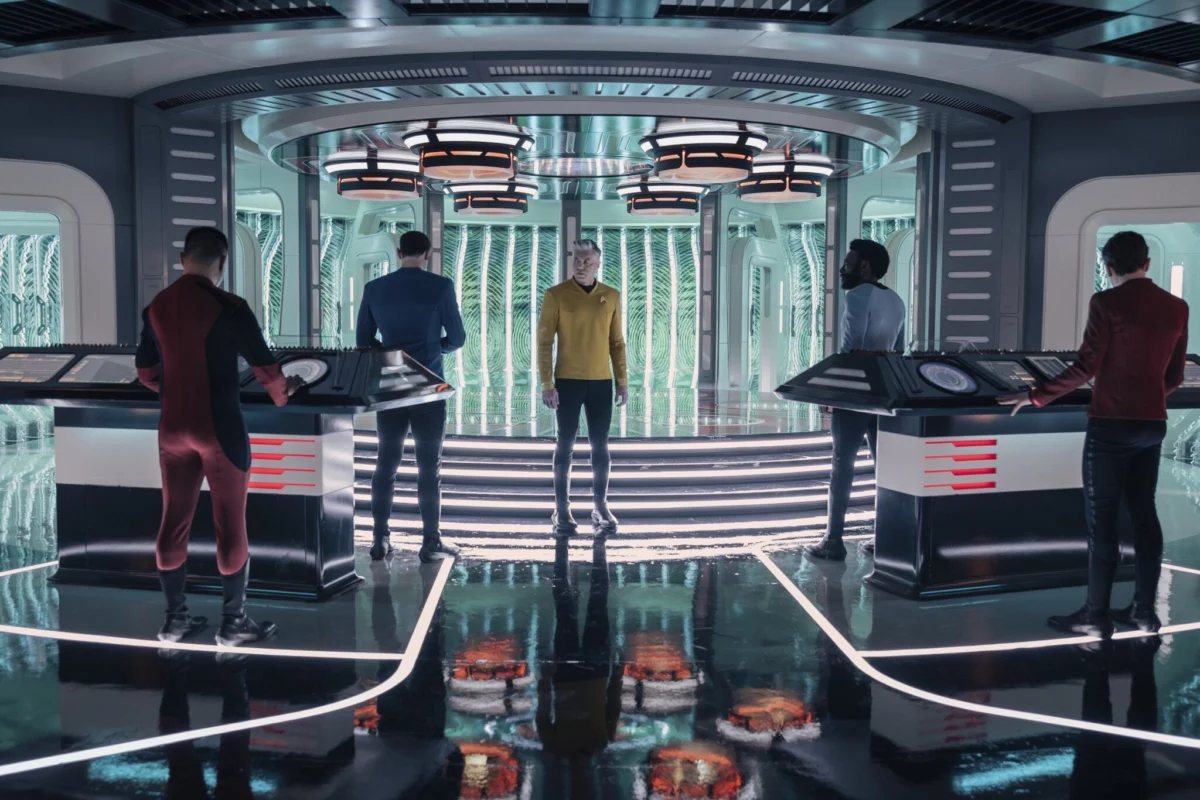
The Return of the Enterprise: Analyzing the Resurgent Fourth Season of Star Trek: Strange New Worlds
The U.S.S. Enterprise is back, both in the literal sense of our screens and the metaphorical sense of its creative identity. After a third season that often struggled to balance its high-concept aspirations with its prequel limitations, the premiere of the fourth season, "Valles Marineris," signals a confident, revitalized return to form. By shedding the baggage of excessive fan-theory "easter eggs" and refocusing on the core tenets of the franchise—exploration, diplomacy, and the moral weight of command—the series has delivered an episode that feels both refreshingly classic and uniquely modern.
The Narrative Arc: A Return to Deep-Space Exploration
The premiere episode, "Valles Marineris," centers on the Enterprise as it investigates a rare, unexplained interstellar squall. While the episode begins with a minor, cheeky nod to Doctor Who—suggesting that the enigmatic Pelia has previously traveled in a "phone box"—it quickly pivots to a grounded, procedural exploration of a space phenomenon.
The mission takes a turn for the perilous when the crew discovers a distress buoy, only to be trapped by the expanding field of the squall. The ship is rendered powerless, drifting in an unknown system containing three M-class planets. With the warp drive failing and uridium required for ignition, Captain Christopher Pike (Anson Mount) authorizes a landing party—consisting of Una Chin-Riley, Erica Ortegas, and La’an Noonien-Singh—to scavenge resources from one of the local planets.
What follows is a high-stakes, dual-fronted narrative. On the Enterprise, Pike finds his command challenged by Battle Commander Cassell (played with immense gravitas by Saffron Burrows), who intercepts the disabled ship and claims it as "salvage." Simultaneously, the landing party finds themselves navigating a prehistoric landscape, only to realize that the creatures blocking their path are, in fact, dinosaurs.

Chronology and The Temporal Twist
The narrative tension escalates when Spock calculates the ship’s location not just in space, but in time. The Enterprise has drifted 65 million years into the past of the Sol system. The planet from which Cassell hails is a nascent Mars, and the landing party is walking upon the surface of primordial Earth.
This realization forces the crew into an impossible ethical corner. Pike and his team are forced to contend with the "Butterfly Effect" in a way that recalls Ray Bradbury’s classic A Sound of Thunder. The landing party must secure the uridium without disrupting the timeline, leading to a series of tense, creative sequences—such as Number One utilizing a phaser on stun to neutralize a threat without resorting to lethal force.
The climax of the episode is truly devastating. Pike discovers that the Martian civilization is locked in a genocidal war with the Dol’Drm, an insectoid species from a neighboring planet. When Cassell learns that the Enterprise is from the future, and that the Mars she fights for will one day be a dead, terraformed rock—scarred by the very weapon that created Valles Marineris—her alliance with Pike fractures. She steals the ship’s antimatter containment unit, intending to destroy the Dol’Drm homeworld.
Supporting Data: The Ethics of Inaction
One of the most compelling aspects of "Valles Marineris" is its refusal to provide a "clean" resolution. The episode forces Pike to confront the inevitability of the timeline. Upon discovering that a fifth planet existed in the system—one that would eventually become the asteroid belt—Pike makes the agonizing decision to stand down.
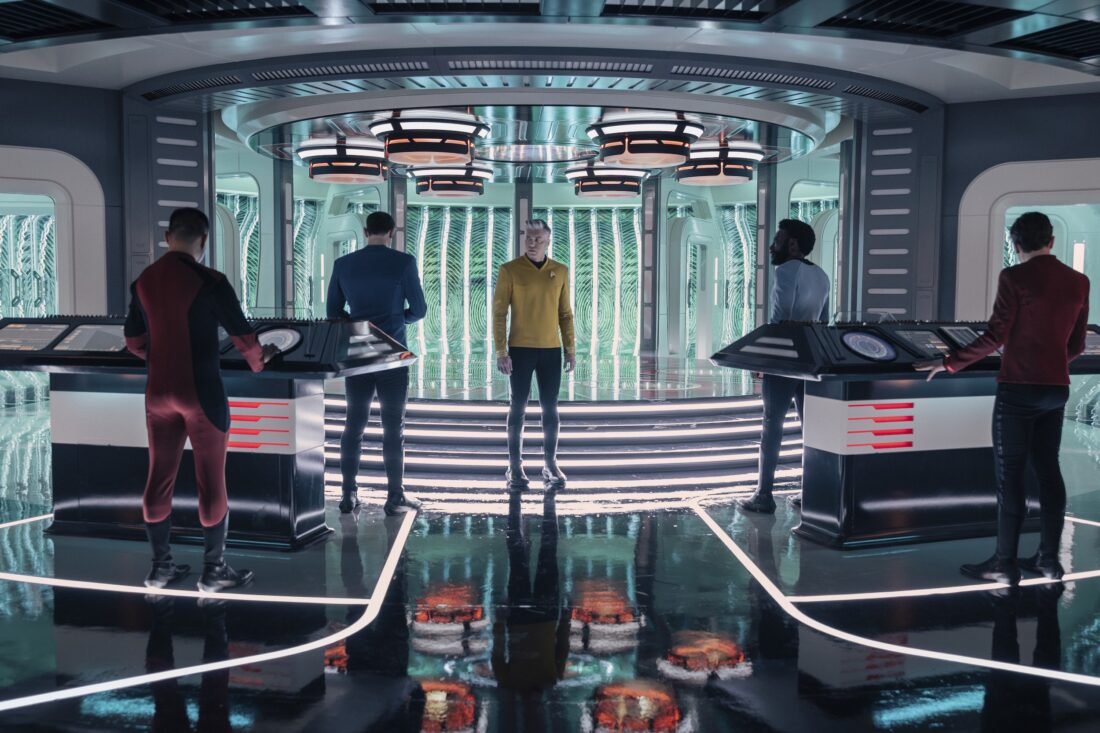
By refusing to intervene, Pike allows history to take its course. The audience witnesses the destruction of an entire civilization, a choice that carries a weight seldom seen in contemporary science fiction. The resulting energy release from the planetary destruction provides the Enterprise with the power necessary to return to the 23rd century, effectively creating the very anomaly they were sent to study. The episode confirms that the debris from this conflict was responsible for the extinction-level event on Earth, effectively tying the show’s internal logic to the known history of our own planet.
Implications for the Series
The success of "Valles Marineris" provides a roadmap for the remainder of the season. By moving away from the "goofing around" with fan service that characterized previous installments, the writers have proven that Strange New Worlds works best when it trusts its own internal universe.
The Evolution of Character
The character work in this episode is exemplary. We see a younger, more conservative Montgomery Scott, whose caution regarding the Enterprise’s engines adds a layer of depth to the character’s well-known expertise. Furthermore, the dynamic between Pike and the guest characters highlights the core Trek ethos: communication over conflict. Even though the mission ultimately ends in tragedy, the effort made to understand the "other" remains the show’s moral north star.
Continuity and World-Building
The script—penned by executive producers Akiva Goldsman and Henry Alonso Myers—is dense with lore that respects the past while building the future. The revelation regarding the Vulcanoid nature of the Martians provides a clever, albeit subtle, nod to early Star Trek concepts where Spock was originally intended to be from Mars. By suggesting that Martian DNA is the progenitor of many Alpha Quadrant species, the show successfully bridges the gap between the various incarnations of the franchise.

Professional Reception and Critique
Critics have noted that while the "Space Cowboy" opening, featuring Pike on horseback, may border on the cliché of the "Captain’s promotion refusal," these moments are outweighed by the sheer quality of the storytelling. The decision to promote Number One to full commander serves as a welcome recognition of the character’s growth, providing a necessary counterbalance to the darker themes of the episode.
Conclusion: The Path Forward
"Valles Marineris" is more than just a strong premiere; it is a declaration of intent. It confirms that the production team understands the heart of Star Trek. By weaving together pulp-adventure tropes with hard-hitting ethical dilemmas, the writers have managed to recapture the sense of wonder that made the original series a cultural touchstone.
The episode does not soft-pedal the trauma of command. Pike’s decision to watch a world die to preserve the timeline is the kind of narrative boldness that the franchise has occasionally shied away from in recent years. It is a reminder that the Enterprise is not merely a vessel for adventure, but a platform for exploring the difficult, often impossible choices that define leadership.
As the Enterprise continues its mission, the audience can rest assured that the creative team has found its footing. If this premiere is any indication, the fourth season of Strange New Worlds is poised to be a landmark entry in the Star Trek canon. It balances the required spectacle of modern television with the intellectual rigor of a classic moral play, setting a high bar for the episodes to come. The "Strange New Worlds" are, once again, exactly where they should be: waiting to be discovered with courage, caution, and a deep respect for the unknown.