From Phantom Menace to Shadow Lord: The Unrelenting Evolution of Darth Maul
In the vast, interconnected tapestry of the Star Wars galaxy, few characters have undergone a transformation as radical or as compelling as Darth Maul. Initially introduced as the silent, terrifying harbinger of doom in 1999’s Star Wars Episode I: The Phantom Menace, Maul was destined for a quick, brutal end at the hands of Obi-Wan Kenobi. Yet, defying the finality of the blade and the expectations of the audience, the former Sith apprentice has clawed his way back from the brink of death—and obscurity—to become one of the franchise’s most complex anti-heroes.
Now, Lucasfilm is set to elevate this enigmatic figure once more with the announcement of Star Wars: Maul — Shadow Lord. Following in the footsteps of Boba Fett, Maul is becoming the rare Star Wars villain to anchor his own dedicated television series. This new animated project promises to bridge the gap between his reign as a crime lord in The Clone Wars and his eventual, tragic descent into the madness witnessed in Star Wars Rebels.
A Legacy Written in Blood and Cybernetics
To understand the significance of Shadow Lord, one must first appreciate the journey Maul has taken. After being cut in half during the climax of The Phantom Menace, Maul’s survival—fueled by sheer hatred and the dark side of the Force—became one of the most celebrated "retcons" in fan history. Resurrected with cybernetic legs and a thirst for vengeance, Maul evolved from a simple instrument of the Sith into a tactical mastermind.
His arc has been a masterclass in serialized storytelling. In The Clone Wars, he established the Shadow Collective, a criminal empire that challenged the status quo of the galaxy. He gained a devoted, if tragic, apprentice in his brother, Savage Opress, and navigated the treacherous waters of galactic politics. Following the events of The Clone Wars, he emerged in a brief but iconic live-action cameo in Solo: A Star Wars Story, before meeting his poignant, definitive end in the desert sands of Tatooine in Star Wars Rebels.

Shadow Lord acts as the connective tissue, exploring the fallout of the Siege of Mandalore. Having lost his seat of power, his allies, and his sense of belonging, the series finds a broken, desperate, and uniquely vulnerable Maul.
Chronology: Where Does ‘Shadow Lord’ Fit?
The narrative positioning of Maul — Shadow Lord is critical to its thematic weight. Set in the immediate aftermath of the Siege of Mandalore, the show places Maul in a precarious position during the transition from the Republic to the burgeoning Galactic Empire.
- The Power Vacuum: The series begins with Maul having lost his influence. He is a man—and a monster—without a home, cast aside by both his former master, Darth Sidious, and the crime syndicates he once ruled with an iron fist.
- The Pursuit of Revenge: Maul’s primary motivation remains his vendetta against Sidious, who discarded him in favor of Anakin Skywalker. However, the show introduces a new layer to his psyche: the desire for a legacy.
- The Padawan Dilemma: Perhaps the most intriguing plot point is Maul’s interest in recruiting a new apprentice: a Jedi Padawan named Devon. This dynamic serves as the emotional core of the series, questioning whether Maul seeks a weapon or a successor to fill the void left by his fallen brother.
The Craft of Darkness: Visual and Auditory Innovation
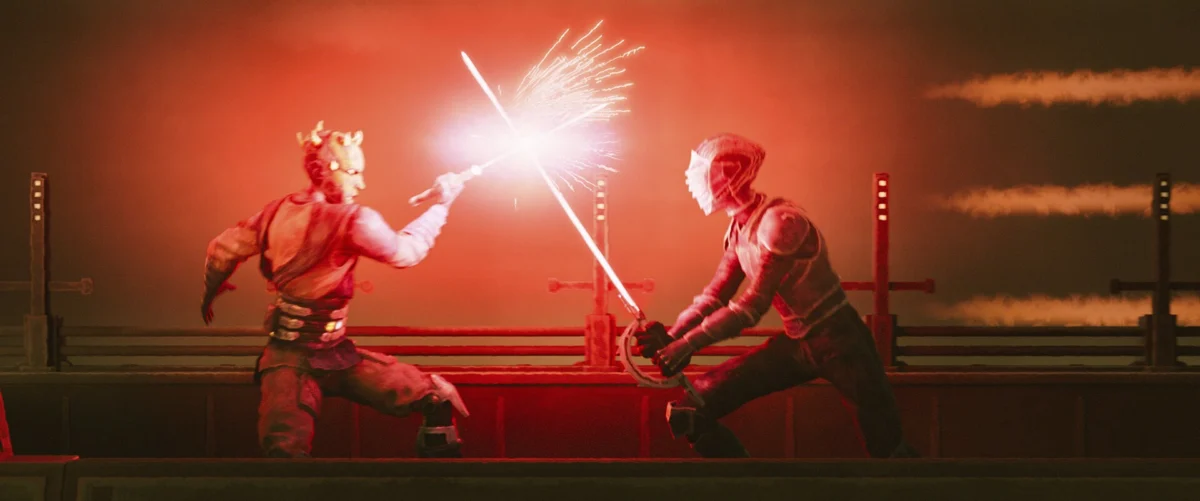
Star Wars: Maul — Shadow Lord is distinguished by a departure from the traditional aesthetic of previous animated entries. Executive producer Athena Yvette Portillo and showrunner Matt Michnovetz have pushed for a "painterly" and visceral visual language that emphasizes the grit of a galaxy in transition.
A New Visual Grammar
Director of photography Joel Aron has implemented a hybrid approach to the animation, blending traditional techniques with practical sensibilities. The show utilizes oil-on-canvas matte paintings and brush-stroke textures on glass panes, resulting in a look that feels handcrafted and tactile. By integrating live-action, practical models for spacecraft, the team has managed to lend a grounded, weight-heavy realism to the series that stands in stark contrast to the sterile, digital-heavy look of many modern animated projects.

The Auditory Experience
The sound design, led by David W. Collins, is equally ambitious. To capture the raw, unbridled agony and fury of the character, the production team went to extreme lengths. In an unprecedented move, Collins incorporated actual vocal recordings and screams from actor Sam Witwer—who has voiced Maul since 2010—directly into the sound effects of the lightsaber blades themselves. When Maul swings his weapon, the sound isn’t just a hum; it is a manifestation of his psychological torment.
Official Perspectives: Shaping the Shadow
For Sam Witwer, returning to the role of Maul is not merely a job; it is an ongoing exploration of a man who has lost everything. "It’s been a real surprise that the character continues to evolve and to grow," Witwer noted in an interview with IndieWire. "The fun of it is reinventing him every time that we bring him out and learning new things about him."
According to Witwer, this series provides the "full vision" of Maul’s arc. For the first time, the actor feels he has a complete understanding of why Maul makes the choices he makes, framing him not just as a villain, but as a mirror to characters like Ahsoka Tano. Like Ahsoka, Maul was a child removed from his family and indoctrinated into a rigid, often uncaring order. The difference, as Witwer observes, is that while Ahsoka managed to forge her own path, Maul remains trapped in a cycle of trauma and repetition.
Supervising director Brad Rau echoes this sentiment, highlighting the charisma and manipulation that make Maul such a dangerous entity. "He’s a survivor… a devil on the shoulder of our characters," Rau explains. "He’s a relatable character due to the losses he’s suffered and the mistakes he keeps repeating."

Implications: A Different Kind of Empire
The series also aims to redefine the role of the Empire in Star Wars media. Following the intimate, boots-on-the-ground oppression depicted in Andor, the creative team behind Shadow Lord wanted a different approach.
"We wanted to make it a menacing, strong, external force that would come in at the right time to push the story forward," said Matt Michnovetz. In this series, the Empire is a looming, omnipresent threat that characters fear but often misunderstand. While some citizens buy into the Imperial propaganda of "order and safety," others live in the shadow of its impending reach. This creates a high-stakes environment where Maul must navigate not only his personal vendettas but the shifting political landscape of a galaxy under the boot of a new regime.
The show further challenges the traditional Star Wars binary of good versus evil. With a detective character who prioritizes the letter of the law over morality, and a Jedi Padawan struggling to define justice in a lawless time, Shadow Lord posits a world where survival is the only true currency.
Conclusion: The Endurance of the Shadow
Maul — Shadow Lord represents a significant evolution in the Star Wars franchise. By committing to a fully serialized format and moving away from the "mission-of-the-week" structure, the show invites viewers to sit with the uncomfortable truths of a character who has been defined by his failures.

As the series prepares to debut, it stands as a testament to the longevity of the character. Maul started as a visual gimmick—a devil-like figure with a double-bladed lightsaber—but through the dedication of writers, animators, and actors like Sam Witwer, he has become the tragic heart of the Star Wars lore. He is the reminder that in a galaxy of heroes and villains, the most interesting stories are often found in the grey, in the spaces between the light and the dark, where a broken man tries to find his place in a universe that has long since moved on from him.
Whether he finds redemption or further ruin, one thing is certain: Darth Maul’s shadow will continue to loom over the galaxy, proving that even after being sliced in half, the most dangerous foes are those who refuse to stay down.