Japan Weighs Strategic Shift: The Debate Over Acquiring Nuclear-Powered Submarines
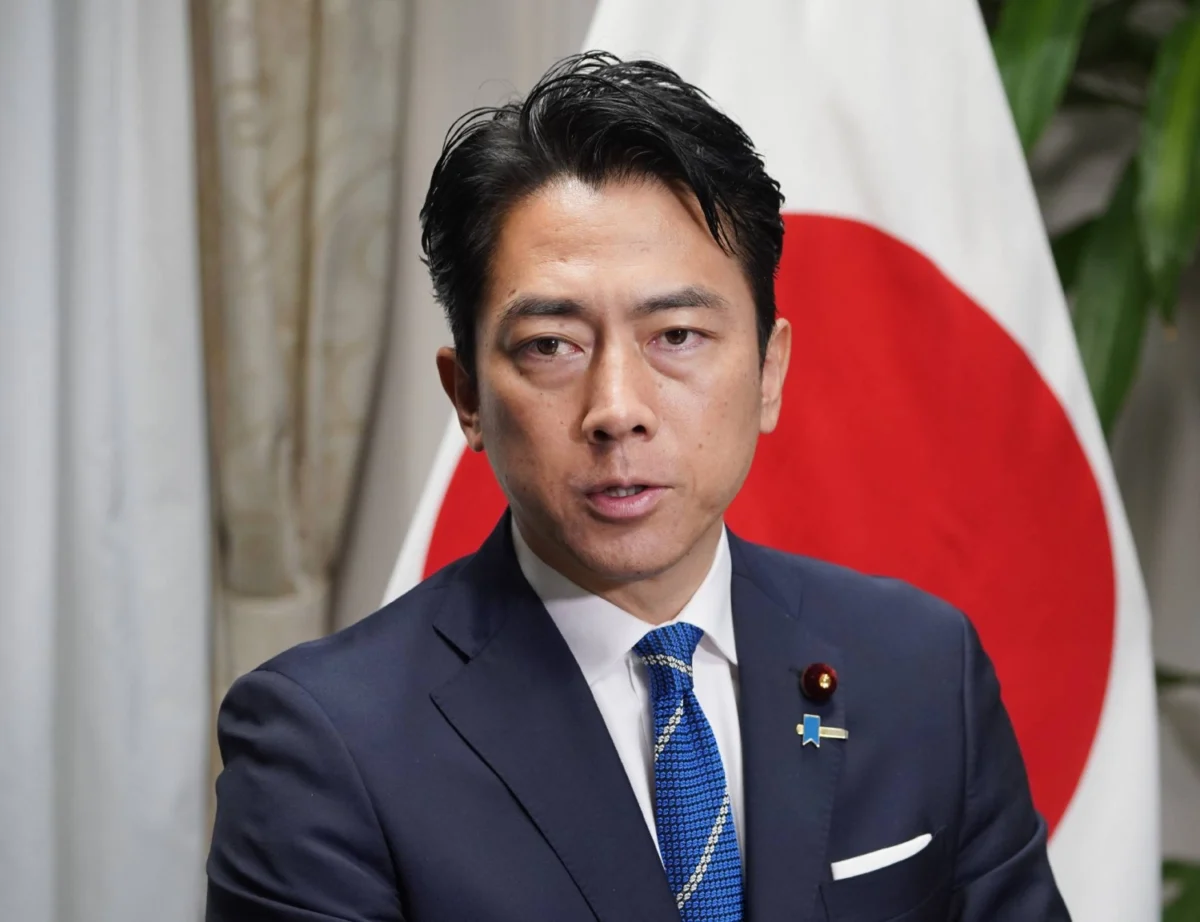
TOKYO — In a move that signals a potential paradigm shift in Japan’s maritime defense posture, Defense Minister Shinjiro Koizumi has reiterated that the government is keeping the acquisition of nuclear-powered submarines firmly on the table. As Tokyo prepares to finalize revisions to its three key national security documents by the end of the year, the prospect of transitioning from a purely diesel-electric submarine fleet to one augmented by nuclear propulsion has moved from a theoretical discourse to a centerpiece of high-level policy debate.
The debate, which has simmered in the halls of the Diet for years, has gained renewed urgency following reports of U.S. Navy support and a rapid expansion of Chinese naval capabilities in the Pacific.
The Defense Minister’s Stance: A Calculated "Not Ruling Out"
Speaking at a regular news conference on Friday, Defense Minister Koizumi addressed the growing speculation surrounding Japan’s undersea future. "Regarding nuclear-powered submarines, we will proceed with our consideration of not ruling them out as an option," Koizumi stated, maintaining a stance of strategic ambiguity that has become the hallmark of his tenure regarding this sensitive topic.
Koizumi’s comments followed reports that an unidentified U.S. Navy official, speaking to media outlets in Japan and South Korea earlier this week, offered a positive assessment of Japan potentially acquiring such vessels. The U.S. official highlighted Japan’s existing expertise in nuclear energy technology—an industrial foundation that proponents argue would make the integration of nuclear propulsion into the Maritime Self-Defense Force (MSDF) feasible.
When pressed on how these vessels would integrate into Japan’s broader security strategy, Koizumi offered a balanced, albeit cautious, assessment. He acknowledged the distinct advantages of nuclear propulsion: significantly higher sustained speeds compared to conventional vessels and, crucially, the ability to conduct extended, near-limitless patrols without the need to surface for air to recharge batteries. However, he was equally quick to highlight the hurdles: nuclear submarines are famously noisier than the latest generation of Japanese diesel-electric boats, possess exorbitant lifecycle costs, and require a specialized infrastructure for maintenance, repair, and operation that Japan currently lacks.
Chronology of a Policy Shift
The discussion surrounding nuclear submarines is not new, but its political traction has accelerated significantly over the past 24 months.
- September 2024: An influential government-appointed expert panel recommended that Japan develop "next-generation" power sources and vertical launching systems for long-range missiles. While avoiding the specific term "nuclear," the recommendation provided the necessary technical roadmap for a shift toward more capable, endurance-focused naval platforms.
- June 2026: The Japan Innovation Party (JIP) injected political intensity into the debate by formally submitting a proposal to the government calling for the "swift introduction" of nuclear-powered submarines. The JIP cited China’s relentless naval expansion into the Pacific as the primary driver for this urgency.
- October 2026: The ruling Liberal Democratic Party (LDP)-JIP coalition agreement codified the push for enhanced defense capabilities, marking the first time the coalition aligned formally on the trajectory of advanced undersea warfare technologies.
- November 2026: Defense Minister Koizumi further fueled the speculation by referencing South Korea’s ongoing discussions with the U.S. regarding nuclear-powered vessels. Koizumi noted pointedly that "all the surrounding countries have nuclear submarines," underscoring the regional imbalance Japan faces.
Supporting Data: The Case for and Against
Japan currently operates a fleet of 23 diesel-electric attack submarines (SSKs), including the highly advanced Taigei-class. These vessels are widely considered among the best in the world for littoral and coastal defense, thanks to their quiet operation and lithium-ion battery technology. However, their reliance on periodic snorkeling to recharge batteries limits their operational reach in the vast reaches of the Indo-Pacific.
The Strategic Imperative
Proponents argue that the geographic reality of the "First Island Chain" necessitates a force capable of long-endurance patrols. As China’s People’s Liberation Army Navy (PLAN) shifts toward an all-nuclear-powered submarine fleet—a transformation noted by U.S. intelligence officials as a "monumental shift"—the technological gap is widening. A nuclear submarine can remain submerged for months, moving at high speeds to intercept threats or transit rapidly to contested waters. For Japan, which must monitor the East and South China Seas, the ability to maintain a permanent presence without the vulnerability of surfacing is an increasingly attractive prospect.
The Technical and Financial Hurdles
Conversely, the "silent" advantage of Japan’s current diesel-electric fleet is a tactical asset that is difficult to replicate with nuclear propulsion. Nuclear reactors require coolant pumps and other mechanical systems that generate acoustic signatures, making them generally noisier than a diesel-electric boat running on battery power.
Furthermore, the "Nuclear Barrier" remains a daunting challenge. Japan’s national policy, rooted in its post-war history, maintains a strict "Three Non-Nuclear Principles" (not possessing, not producing, and not allowing the entry of nuclear weapons). While nuclear propulsion is distinct from nuclear warheads, the acquisition of such vessels would require a massive overhaul of Japan’s nuclear regulatory framework, specialized training for the MSDF, and the development of nuclear-capable shipyards.
Official Responses and Political Implications
The Japanese public remains deeply sensitive to nuclear-related issues. The government is acutely aware that any move toward nuclear-powered vessels will be framed by opposition parties and pacifist groups as a potential violation of the spirit of the Three Non-Nuclear Principles.
However, the political landscape is shifting. The LDP-JIP coalition, emboldened by the changing security environment, views the potential for nuclear submarines as a necessary evolution of Japan’s status as a regional security pillar. By keeping the option "not ruled out," the government is essentially conducting a slow-burn socialization of the idea, preparing the public for a potential procurement announcement in the upcoming defense document revisions.
International reactions have been equally measured. The United States, which has recently shared nuclear submarine technology with Australia under the AUKUS pact, may find itself in a complex position. While the U.S. values a stronger Japan, sharing nuclear-propulsion technology involves stringent non-proliferation standards and legal hurdles that would require significant legislative maneuvering in Washington.
Implications: A New Era of Deterrence
The implications of Japan moving forward with a nuclear-powered submarine fleet would be profound. It would signal a move away from a purely defensive, coastal-focused maritime strategy toward a "blue-water" power projection capability.
If Japan does eventually procure nuclear-powered submarines, it would effectively rewrite the rules of engagement in the Pacific. It would provide the MSDF with the ability to shadow Chinese fleets across the Philippine Sea, deter incursions into the Senkaku Islands with greater persistence, and integrate more seamlessly into U.S.-led naval task forces.
However, the path forward is fraught with risk. The financial cost of developing, commissioning, and maintaining such a fleet would place an immense strain on the defense budget, potentially diverting funds from other critical areas like space, cyber, and drone warfare. Moreover, the decision would likely spark a new cycle of regional tension, with Beijing almost certainly characterizing the move as a provocative escalation.
As Tokyo approaches the end-of-year deadline for its security document revisions, the focus will remain on whether Minister Koizumi’s "not ruling out" stance matures into a formal procurement policy. For now, Japan stands at a crossroads, balancing its deep-seated post-war caution against the cold, hard reality of an increasingly contested maritime future. The decision will not merely be a matter of naval hardware; it will be a defining statement on Japan’s willingness to shoulder the burdens of a leading regional power in an era of great power competition.