Unpacking the Myth: Film Comment Podcast Analyzes Christopher Nolan’s Divisive Adaptation of The Odyssey
Main Facts
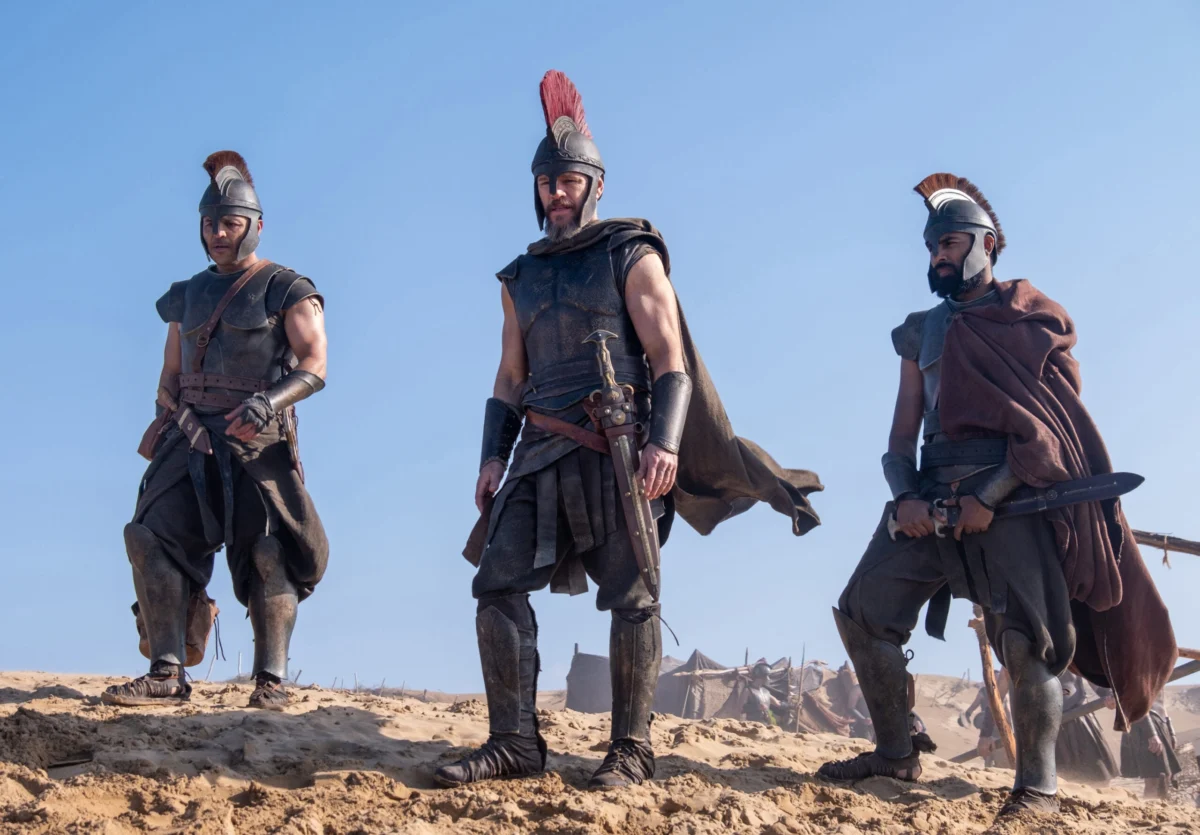
Christopher Nolan’s The Odyssey has dominated global box offices and cultural conversations since its theatrical release, positioning itself as the defining cinematic event of 2026. Featuring a staggering, star-studded ensemble cast that includes Matt Damon, Anne Hathaway, Tom Holland, Robert Pattinson, and Zendaya, the blockbuster brings the foundational Western epic of ancient Greece into the contemporary IMAX era. However, the film has sparked intense critical debate regarding its stylistic choices, tonal shifts, and thematic departures from Homer’s original text.
In response to the widespread discourse, Film Comment Editor Clinton Krute recently hosted a dedicated podcast episode featuring FC Contributing Editors Genevieve Yue and Inney Prakash. The panel deep-dived into the cinematic anatomy of Nolan’s blockbuster, focusing heavily on Yue’s recent review, titled "There Is No Ithaca." In her critique, Yue characterized the adaptation as a "strangely bloodless" journey, noting that the director’s signature dourness entirely supplants the vibrant, adventurous, and occasionally comedic interplay between mortals and immortals found in the ancient epic.
The podcast conversation moves beyond a binary review, evaluating how Nolan’s transposition of Homer functions within his broader directorial oeuvre, how it compares to previous cinematic interpretations of the legendary myth, and what the film’s massive cultural footprint reveals about contemporary Hollywood’s appetite for classical source material.
Chronology
To understand the trajectory of Christopher Nolan’s The Odyssey and its critical reception, it is necessary to examine the timeline of its development, release, and subsequent academic dissection:
- Pre-Production and Casting Announcements (2024–2025): Rumors swirl regarding Christopher Nolan’s follow-up to his Academy Award-winning Oppenheimer. Warner Bros. and Syncopy officially announce the adaptation of Homer’s The Odyssey, accompanied by rolling cast announcements that reveal an unprecedented ensemble of Hollywood A-listers, including Matt Damon as Odysseus and Anne Hathaway as Penelope.
- The Theatrical Premiere (Early Summer 2026): The Odyssey opens globally in IMAX and standard formats to massive commercial success, instantly driving millions of moviegoers to theaters and setting high-water marks for epic historical cinema in the post-pandemic box office era.
- Publication of Critical Reviews (Mid-Summer 2026): Film critics publish deeply polarized reviews. While technical wizardry, practical effects, and Hoyte van Hoytema’s cinematography are universally praised, critics clash over the severe tonal austerity of the picture. Genevieve Yue publishes her review, "There Is No Ithaca," in Film Comment, introducing the critique that the film strips Homer of all lightness and humor.
- The Film Comment Podcast Recording (Late Summer 2026): Editor Clinton Krute convenes with contributing editors Genevieve Yue and Inney Prakash to record a comprehensive roundtable discussion. Released as part of the Summer 2026 issue cycle, the podcast dissects the cultural and aesthetic impact of Nolan’s adaptation.
Supporting Data
The commercial and critical parameters surrounding Christopher Nolan’s The Odyssey highlight the magnitude of the project within the modern media landscape:
- Cast Scale: The film employs over a dozen globally recognized headliners, bridging multiple generations of cinematic talent, including Matt Damon, Anne Hathaway, Tom Holland, Robert Pattinson, and Zendaya.
- Box Office Footprint: Opening weekend metrics placed The Odyssey among the highest-grossing epics of the decade, reflecting Christopher Nolan’s enduring status as a primary theatrical draw capable of turning classical literature into an essential cinematic event.
- Critical Divide: Early aggregator metrics reveal a distinct schism between technical praise (averaging near-universal acclaim for cinematography, sound design, and scale) and thematic reception, where cultural critics debate the appropriateness of applying a minimalist, existentialist lens to a narrative historically celebrated for its swashbuckling adventure elements.
- Publication Context: The associated podcast and critical essays form a cornerstone of the Summer 2026 print and digital issues of Film Comment, a publication with decades of history analyzing auteur-driven cinema.
Official Responses and Critical Analysis
The dialogue between Clinton Krute, Genevieve Yue, and Inney Prakash on the Film Comment podcast provides a nuanced look at the reception of the text. Yue elaborated on her written piece, pointing to specific emotional and structural choices made by Nolan that alienate audiences accustomed to the traditional rhythms of heroic myths.
"The film is shrouded in Nolan’s characteristic dourness, so that Homer’s lively world of men and gods is purged of lightness and humor," Yue noted during the podcast. She highlighted the grim atmosphere surrounding Odysseus’s long-awaited return to his homeland: "Odysseus’s homecoming brings relief, but not joy. A lot of people cry, but no one laughs except the suitors, whose sport is to insult beggars. Even the Sirens’ song, famed for its irresistibility, causes Odysseus to wail in grief."
Inney Prakash expanded on this assessment by contextualizing the film within Nolan’s wider filmography. Where previous Nolan protagonists—such as the architects of Inception, the pilots of Dunkirk, or the physicists of Oppenheimer—grapple with linear time, moral compromises, and existential dread, Odysseus is forced into an episodic, mythic framework. Prakash and Yue discussed how Nolan struggles—or deliberately refuses—to reconcile the episodic nature of the ancient Greek epic with his preferred architectural style of tightly wound, puzzle-box narrative plotting.
Furthermore, the podcast explored how earlier cinematic iterations of The Odyssey—ranging from Italian peplum films of the mid-20th century to television miniseries—handled the inherent theatricality of mythological monsters, divine intervention, and supernatural temptation. By comparison, Nolan’s approach leans heavily into a gritty, earthbound realism, even when depicting fantastical elements like Circe’s island, the Cyclops, or the descent into the Underworld.
Implications
The release of Christopher Nolan’s The Odyssey and the subsequent critical unpacking by platforms like Film Comment carry broad implications for the future of blockbuster filmmaking, the adaptation of classic literature, and the ongoing evolution of the Hollywood auteur system.
1. The Death of Camp and the Rise of Austerity in Mythological Cinema
For decades, Hollywood adaptations of Greek and Roman mythology—from Jason and the Argonauts (1963) to Clash of the Titans (1981 and its 2010 remake)—embraced a sense of theatrical spectacle, high adventure, and campy melodrama. Nolan’s The Odyssey signals a definitive shift toward treating classical myth with the same somber, prestige-drama gravity historically reserved for historical biographies or prestige war films. This raises a crucial question for the industry: Can contemporary audiences connect with ancient myths only when they are stripped of their inherent playfulness and transformed into exercises in existential suffering?
2. Auteur Dominance Over Source Material
Nolan’s ability to command a massive budget to adapt a 3,000-year-old epic poem with his distinct authorial fingerprints—non-linear temporal hints, muted color palettes, brooding protagonists, and thunderous soundscapes—demonstrates the ultimate triumph of the modern auteur blockbusters. However, as Yue and Prakash point out on the podcast, this triumph comes with creative friction. When a director’s stylistic brand is so rigid that it purges the source material of its humor, levity, and emotional variety, it challenges audiences to consider where the boundary lies between faithful adaptation and personal cinematic vanity.
3. The Role of Critical Discourse in the Streaming and Social Media Era
The rapid cycle of hype, release, and instant social media reaction often flattens complex works of art into binary categories of "masterpiece" or "disaster." In-depth critical spaces like the Film Comment podcast serve as vital counterweights. By gathering critics to parse the stylistic contradictions of a film like The Odyssey, cultural journalism provides a framework for audiences to appreciate a film’s technical achievements while critically interrogating its ideological and emotional shortcomings. As The Odyssey continues its theatrical run and heads toward home media and awards seasons, the debate over its "bloodless" nature will likely define its legacy in film history.