The Tide Turns: Is Disney’s Live-Action Strategy Hitting a Breaking Point?
In the original 2016 animated musical Moana, the titular Polynesian heroine famously sings about the irresistible gravitational pull she feels to return to the water. In 2026, Disney—the studio behind the ambitious, high-budget live-action reimagining of that very film—is likely wishing it had ignored the impulse to dive back into the sea so soon.
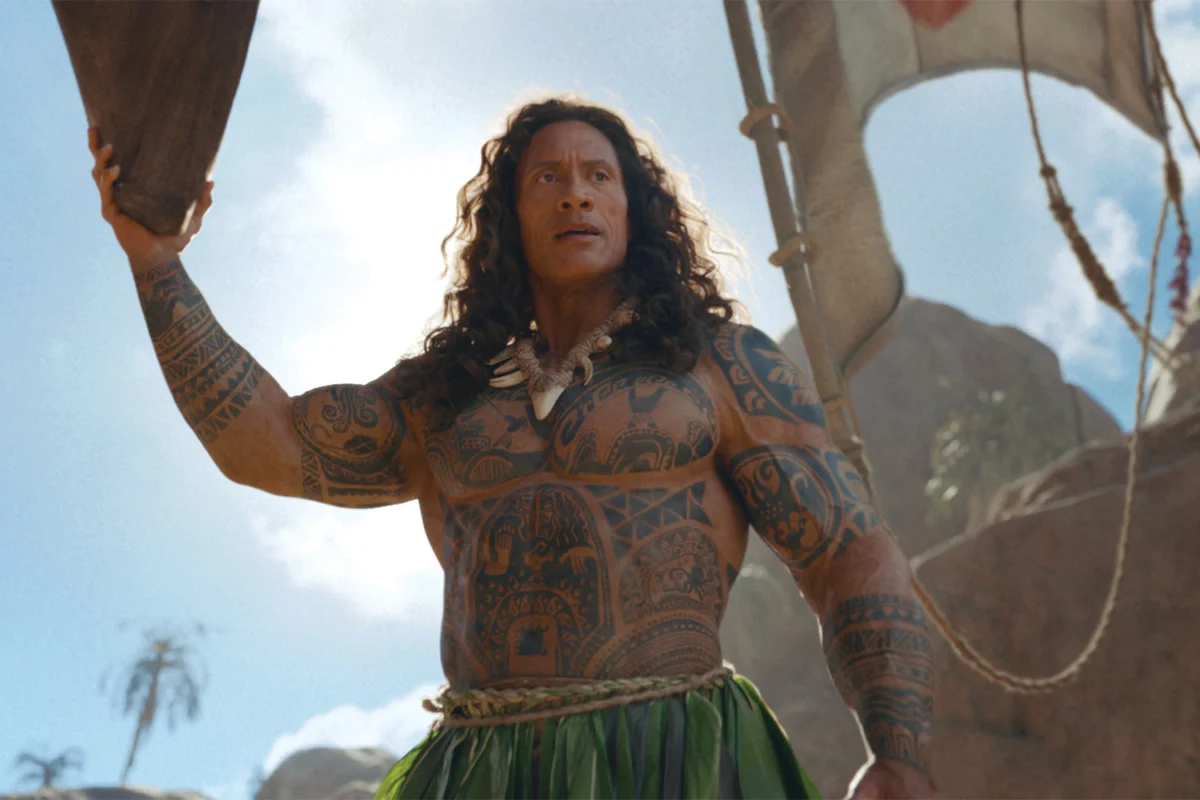
The live-action adaptation of Moana arrived in theaters with high expectations, only to be met with a lukewarm reception. With a meager $43 million opening in North America and a global debut of $95 million, the film has stalled significantly behind the studio’s internal projections. For a production that carried a staggering $250 million price tag, supplemented by an estimated $120 million in marketing costs, the financial implications are dire. As Disney navigates a shrinking vault of classic intellectual properties, Moana stands as a cautionary tale about the perils of market oversaturation and the delicate nature of cinematic nostalgia.
The Anatomy of a Box Office Misfire: The Facts
The numbers behind Moana paint a sobering picture for the House of Mouse. To reach a break-even point, industry analysts estimate the film would need to rake in at least $600 million globally, a tall order given that theater chains typically retain roughly 50% of ticket sales.
The film’s opening performance was strikingly similar to the 2025 flop Snow White, which ultimately left theaters with just $205 million worldwide against a $250 million budget. If Moana follows a similar trajectory, the studio could be facing a theatrical loss exceeding $100 million.
The discrepancy between the film’s massive budget and its performance is particularly glaring when compared to the recent success of Lilo & Stitch. That live-action adaptation, which became a billion-dollar sensation, was produced for a relatively modest $100 million. Unlike Moana, which saw star Dwayne Johnson command a $30 million payday as both producer and star, Lilo & Stitch relied on a leaner production model that didn’t require astronomical talent costs. The Moana budget was further bloated by the 2023 Hollywood labor strikes, which caused production delays and ballooned overhead costs.
A Chronology of Reimagining: From Classics to Contemporary
Disney pioneered the modern "live-action remake" trend, successfully mining its deep library of 20th-century animation to revitalize its brand for a new generation. Throughout the 2010s, the studio systematically reimagined Cinderella, The Lion King, Aladdin, Mulan, Dumbo, The Little Mermaid, Beauty and the Beast, and Lady and the Tramp.
This strategy relied on a "nostalgia sweet spot." On average, the studio waited 27 years before revisiting an animated film. This timeline allowed the children who grew up with the original hand-drawn classics to reach adulthood and enter the workforce, becoming parents themselves—thereby creating a multi-generational audience ready to return to the theater.
However, as the "low-hanging fruit" of the 1990s and early 2000s library disappeared, Disney began looking at more recent properties. Moana, released only a decade after its original, represents the latest, and perhaps most aggressive, attempt to shrink that gap. The studio’s decision-making was further complicated by the transformation of Moana 2—originally conceived as a television series—into a theatrical sequel. The proximity of the 2024 animated sequel to the 2026 live-action remake left audiences with little time to cultivate a sense of longing for the franchise.
Expert Analysis: Event vs. Duplicate
Industry observers are quick to point out that audiences haven’t necessarily lost their appetite for remakes, but they have become increasingly discerning.
"Disney’s strategy is dependent on whether audiences see the remake as an event or a duplicate," says Jeff Bock, senior analyst at Exhibitor Relations. "This was the latter. People wanted Moana 3, not a remake of the original."
This sentiment is echoed by David A. Gross, who runs the consulting firm FranchiseRe. "The takeaway for Disney has to be, how long does it take for an animated film to become a classic?" Gross notes. "It’s not about how successful the last film in the series is; it takes time to be a classic, not just success."
The failure of Moana to capture the public imagination suggests that, while the original film is the most-watched property on Disney+ and a billion-dollar franchise, it is not yet "old enough" to be viewed as a nostalgic artifact worthy of a total reboot.
The "Long-Tail" Defense: Beyond the Box Office
Disney executives have long defended these massive expenditures by pointing to the "ecosystem" value of their intellectual property. A film like Moana is not merely a piece of cinema; it is a catalyst for theme park attractions, merchandise sales, and streaming subscriptions.
Since 2016, the Moana franchise has fueled more than 22 million toy sales and inspired attractions across 40 Disney parks globally. The music alone has been a goldmine, with 26 billion total streams and nearly 5 billion for the signature ballad "How Far I’ll Go."
However, even with these ancillary revenue streams, the theatrical model remains the "front door" for these franchises. When that door fails to swing open, it undermines the brand equity of the property. While the film holds a respectable "A-" grade on CinemaScore—suggesting that audiences who did show up enjoyed the experience—the challenge is getting people into the seats in an increasingly crowded marketplace. Moana faces stiff competition in the coming weeks from Toy Story 5 and Universal/Illumination’s Minions & Monsters, not to mention the "prestige" audience draw of The Odyssey.
Implications: Where Does the Strategy Go From Here?
The road ahead for Disney’s remake strategy is now shrouded in uncertainty. The studio has already hit the pause button and restarted productions based on market signals. For instance, the Tangled live-action project was put on hold following the Snow White failure, only to be revived when Lilo & Stitch proved that a well-timed, properly budgeted remake could still ignite the box office.
Moving forward, Disney is expected to prioritize sequels and niche spinoffs—such as projects centered on the stepsisters from Cinderella or Gaston from Beauty and the Beast—rather than direct, shot-for-shot remakes of films that still feel "fresh" to the modern viewer.
"Disney will keep making these," says Paul Dergarabedian, Rentrak’s head of marketplace trends. "For every one that doesn’t do well, there will be a Lilo & Stitch that sets the world on fire. The studio just has to keep the budgets in line."
The bottom line for Disney is a lesson in patience. While the allure of the Moana brand remains undeniable—with a third animated film already in development—the studio’s recent struggles prove that there is a definitive difference between "popular" and "nostalgic." In the race to monetize their vault, Disney may have finally encountered a property that needs more time to settle. For now, the studio must hope that word-of-mouth keeps Moana afloat, but the lesson of this box office voyage is clear: sometimes, the best way to honor a classic is to leave it alone for just a little while longer.