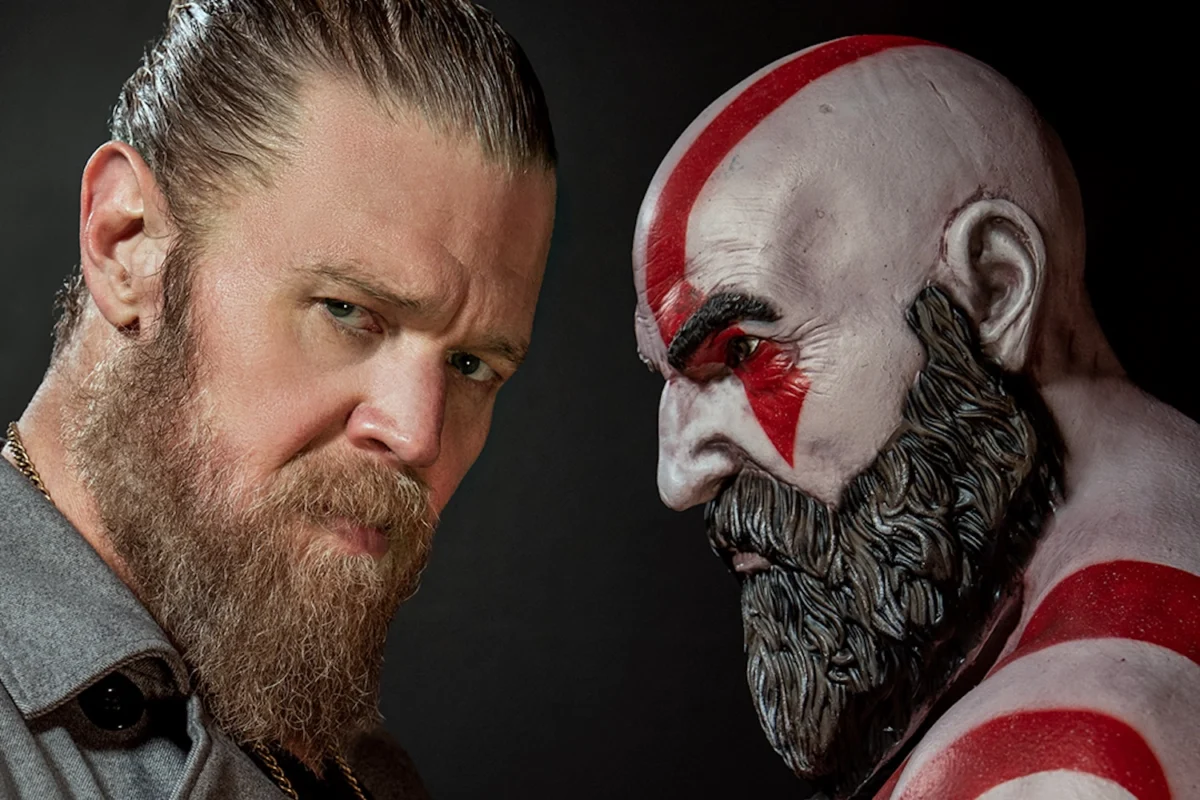
Prime Video’s God of War Adaptation Faces Major Setback: Kratos to be Recast Following Lead Actor’s Injury
The highly anticipated live-action adaptation of Sony’s critically acclaimed God of War franchise has encountered a significant production hurdle. Amazon MGM Studios and Prime Video have officially confirmed that Ryan Hurst, who was set to portray the legendary Spartan warrior Kratos, will no longer headline the series. This decision follows a severe on-set injury sustained by the actor last month, which has necessitated an extensive recovery period incompatible with the project’s rigid filming schedule.
The loss of its lead is a substantial blow to a production that has spent years in development. With the series aiming to capture the brutal, high-stakes essence of the source material, the physical toll on its cast was always a core consideration. Now, the production team must navigate the complexities of a mid-stream casting change, a move that will ripple through the show’s creative and financial trajectory.
The Chronology of a Production Crisis
The chain of events leading to the decision to recast the role of Kratos unfolded rapidly over the past few weeks, catching many industry insiders off guard.
The On-Set Incident
During a physically demanding sequence filmed in late June, Ryan Hurst sustained a severe tear to his bicep. While on-set injuries are an unfortunate reality of large-scale action productions, the severity of this particular tear required immediate surgical intervention. Initial reports suggested that the injury was serious, but the production team initially held out hope that a modified shooting schedule could allow for a hiatus.
The Assessment of Recovery
Following the surgery, medical professionals evaluated the projected recovery timeline for a muscle tear of this magnitude. It became clear that the rehabilitation process—which involves physical therapy and restricted mobility—would extend for several months. For a production of the scale of God of War, which requires an actor to be at the peak of physical condition for intense choreography and heavy-duty stunt work, this delay was deemed insurmountable.
The Pivot
After internal deliberations between Amazon MGM Studios, the show’s producers, and the creative team, the decision was finalized to part ways with Hurst to ensure the series could resume production without an indefinite delay. By mid-July, the studio initiated the process of scouting a new lead, a move that has effectively reset the clock on the series’ first four episodes.
Supporting Data: The Physicality of Kratos
The role of Kratos is arguably one of the most physically demanding in modern media. The character, known as the "Ghost of Sparta," is defined by his Herculean strength, imposing silhouette, and relentless combat prowess.
To prepare for the role, Ryan Hurst had undergone a rigorous transformation. Industry reports indicate that the actor had successfully gained roughly 40 pounds of pure muscle mass, adhering to a strict regimen of nutrition and high-intensity strength training to mirror the character’s Spartan lineage. This dedication highlighted the production’s commitment to visual authenticity.
The character description provided by Prime Video emphasizes the weight of the role: "Kratos is Spartan by birth, and a god by nature. Raised in a martial culture, he rose to command armies in service of his homeland until one day he made a fateful deal with Ares, the Greek God of War and lost his soul in exchange for being victorious in battle."
This narrative foundation requires an actor capable of balancing immense physical presence with the emotional complexity of a man haunted by his past. The loss of an actor who had already achieved the required physical aesthetic means the production must now either find a candidate who can undergo a similar transformation or adjust their expectations for the character’s physical portrayal.
The Domino Effect: Reshoots and Logistics
The most significant implication of the recasting is the status of the footage already in the can. Sources close to the production have confirmed that four episodes had been fully completed prior to Hurst’s injury. Because these episodes feature Hurst as the central figure, the studio has confirmed that they will be reshot entirely.
The Cost of a Reset
Reshooting four full episodes of a high-budget fantasy series is a monumental undertaking. It involves the recall of the entire supporting cast, the reconstruction of sets, and the logistical nightmare of rescheduling a massive crew. This will undoubtedly impact the series’ budget, which was already expected to be among the highest in the Prime Video catalog.
The Remaining Ensemble
Despite the setback, the rest of the cast remains attached to the project. The series features a robust lineup of talent who are now waiting to resume production this coming fall:
- Callum Vinson as Atreus (Kratos’ son)
- Mandy Patinkin as Odin
- Ed Skrein as Baldur
- Max Parker as Heimdall
- Sonya Walger as Freya
- Ólafur Darri Ólafsson as Thor
- Teresa Palmer as Sif
- Alastair Duncan as Mimir
- Jeff Gulka as Sindri
- Danny Woodburn as Brok
The chemistry between these actors, particularly the father-son dynamic between the new Kratos and Callum Vinson, will be the primary focus of the casting directors in the coming weeks.
Official Responses and Studio Strategy
While Amazon MGM Studios has maintained a professional stance, the mood in the industry reflects the gravity of the situation. A representative for the production stated, "While Ryan Hurst’s full recovery is our absolute priority, the timeline required for his return exceeds the capacity of our production schedule. We have made the difficult decision to recast the role of Kratos to ensure that we can deliver the high-quality experience our audience expects from the God of War franchise."
The studio is currently operating under a "fast-track" search protocol. They are not merely looking for an actor with a similar build, but someone who can embody the stoicism and internal conflict that defines Kratos. The pressure is on, as the production intends to resume principal photography this autumn.
Implications for the God of War Universe
The implications of this recasting extend beyond the immediate financial cost.
1. The "Adaptation Curse"
Video game adaptations have historically struggled with consistency and reception. By choosing to reset a significant portion of their work rather than releasing a sub-par product, Amazon is clearly signaling a commitment to quality. However, a major recasting mid-production can often lead to rumors of creative instability. The studio will need to manage the narrative carefully to ensure fans remain confident in the show’s direction.
2. Schedule Delays
The original release window for God of War was already speculative, but this development pushes the timeline back significantly. Fans should not expect to see the series until late 2026 or early 2027, depending on how quickly the new lead can integrate into the existing production framework.
3. The Bar for the New Kratos
The casting of the new Kratos will be heavily scrutinized. The public already had an image of Ryan Hurst in the role; the next actor will have to overcome the "replacement bias." Whether the showrunners pivot to a more established star or look for a breakout talent will define the marketing strategy for the coming year.
4. Safety and Labor Concerns
The injury itself raises broader questions about safety standards on high-action sets. While the studio has not faced public criticism regarding the safety protocols in place during Hurst’s injury, the industry is increasingly sensitive to the physical demands placed on actors. Future productions may look at this incident as a case study for why more robust stunt-doubling or longer preparation windows are necessary.
Conclusion
The God of War series remains one of the most ambitious projects in the current television landscape. While the recasting of Kratos is a setback, it is not necessarily a death knell. In the history of television, many great shows have survived significant casting changes and production delays.
For now, the focus shifts to the casting room. The search for a new Kratos is not just a search for an actor—it is a search for the heart of the series. As production readies to resume this fall, the eyes of the gaming and entertainment worlds will be fixed on Prime Video, waiting to see who will pick up the Blades of Chaos and carry the burden of the Spartan god. The road to Olympus is rarely smooth, and this unexpected detour is merely the latest chapter in the tumultuous journey of bringing one of gaming’s greatest stories to life.