A Golden Friday: Japan Dominates Across Disciplines at Aichi-Nagoya Asian Games
NAGOYA — The Aichi-Nagoya Asian Games reached a fever pitch on Friday as Japanese athletes delivered a masterclass in versatility, sweeping gold medals across the skate park, the pool, the gymnastics arena, and the fencing strip. In a day defined by both youthful exuberance and seasoned precision, Japan solidified its position as a dominant force in the regional sporting landscape, setting records and securing maiden titles that will echo long after the closing ceremonies.
Main Facts: A Day of Unprecedented Success
Friday’s performance was nothing short of a sporting blitzkrieg. The narrative of the day was centered on two primary themes: the rise of the next generation of extreme sports stars and the continued dominance of Japan’s traditional powerhouses in gymnastics and aquatic sports.
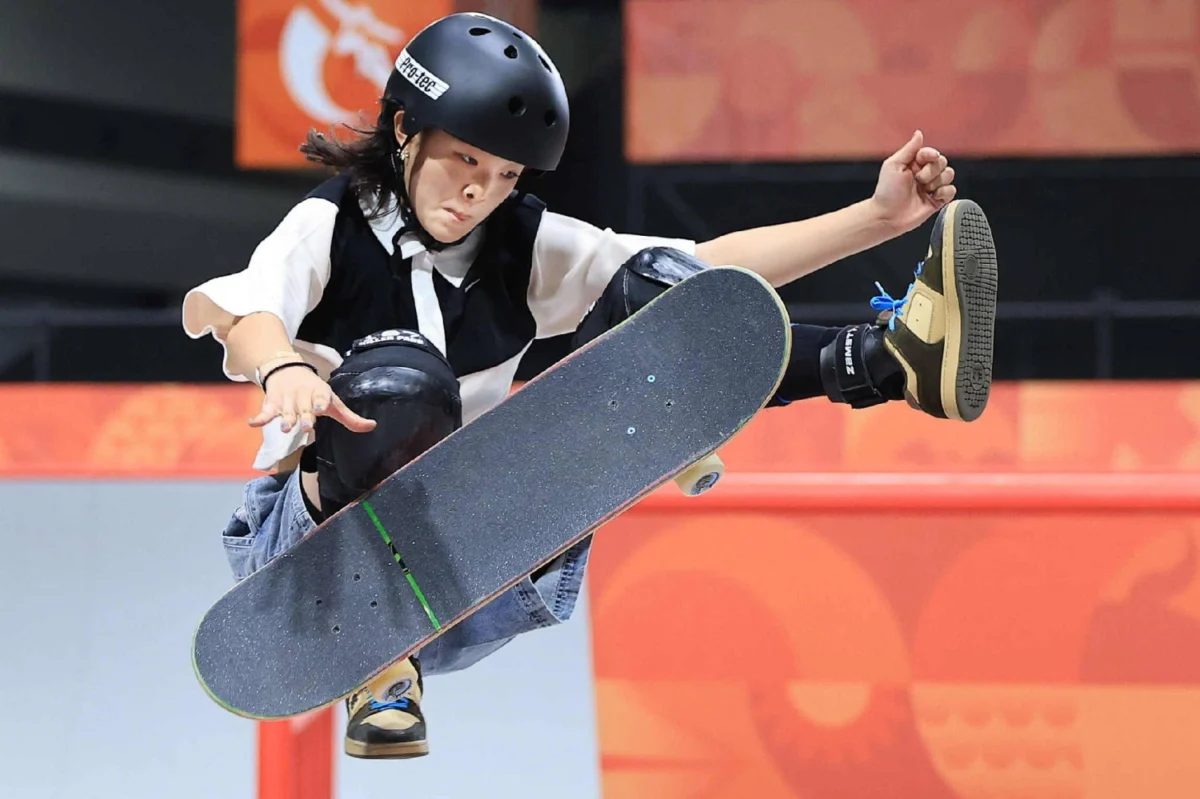
In the high-octane environment of the skate park, 15-year-old phenoms Mizuho Hasegawa and Izuru Nagahara claimed the top spots on the podium in the women’s and men’s park events, respectively. Their victories signal a changing of the guard in Olympic-style skateboarding, highlighting the depth of talent emerging from Japan’s burgeoning street-culture athletic programs.
Simultaneously, the pool remained a theater of triumph for Japan. Kodai Nishiono showcased tactical brilliance in the 200-meter backstroke, while artistic gymnast Aiko Sugihara etched her name into the history books, becoming the first Japanese athlete to secure gold in the women’s floor exercise. Complementing these individual heroics were team successes, most notably in the men’s foil fencing team final and a dominant showing in the women’s 3×3 basketball tournament.
Chronology of the Games: A Day in Motion
The day began early at the aquatic center, where the morning sessions set a rhythmic, competitive tone.
09:00 AM – The Pool’s Morning Surge: Kodai Nishiono entered the 200-meter backstroke final with a singular focus. Throughout the first 100 meters, he trailed the field, but a spectacular turn at the 150-meter mark allowed him to surge ahead. His gold medal performance served as the catalyst for the day’s momentum. Shortly thereafter, breaststroke sensation Shin Ohashi, already a double-gold medalist in the 100 and 200-meter distances, took to the blocks for the 50-meter sprint. While he ultimately finished with the bronze, his presence remained a constant threat throughout the race.
12:30 PM – Gymnastics Excellence: By midday, the focus shifted to the gymnastics arena. Aiko Sugihara took to the floor with an air of composure that belied the pressure of the moment. Her routine, characterized by gravity-defying tumbling passes and intricate choreography, earned her the historic gold in the floor exercise. This victory came on the heels of her all-around title, cementing her status as the most decorated gymnast of the Games thus far.
03:00 PM – The Rise of the Youth: As the sun began to dip, the skate park in Nagoya became the center of the sporting world. In the men’s and women’s park events, 15-year-olds Izuru Nagahara and Mizuho Hasegawa demonstrated a technical proficiency that left judges and spectators in awe. Their runs were marked by high-risk aerial maneuvers and flawless transitions, effectively silencing any doubts regarding their readiness for the international stage.
06:00 PM – The Tactical Battles: The evening was reserved for team sports. On the fencing strip, the Japanese men’s foil team engaged in a high-stakes duel against a resilient Hong Kong squad. The final was a tactical chess match, with Japan reclaiming the title after an eight-year drought. Simultaneously, the 3×3 basketball court witnessed a landslide victory for Japan, as they dispatched the Philippines with a decisive 21-11 scoreline.
Supporting Data and Technical Breakdown
The statistical significance of Friday’s events cannot be overstated.
- Skateboarding Metrics: The scores achieved by Hasegawa and Nagahara suggest a shift toward higher-difficulty tricks being landed with greater consistency. The judges noted that the "flow" score—a component of the park event—was significantly higher for the Japanese duo compared to their regional rivals.
- Gymnastics Depth: Aiko Sugihara’s floor exercise victory was won by a narrow margin of 0.150 points, a testament to the high level of competition in Asian gymnastics. Her combined score across all events indicates a level of all-around mastery not seen in Japanese women’s gymnastics for over a decade.
- 3×3 Basketball Efficiency: The 21-11 victory in the 3×3 format is statistically significant, as it represents a "knockout" win (where the first team to 21 wins, or the team with the highest score at the 10-minute mark takes the game). Japan’s shooting percentage from the arc was an impressive 42%, well above the tournament average.
Official Responses: Voices from the Podium
The mood in the Japanese camp was one of quiet confidence, tempered by the humility typical of the nation’s athletes.
"I just wanted to focus on my lines," said Mizuho Hasegawa in a post-event press conference. "The crowd in Nagoya was incredibly supportive. I didn’t think about the gold; I just thought about the rhythm of the park."
Her male counterpart, Izuru Nagahara, echoed these sentiments, noting the rigorous training regimen he underwent in the lead-up to the Games. "We have been training on this specific park layout for months. To see that work pay off in front of our home crowd is a dream come true."
Aiko Sugihara, speaking on her historic floor exercise win, emphasized the importance of mental fortitude. "Gymnastics is about moments of perfection. Today, I found those moments. Being the first to win the floor exercise for Japan makes this medal feel especially heavy—in the best possible way."
Team Japan’s head of delegation noted in an official statement: "Today represents the culmination of years of investment in both infrastructure and coaching. From our veterans in the pool to our youngest competitors on the skateboards, the consistency we have seen today is a testament to the ‘One Japan’ philosophy we have adopted for these Games."
Implications: A New Era for Japanese Athletics
The results of this Friday at the Aichi-Nagoya Asian Games carry profound implications for the future of Japanese sports.
Expanding the Horizon of Extreme Sports
The emergence of Hasegawa and Nagahara confirms that Japan is successfully transitioning its sports funding model to include modern, urban disciplines. By institutionalizing support for skateboarding—a sport once viewed as counter-cultural—Japan has created a pipeline that ensures competitiveness in both the Asian Games and the Olympic cycle.
The Legacy of Aquatic Dominance
While Shin Ohashi’s third-place finish in the 50-meter breaststroke might seem like a minor setback, the team’s overall performance in the pool highlights a strategic depth that most nations lack. The focus is clearly on endurance and technical longevity, ensuring that Japan remains a permanent fixture in the top three of the swimming medal table for years to come.
National Pride and Soft Power
The success in 3×3 basketball and fencing serves to broaden Japan’s athletic appeal. By capturing titles in sports that require team cohesion and strategic improvisation, Japan is signaling that its athletic prowess extends beyond individual disciplines. This "soft power" boost is invaluable, as it promotes Japan as a destination for international sporting events and encourages a new generation of youth to engage in a wider variety of athletic pursuits.
Looking Toward the Future
As the Aichi-Nagoya Asian Games progress, the bar has been set exceptionally high. The challenge for the Japanese delegation will be to maintain this intensity. With eyes now turning toward upcoming events, the momentum generated on this historic Friday will likely serve as the psychological bedrock for the remainder of the competition.
For the spectators, this was more than just a tally of medals; it was a showcase of a nation in its prime. Whether in the water, on the floor, or in the skate park, the Japanese athletes demonstrated that when preparation meets opportunity, the result is nothing short of gold. As the sun sets over Nagoya, the city celebrates not just the victories, but the spirit of the young athletes who have defined a new chapter in Asian sporting history.