Beyond the Myth of Resilience: A Critical Look at Smong Aceh: Two Decades of Resilience After the Tsunami
Twenty years have passed since the Indian Ocean tsunami tore through the western coast of Aceh, leaving an indelible scar on the landscape and the collective psyche of its people. Two decades later, the public discourse surrounding the catastrophe remains tethered to a single, pervasive buzzword: resilience. In the aftermath of trauma, “resilience” has evolved from a psychological concept into a political imperative—a shorthand for successful recovery and a central pillar of post-disaster development projects. It is within this heavily curated narrative environment that Tonny Trimarsanto’s documentary, Smong Aceh: Two Decades of Resilience After the Tsunami (2024), arrives.
The film, produced in two distinct versions—a 30-minute cut for audiences in Jakarta and Yogyakarta and a 70-minute version for the people of Aceh—attempts to bridge the gap between scientific mitigation and lived experience. Yet, beneath its polished surface lies a profound tension between the clinical, state-sanctioned narrative of "bouncing back" and the raw, unarticulated remnants of trauma that continue to haunt the survivors of 2004.
The Architecture of the Documentary: A Dual Narrative
The structural dichotomy of Smong Aceh reveals much about the documentary’s intended objectives. The shorter version serves as an educational tool, focusing on disaster mitigation through the synergy of modern science and local wisdom. It is designed to be palatable, informative, and ultimately, optimistic.
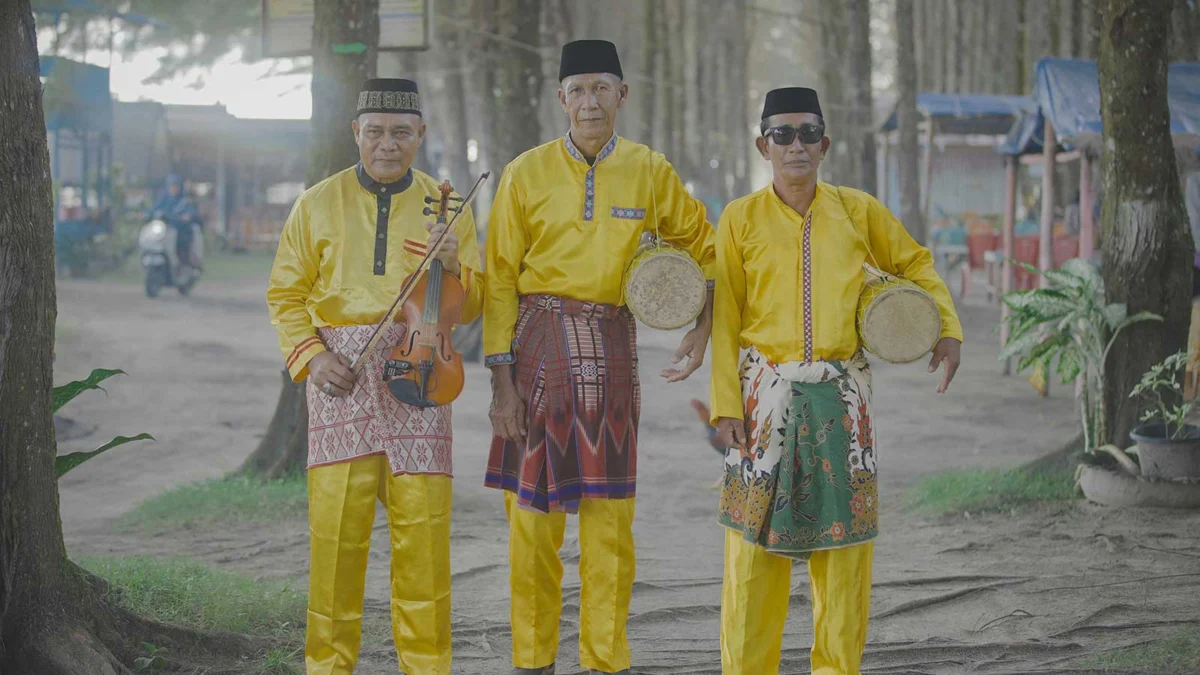
In contrast, the 70-minute version, tailored for an Acehnese audience, follows two central figures: Zahrina, a researcher at the Tsunami and Disaster Mitigation Research Center (TDMRC) at Syiah Kuala University, and Suman, a traditional artist from Simeulue. Through them, the film attempts to trace the personal journeys of those who survived the surge. However, rather than providing a space for honest, unfiltered reflection, the film often feels constrained by its own premise. By prioritizing a narrative of strength, the documentary inadvertently creates a barrier between the audience and the depth of the survivors’ grief.
Zahrina and Suman: Caught Between Roles
The portrayal of Zahrina and Suman highlights the documentary’s central struggle. Zahrina is introduced as the epitome of the "resilient survivor"—rational, professional, and data-driven. Early in the film, she cites research to suggest that the people of Aceh have demonstrated greater resilience than their counterparts in Japan.
Yet, as the camera follows her into the intimacy of her home and the somber landscape of the Ulee Lheu mass graves, the film captures a haunting, fleeting moment of vulnerability. Zahrina speaks of feeling "empty"—a hollow space that neither scientific jargon nor technocratic frameworks can articulate. This emptiness is not merely an emotional state; it is a profound social signal, representing the widening chasm between the official "success story" of recovery and the fragmented, unhealed reality of the individual.
Similarly, Suman, a traditional nandong artist, is tasked with performing the oral history of smong (the local term for tsunami). While he effectively preserves the cultural heritage of disaster warning, the film fails to engage with his personal reality. How did it feel when the folklore of his ancestors—the cautionary tales he had known his whole life—transformed into the terrifying, concrete reality of 2004? The film stops short of asking the difficult questions, leaving the audience to wonder how Suman reconciled his identity as a keeper of tradition with the crushing weight of having lived through the very tragedy he sings about.
Theoretical Context: Raymond Williams and the "Structure of Feeling"
To understand the documentary’s reticence, one must look toward the concept of "structure of feeling," coined by the cultural theorist Raymond Williams. This term refers to the lived, yet often unspoken, experiences and intuitions that define a society at a given moment. It exists in the interstices of our daily lives—in the language we cannot find, the social norms that suppress grief, and the feelings that remain locked away.
In Aceh, this "structure of feeling" is evident in the quiet, stoic demeanor of its people. As documented by anthropologist Annemarie Samuels in After the Tsunami: Disaster Narratives and the Remaking of Everyday Life in Aceh, expressions of grief are often circumscribed by religious and social expectations. To display excessive sadness is sometimes misinterpreted as a sign of weak faith. Consequently, survivors have channeled their mourning into socially acceptable outlets like zikir (recitation of prayers), kenduri (communal feasts), and visiting mass graves. While these practices provide structure, they do not necessarily resolve the loss.
Smong Aceh fails to tap into these nuances. It favors a tidy, linear narrative of recovery, effectively silencing the messy, unfinished business of human suffering. By focusing on the "resilient" output, the film misses the opportunity to explore the "structure of feeling" that resides in the silence.

Structural Vulnerability and the Gendered Reality of Disaster
The reliance on "resilience" as a primary theme also serves to obscure structural vulnerabilities. As highlighted by Pradiayu FA in Konde, disaster outcomes are never equitable. In many instances, the "resilience" celebrated in post-disaster narratives is actually a form of enforced adaptation.
Women in Aceh, for instance, faced unique vulnerabilities during the 2004 event—not because of personal failings, but due to deep-seated cultural norms that restricted their mobility, swimming capabilities, and decision-making power. When the documentary portrays survivors as "strong" without acknowledging these pre-existing structural inequalities, it risks romanticizing survival as a choice rather than a result of systemic survival strategies. True mitigation requires the courage to dismantle these vulnerabilities, not just the ability to endure them.
Official Responses and the "Sterilization" of History
The production team behind Smong Aceh—which includes reputable entities like Christine Hakim Films and Cinesurya Pictures—has succeeded in creating a high-quality visual document. However, the film serves more as an instrument of socialization than a space for collective catharsis.
The smong story itself, while essential for disaster preparedness, has been sterilized. In the film, it functions as a slogan—a brand of "preparedness" that is easy to export. The film neglects to explore how this knowledge was historically passed down, the power dynamics involved in its transmission, and the personal cost of maintaining such a heavy legacy. By treating the story of smong as a functional tool for future safety, the film loses the human element of the story: the solidarity of a community bound not just by the fear of the ocean, but by the shared, ongoing process of caring for what was lost.
Implications for Future Disaster Documentation
The primary implication of Smong Aceh is a cautionary tale for future filmmakers and historians. Twenty years post-tsunami, there is a temptation to wrap the trauma in a blanket of "recovery." But if a documentary is to serve as a genuine archive of human experience, it must be willing to sit with the ambiguity.
- Reframing Resilience: We must redefine resilience. It should not be the absence of trauma, but the capacity to acknowledge that the trauma persists.
- Space for the "Unspoken": Future narratives must prioritize the voices of survivors without directing them toward a predetermined conclusion of "readiness." If a survivor feels "empty," that emptiness is a valid narrative that deserves exploration rather than erasure.
- Beyond Mitigation: While disaster preparedness is a vital goal, it should not be the sole endpoint of human storytelling. The value of a documentary lies in its ability to foster intersubjectivity—the shared understanding of a tragedy that defies easy explanation.
Conclusion: A Missed Opportunity for Deep Healing
Smong Aceh is a well-crafted, visually compelling piece of work, but it is ultimately hindered by its own desire to be "safe." By opting for the polished narrative of a resilient society, the film misses the chance to dive into the deep, murky waters of real human recovery.
The emptiness felt by Zahrina and the unspoken pain of Suman are not signs of weakness; they are evidence of a humanity that has not been completely overwritten by the bureaucratic necessity of being "prepared." If we truly want to honor the lives lost and the lives altered, we must move beyond the narrow confines of resilience. We must dare to look at the cracks in the narrative, for it is precisely within those spaces—where the grief is unrefined and the recovery is incomplete—that the most honest, and perhaps most meaningful, conversations about our past and future begin.
This article was produced in collaboration with disaster psychology expert Yulia Direzkia and social psychologist Mifta Sugesti, providing a multidisciplinary lens into the complexities of post-disaster recovery.
Smong Aceh | 2024 | Duration: 30/70 minutes | Director: Tonny Trimarsanto | Production: Christine Hakim Films, Cinesurya Pictures, Rumah Dokumenter, Weber Shandwick Indonesia | Country: Indonesia