The Primetime Purge: Why the Television Academy’s Latest Cut is a Blow to Emmy History
In a move that has sent shockwaves through the corridors of Hollywood, the Television Academy dropped a controversial “Friday news dump” that threatens to fundamentally alter the landscape of the industry’s most prestigious night. The Academy announced it is pulling five key categories—Supporting Actor and Supporting Actress in a Limited or Anthology Series/Movie, Directing for a Limited or Anthology Series/Movie, Writing for a Limited or Anthology Series/Movie, and Writing for a Variety Series—from the main Primetime Emmys broadcast. These awards are set to be relegated to the Creative Arts Emmys, a move the Academy claims is a necessary step to modernize the show, but which industry professionals are decrying as a calculated devaluation of artistic craft.
The Justification vs. The Outcry
The Television Academy has defended its decision by citing a mandate to deliver a “fresh new take on the Emmys broadcast,” emphasizing a shift toward high-octane entertainment. In an era where linear broadcast viewership is under constant pressure from digital streaming and social media fragmentation, the Academy is clearly gambling that a tighter, more celebrity-heavy main show will capture a larger audience.
However, the backlash from the industry’s most powerful labor unions was immediate and fierce. In a rare show of unified force, SAG-AFTRA, the Directors Guild of America (DGA), and the Writers Guild of America (WGA) issued a joint statement to Gold Derby, pulling no punches.
“The decision to eliminate these categories from the primetime broadcast devalues the contributions of the talented people the Academy is meant to honor,” the guilds stated. “These categories represent the backbone of storytelling in limited series and variety, and moving them to the Creative Arts ceremony—a broadcast that, while important, lacks the global reach of the main event—is an insult to the craftspeople who make television the preeminent art form of our time.”
A History of Iconic Moments
To understand the weight of this decision, one only needs to look at the history of the categories being pushed to the sidelines. The Limited/Anthology and Movie fields have become the premier prestige sector of the television industry, often attracting Hollywood’s A-list talent and resulting in some of the most memorable, emotional, and historically significant speeches in the history of the medium.
If the Television Academy’s new, leaner broadcast model had been in place during the last decade, audiences would have been deprived of a treasure trove of cultural touchstones. The primetime broadcast is a cultural megaphone; the Creative Arts ceremony, while technically rigorous and appreciative, rarely generates the same level of mainstream conversation or lasting viral impact.

Case Studies: The Moments We Would Have Missed
The removal of these categories isn’t just about administrative reshuffling; it is about silencing the voices of artists who use their moment at the podium to address power, celebrate identity, and inspire the next generation.
Owen Cooper: The Youngest to Break the Glass Ceiling (2025)
Last year, the world watched as 15-year-old Owen Cooper shattered records to become the youngest male actor ever to win an Emmy for his chilling, nuanced performance in Netflix’s Adolescence. His speech was more than a thank-you list; it was a manifesto for aspiring actors everywhere. “If you listen and you focus and you step out of your comfort zone, you can achieve anything in your life,” he told an enraptured audience. That moment, broadcast in primetime, provided a genuine “watercooler” moment that connected with viewers of all ages.
Lamorne Morris: Bridging the Gap (2024)
When Lamorne Morris took the stage for his work in FX’s Fargo, he provided a moment of pure, unadulterated joy that cut through the typical stoicism of award shows. From his charming admission of where babies come from to his hilarious, fan-boy plea for a poster autograph from fellow nominee Robert Downey Jr., Morris captured the essence of why we watch these shows: to see human beings connect. The chemistry between Morris and his peers on the front row was the kind of spontaneous television that producers usually pay millions to manufacture.
Niecy Nash: The Power of Self-Affirmation (2023)
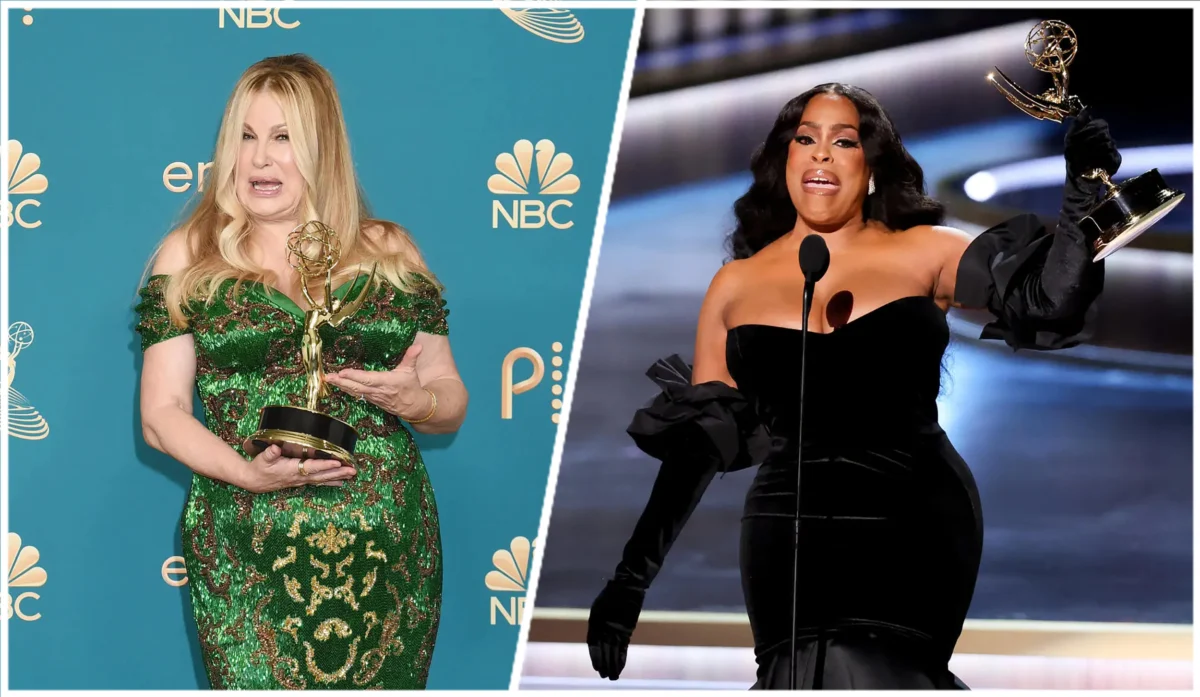
Niecy Nash’s victory for Monster: The Jeffrey Dahmer Story stands as one of the most powerful speeches in recent memory. By publicly thanking herself—a taboo in the typically humble-brag environment of award ceremonies—she validated the long, arduous journeys of artists who work in the shadows for years before hitting the spotlight. Her closing statement, acknowledging the struggles of Black and Brown women who remain "unheard yet over-policed," moved the needle on what a thank-you speech could be. It was a moment of "truth to power" that deserves the largest platform available.
Jennifer Coolidge: The Iconography of the Lavender Bath (2022)
Perhaps the most damning argument against the move is the loss of the "Jennifer Coolidge moment." Her win for The White Lotus was pure television gold. From her lavender-bath anecdote to her refusal to be played off by the orchestra, she proved that supporting actors are often the lifeblood of a show’s personality. Shunting her to a pre-taped, edited segment of the Creative Arts would have robbed the public of a genuine pop-culture phenomenon.
The Institutional Implications
Beyond the speeches, there is a structural concern regarding how these categories are viewed by the industry at large. When an award is handed out in a secondary, edited, or off-peak ceremony, it carries a different weight in the eyes of agents, studio executives, and the public.

For decades, the “Primetime” designation has served as a seal of quality. By diluting the list of categories eligible for the main telecast, the Academy risks creating a tiered system of artistry. There is a palpable fear that this is the “thin end of the wedge”—if Supporting Actor in a Limited Series can be moved, what is to stop the Academy from moving other categories, such as Writing or Directing in comedies or dramas, to the Creative Arts in the future in favor of more "entertainment-focused" segments like musical numbers or sketch comedy bits?
Looking Ahead: The Future of the Emmys
The Television Academy faces a difficult balancing act. It must answer to its broadcast partners, who demand high ratings and viral social media engagement, and its membership, which demands respect and recognition for the grueling work of television production.
However, by prioritizing a "fresh take" that involves cutting the very people who define the quality of the medium, the Academy may be alienating the creative community it relies on to fill the seats. The guilds have already proven they are willing to mobilize and exert pressure; if the Academy does not find a way to honor these categories—perhaps by shortening speeches or finding more efficient ways to present them—they may find that the "fresh" show they are planning is a hollow shell of the event that once defined the peak of artistic achievement.
As we look toward 2026, the industry remains in a state of high tension. Will the Academy walk back its decision in the face of the unified guild opposition? Or will they push forward, risking the ire of the very stars and storytellers that make the Primetime Emmys a global event? One thing is certain: history—from Jessica Lange’s genre-defying wins to Regina King’s path-breaking speeches—suggests that the audience wants to see the people who make the magic, not just a highly produced, sanitized spectacle. The Academy would do well to remember that the "entertainment" they are chasing is built on the backs of those they have just decided to move to the back of the room.