The Final Ghoulish Bow: Looking Back at the Legacy of ‘Tales from the Crypt’
Even a Crypt Keeper cannot live forever. Thirty years ago, on July 19, 1996, HBO finally brought the heavy, rusted burial shroud down over Tales from the Crypt. The horror anthology series, which had been a cornerstone of the network’s identity since 1989, ended its run not with a grand, cinematic crescendo, but with a surreal, animated experiment that left many longtime fans scratching their heads.
Based on the gruesome, EC Comics series of the 1950s and anchored by the iconic, pun-loving Crypt Keeper—whose skeletal visage and cackling intros became a pop-culture touchstone—the show had once been the network’s crown "ghoul." It had survived ratings ebbs and flows, garnered prestige at the Cable ACE Awards, and attracted the most formidable talent in Hollywood. Yet, as the show reached its conclusion, its final act felt less like a celebration and more like a fading heartbeat.
The Rise of a Premium Cable Titan
To understand the ignominious end of Tales from the Crypt, one must first appreciate its meteoric ascent. When HBO launched the series in 1989, it was a daring gamble. Premium cable was still in its infancy, and the network was hungry for programming that could differentiate itself from the safe, sanitized fare of broadcast television. Tales from the Crypt provided that in spades.
It was bold, unapologetically sexy, and dripping with high-production value gore. The show became a magnet for A-list talent, proving that horror could be high art. Legendary filmmakers like Robert Zemeckis, Richard Donner, and William Friedkin stepped behind the camera, while a parade of stars—including Demi Moore, Kyle MacLachlan, Whoopi Goldberg, and Brad Pitt—vied for roles in the anthology’s twisted morality plays. It was a cultural phenomenon that defined the "premium" in premium cable.

However, by the time the series entered its seventh season, the landscape of television had shifted. The novelty had worn thin, and the production had become an expensive, exhausting machine. What started as a prestigious experiment had transformed into a grueling slog.
Chronology: The Road to the Grave
The path to the series finale was paved with cost-cutting measures and shifting creative directions. By Season 6 and 7, the show was a shell of its former self in terms of its domestic production footprint.
In a final, desperate attempt to reduce overhead, the production relocated to England for its final season. While this move allowed for an influx of British talent—including appearances by then-rising stars like Ewan McGregor and Daniel Craig—the shift was fundamentally disruptive. The crew, many of whom had been with the show since its inception, felt the fatigue.
"I felt like that last season had more of a Hammer Films feel to it," notes Mike Spatola, one of the show’s long-term makeup effects supervisors. The change in locale, while visually distinct, failed to provide the creative spark needed to justify a renewal.

In truth, the show had been living on borrowed time since Season 2. Every year, the production team operated under the assumption that the next season would be their last. Consequently, when the final live-action episode, "Ear Today… Gone Tomorrow," wrapped, there was no emotional farewell. The cast and crew simply moved on. Costume designer Warden Nei admits, "To tell you the truth, I thought that when we were done here [in the U.S.] that was that. I didn’t even know they were gonna go [to London]."
The "Third Pig" and the Animated Exit
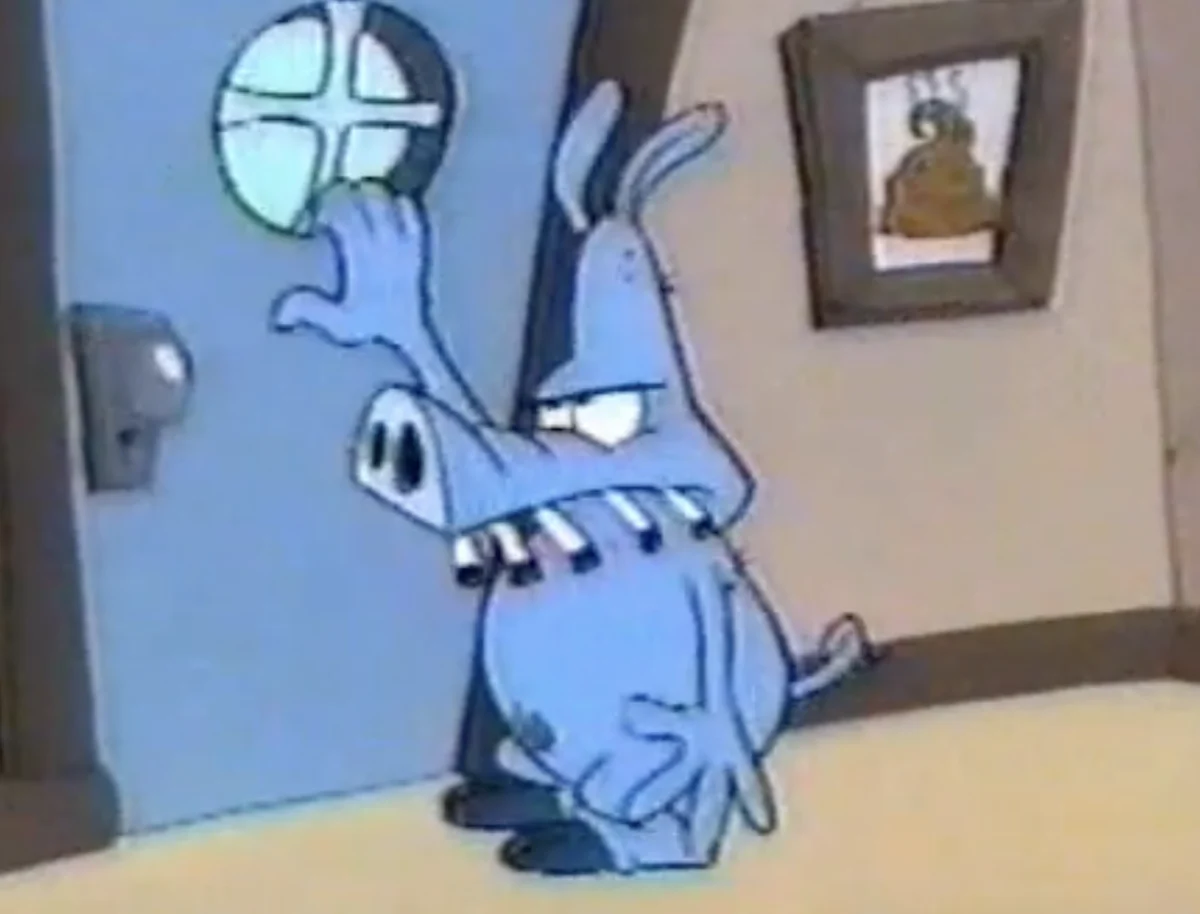
The irony of the series finale is that it wasn’t a live-action production at all. The network closed the book on the Crypt Keeper with an animated special titled "The Third Pig."
Commissioned over a year before the official cancellation, the episode was a bizarre, reimagined take on the classic "Three Little Pigs" fable. In this version, the two pigs who met their ends at the hands of the Big Bad Wolf are long dead, and the surviving pig is put on trial for the gruesome, bloody deaths of his siblings.
The episode was the brainchild of Bill Kopp and Patrick Ventura. Kopp, who had been working in the animation department at Warner Bros., had spent months jokingly pestering the secretary of super-producer Joel Silver. "It became a joke because I would do this every day," Kopp recalls. "[She’d say] ‘Oh, Bill, I’m sorry, he’s out, but I’ll let him know.’ It just kind of went on like that."

Eventually, the connection was made, and the team was given unprecedented creative freedom. "They just turned us loose and there were zero script notes," Kopp says. "It was a great feeling to have that freedom to just go absolutely crazy."
The result was an episode that leaned into the show’s darkest impulses. It was told entirely in rhyme, featured a vulgar, crass depiction of the pigs, and ended with the Big Bad Wolf (voiced by Bobcat Goldthwait) eating the final pig alive while sporting an exposed brain. It was a bizarre, nihilistic, and fittingly weird conclusion to a show that had spent seven years pushing the boundaries of what was acceptable on television.
Behind the Scenes: The Talent Drain
The production of "The Third Pig" highlights a broader truth about the show’s final days: the creative engine had shifted toward future projects. Series producer Alan Katz confirms that by the end of Tales, the team was already mentally checked out.
"The expectation was that we were going to bring Tales from the Crypt to an end and slide into the thing that became Perversions of Science," Katz explains. "I was so done, I wasn’t even thinking about the end of Crypt. I was thinking about the beginning of the next thing that, to me, was much more exciting."

This "next thing," Perversions of Science, ultimately failed to capture the magic of its predecessor, lasting only 13 episodes. Meanwhile, the core team of Tales—the cinematographers, the writers, and the producers—had either been let go or had already pivoted toward new ventures, leaving the Crypt Keeper to finish his final story as a secondary priority.
The Implications of a Quiet Death
The lack of a formal announcement regarding the show’s end remains one of the more curious aspects of television history. There was no "farewell tour," no retrospective special, and very little press coverage acknowledging that one of the most influential horror shows of the 1990s had breathed its last.
In many ways, the finale’s lack of fanfare mirrors the show’s reception over the last three decades: ignored, misrepresented, and relegated to the "pirated graveyard" of low-resolution YouTube uploads. It took thirty years for the series to find a proper, high-quality home.
However, the tide is finally turning. The recent move of Tales from the Crypt to the Shudder streaming platform has breathed new life into the franchise. For a generation of new viewers, the series is finally being recognized not just as a campy horror show, but as a pioneering piece of television that paved the way for the modern era of prestige cable dramas.

A Legacy Re-Evaluated
Looking back, "The Third Pig" might not be the most satisfying series finale in the history of television, but its existence is a testament to the chaotic, anarchic spirit of the show itself. It was never meant to be a grand, tearful goodbye. It was a final, bloody, and cynical laugh from a host who had seen it all.
As we reach the thirty-year mark, it is clear that Tales from the Crypt did more than just provide scares. It established a template for anthologies that would later define networks like HBO and beyond. It proved that audiences were hungry for the macabre, the dark, and the weird.
While the Crypt Keeper may have been forced into the ground in 1996, his influence has remained undead. With the archives now restored and available to a new audience, the "boils and ghouls" of the world can finally appreciate the legacy of the show that turned the grave into a stage.
Editor’s Note: For those interested in a deeper dive into the behind-the-scenes history of the show, look for Kristen Lopez’s forthcoming book, "Welcome, Boils and Ghouls!: The Complete Oral History of Tales From the Crypt," scheduled for release in 2027 from Running Press.