The Future is Now: Unpacking the Atmospheric Teaser for Blade Runner 2099
After nearly five years of hushed anticipation, rumors, and development hell, the neon-soaked veil has finally been lifted. Prime Video has unveiled the first official teaser for Blade Runner 2099, a limited series that seeks to expand the hallowed ground established by Ridley Scott’s 1982 cult classic and Denis Villeneuve’s 2017 visionary sequel, Blade Runner 2049. With a premiere date set for November 25, the project has transitioned from a theoretical curiosity into a concrete, looming reality.
For a franchise that has historically defined the "tech-noir" aesthetic and philosophical depth of science fiction, the stakes could not be higher. Yet, the initial footage suggests a narrative pivot that promises to breathe fresh, albeit smog-filled, life into the Blade Runner mythos.
The Chronology of Chaos: A New World Order
The narrative landscape of Blade Runner 2099 is set five decades after the events of Blade Runner 2049. For those struggling to keep pace with the timeline, this jump forward is intentional, designed to shift the focus from the identity crises of individual replicants to a fundamental restructuring of societal power dynamics.
We are entering a world defined by the aftermath of a successful—and likely brutal—replicant uprising. The traditional power dynamic, in which humans held the metaphorical leash over their synthetic creations, has been inverted. In this iteration, the replicants have ascended to a position of dominance. They are no longer merely laborers or disposable tools of industry; they are the architects of the new order, and they are demonstrating that they have inherited the worst of their creators’ impulses. The systemic mistreatment once reserved for replicants is now being reflected back onto the human population, creating a volatile, claustrophobic atmosphere.
Supporting Data: Themes, Aesthetics, and Philosophy
Showrunner Silka Luisa has been remarkably transparent about the intellectual framework guiding the series. In a recent exclusive interview with Entertainment Weekly, she revealed that the series draws its primary inspiration not just from the cinematic lineage of the franchise, but from the source material itself: Philip K. Dick’s 1968 novel, Do Androids Dream of Electric Sheep?
The "Zaniness" of Existential Dread
Perhaps the most intriguing revelation from Luisa is her commitment to capturing the specific, often overlooked tone of Dick’s writing. "There is a zaniness to it, but at the same time, he has really dark themes and circumstances," Luisa noted. "The juxtaposition of this kind of bubblegum tone with these dark ideas was something I really gravitated toward."
This suggests that Blade Runner 2099 will move away from the purely stoic, melancholic pace of Blade Runner 2049 and move toward a more erratic, perhaps even surreal, exploration of humanity. The core question remains: What does it mean to be human in a world where humanity is no longer the dominant or relevant species?
The Visual Language of Decay
Visually, the teaser is a masterclass in atmospheric storytelling. The cinematography retains the signature "murkiness" of the franchise—a thick, perpetual twilight of smoke, rain, and neon glare. While some critics might point to this as a modern aesthetic trend, it is clearly a deliberate design choice intended to reflect a world in decline. The grand, wide shots of urban sprawl evoke the same sense of crushing scale that defined Syd Mead’s original designs, but with a decaying, post-uprising texture that feels uniquely lived-in.
Character Dynamics: The Hunter and the Hunted
The series centers on a high-stakes, cat-and-mouse dynamic between its two leads: Michelle Yeoh and Hunter Schafer.
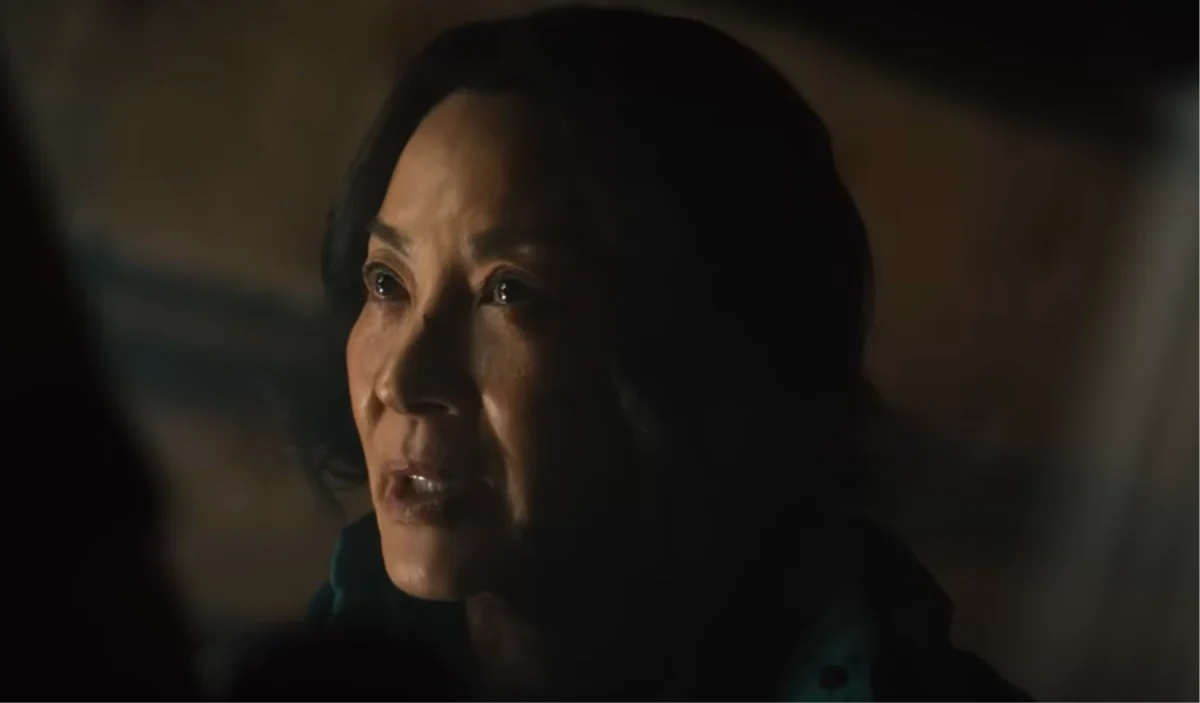
- Olwen (Michelle Yeoh): Yeoh portrays an aging replicant who serves as a Blade Runner. Her character arc is defined by a ticking clock; she is in the final days of her life cycle. Replicants, as established in the lore, are keenly aware of their expiration dates, and Olwen’s perspective as a seasoned officer navigating the end of her own existence adds a layer of fatalistic gravitas to the show.
- Cora (Hunter Schafer): Schafer plays a human on the run. To survive in a world governed by a hostile replicant hierarchy, Cora is forced to masquerade as a replicant Blade Runner. This performance-within-a-performance setup creates a fascinating tension: the hunter is a replicant trying to find her place before she dies, while the "partner" is a human terrified of being unmasked.
The narrative hook revolves around this pair tracking down a group of rogue replicants. As they delve deeper into the investigation, the secrets they both harbor—Olwen’s disillusionment and Cora’s survival lie—threaten to unravel their alliance and the fragile peace of the city.
Official Responses and Creative Vision
The transition from film to television is rarely seamless, particularly when the source material is as visually and thematically demanding as Blade Runner. However, the involvement of Ridley Scott as an executive producer provides a significant seal of quality.
Silka Luisa’s approach is one of careful reverence balanced with necessary evolution. By looking at the series as an exploration of "what comes after us," the show avoids the trap of simply rehashing the "Deckard vs. Batty" dynamic of the 1982 original. Instead, it positions the audience in a space of profound discomfort. For the first time in the franchise’s history, the humans are the ones living in the shadows, fighting for the right to exist in a world that has largely moved past the need for them.
The supporting cast, including Tom Burke, Dimitri Abold, and Wil Coban, fills out a world that feels both expansive and deeply personal. Each character appears to represent a different facet of this new, post-human societal structure, from the bureaucracy of the new regime to the subterranean resistance movements.
Implications: Can the Franchise Sustain its Legacy?
The high expectations surrounding Blade Runner 2099 are both a blessing and a burden. Since 2017, the bar for the franchise has been set exceptionally high by Villeneuve’s direction and Roger Deakins’ cinematography. A television series cannot rely solely on the massive budget of a tentpole film; it must rely on character work and a compelling, serialized narrative.
The Shift in Power
The most significant implication of this series is the narrative departure from the "humanity as the pinnacle" trope. By exploring the societal consequences of a replicant victory, the series forces the viewer to confront the fragility of human dominance. If the replicants are indeed better, faster, and more efficient, why should humanity remain in control? This isn’t just a science fiction question; it is a reflection of current anxieties regarding artificial intelligence, labor automation, and the obsolescence of the human worker.
A New Standard for Sci-Fi Television
If Blade Runner 2099 succeeds, it will likely redefine the scope of science fiction television. It demonstrates a willingness to invest heavily in world-building that is not tied to a specific action-adventure hero, but rather to a philosophical investigation of consciousness.
Furthermore, the casting of Michelle Yeoh—an actress known for her incredible range and physical screen presence—suggests that the action sequences will be as sophisticated as the dialogue. When combined with the high-concept visual storytelling of the teaser, the series appears poised to offer a level of production value rarely seen on streaming platforms.
Final Thoughts: The Road to November 25
The release of the Blade Runner 2099 teaser has achieved its primary goal: it has transformed a project that many feared might be a "cash-grab" extension of a legacy brand into a highly anticipated event. It is clear that the creators are not just interested in the aesthetic of Blade Runner, but in its soul—the inherent "zaniness," the darkness, and the persistent, nagging question of what it means to be alive.
As we count down to the November 25 premiere on Prime Video, the industry will be watching closely. If the show can maintain the balance between the philosophical density of Philip K. Dick’s prose and the visceral, rain-slicked tension of the films, Blade Runner 2099 may well be remembered as the definitive chapter in this long-running, neon-lit saga. Whether or not it will be the crowning achievement of the franchise remains to be seen, but for now, the future looks exactly as it should: dark, beautiful, and profoundly uncertain.