Japan Deepens Maritime Ties with Cambodia Through Official Security Assistance Program
SIHANOUKVILLE, Cambodia – In a significant shift in regional security cooperation, the Japanese government announced on Sunday that it will provide a package of patrol boats and advanced communications equipment to the Cambodian military. This move marks the first time Cambodia has been included as a recipient under Japan’s Official Security Assistance (OSA) program, a framework designed to bolster the defense capabilities of "like-minded" nations in the Indo-Pacific.
The aid package, valued at approximately ¥500 million (roughly $3.2 million USD), underscores Tokyo’s ongoing efforts to enhance maritime domain awareness and regional stability, even as Cambodia continues to balance its complex relationships with major powers, including China and Vietnam.
Main Facts: A New Pillar of Cooperation
The Japanese Ministry of Foreign Affairs confirmed that the assistance is aimed at strengthening Cambodia’s capacity for maritime surveillance and disaster response. The package consists of:
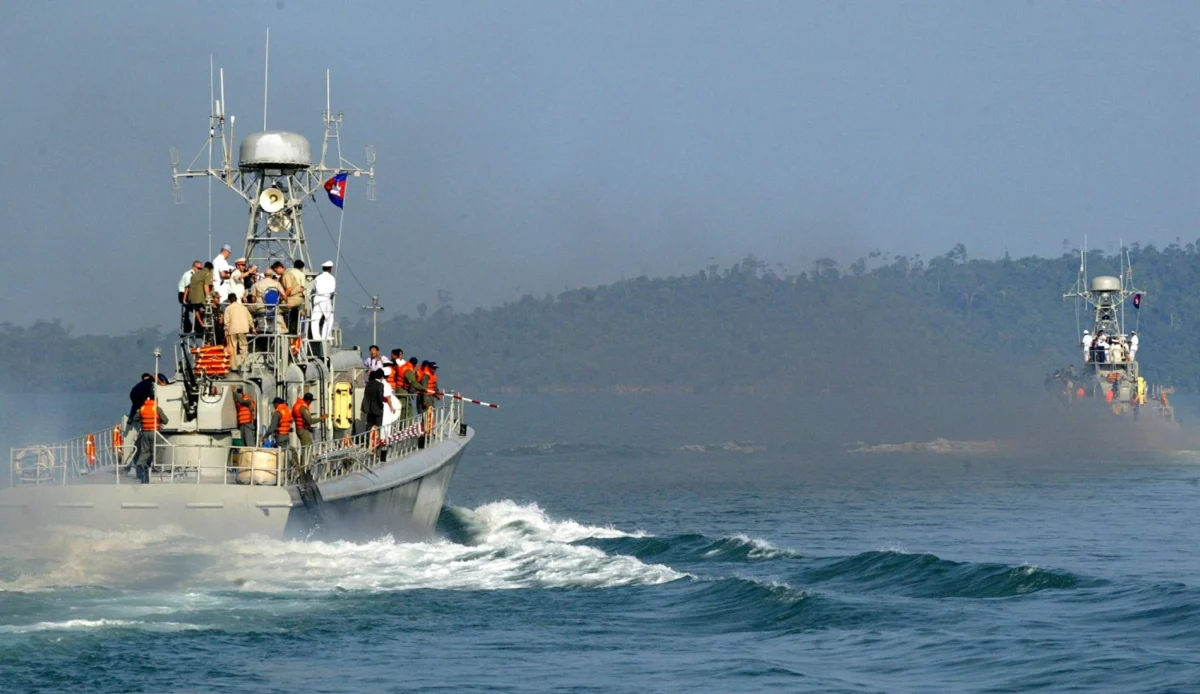
- Patrol Vessels: Small-to-medium range craft designed for coastal monitoring and search-and-rescue operations.
- Communications Infrastructure: A suite of high-frequency radio and data-link equipment intended to improve coordination between the Cambodian naval command and units operating at sea.
The OSA program, established by Japan in 2023, is distinct from the long-standing Official Development Assistance (ODA). While ODA focuses on economic and social development, the OSA is specifically tailored to provide defense equipment free of charge to countries that share Japan’s commitment to a "Free and Open Indo-Pacific." This initiative reflects a broader evolution in Japanese foreign policy, moving toward a more proactive stance in regional security affairs.
Chronology of Evolving Relations
The integration of Cambodia into the OSA program did not happen in a vacuum. It is the culmination of years of quiet, steady diplomatic engagement between Tokyo and Phnom Penh.
2010–2018: Foundational Humanitarian Aid
For over a decade, Japan’s engagement with Cambodia was largely defined by infrastructure projects, demining operations, and civil governance support. During this period, Japan consistently remained one of Cambodia’s top donors, fostering a relationship built on economic trust.
2019–2022: Rising Strategic Alignment
As geopolitical tensions grew in the South China Sea and the broader Southeast Asian region, Japan began to pivot its focus toward maritime security. High-level visits between the Japan Self-Defense Forces (JSDF) and the Royal Cambodian Armed Forces (RCAF) became more frequent. These discussions focused on non-traditional security threats, including illegal, unreported, and unregulated (IUU) fishing and transnational smuggling.

2023: The Launch of OSA
With the formal launch of the OSA framework, the Japanese government identified Southeast Asia as a primary region for security cooperation. Japan’s security planners viewed Cambodia—which holds a strategic position on the Gulf of Thailand—as a vital partner for maritime stability.
2026: The Formalization of Aid
The announcement this Sunday marks the operationalization of this partnership. The selection of the Sihanoukville region as a focus area is significant, given the heavy naval activity in the vicinity, including existing infrastructure projects and the presence of vessels donated by neighboring Vietnam.
Supporting Data: Why the Gulf of Thailand Matters
The Gulf of Thailand has become a crucible of geopolitical competition. According to recent maritime security reports, the region is seeing a surge in traffic, which brings both economic prosperity and security challenges.
- Maritime Traffic: Over 100,000 vessels transit through the waters surrounding Cambodia annually. Monitoring this volume requires sophisticated radar and rapid-response capabilities that the Cambodian Navy has historically lacked.
- Budgetary Constraints: Cambodia’s defense budget remains modest compared to its neighbors. The ¥500 million grant allows Cambodia to modernize its fleet without diverting scarce national funds from economic recovery efforts.
- Regional Interoperability: By providing equipment that adheres to international communication standards, Japan is effectively integrating Cambodia into a more "networked" maritime surveillance architecture, allowing for better information sharing between regional navies.
Official Responses and Diplomatic Nuance
Tokyo’s Perspective
For the Japanese government, the aid is framed as a contribution to the "rule of law" at sea. Prime Minister’s office spokespeople have emphasized that the equipment is non-lethal and intended purely for defensive and patrol purposes. "Japan is committed to supporting partners who seek to maintain the integrity of their maritime borders," a Foreign Ministry official stated during a press briefing in Tokyo.
Phnom Penh’s Perspective
The Cambodian government has welcomed the aid, characterizing it as a testament to the deepening "Comprehensive Strategic Partnership" between the two nations. Analysts in Phnom Penh suggest that Cambodia is eager to diversify its security partners. By accepting aid from Japan, Cambodia is attempting to demonstrate a policy of "omni-directional" foreign policy, signaling that it is not solely reliant on its traditional benefactor, Beijing.
The Regional Context
Vietnam, which has historically maintained close military ties with Cambodia—exemplified by the donation of cruisers observed near Sihanoukville—is watching the development with interest. While Japan’s aid is modest, it represents a new entry in the local security landscape. Observers note that the coexistence of Japanese-donated equipment alongside Vietnamese-donated ships and Chinese-funded naval base infrastructure creates a complex "mixed-fleet" environment for the Cambodian military to manage.
Implications: A Strategic Balancing Act
The provision of this aid carries profound implications for the stability of Southeast Asia and the future of Japan’s diplomatic footprint.
;)
1. Balancing Influence
The most immediate implication is the intensification of the "great power" competition within Cambodia. By entering the fray as a security donor, Japan provides Phnom Penh with a viable alternative to reliance on a single major power. This gives Cambodia more leverage in its diplomatic negotiations, potentially allowing it to navigate the rivalry between the United States and China with greater autonomy.
2. Standardizing Security Operations
By providing communications equipment, Japan is effectively helping the Cambodian Navy adopt standardized protocols. If these systems prove effective, they could pave the way for future joint training exercises between the JSDF and the RCAF, moving beyond mere equipment donation to institutional collaboration.
3. The "Soft Power" of Security
Japan’s approach is notably different from that of other powers. While some nations offer high-profile infrastructure projects that may carry long-term debt or political strings, the OSA program is designed to be transparent and focused on local capacity building. This "soft power" approach aims to solidify Japan’s reputation as a reliable and non-coercive security partner.
4. Challenges Ahead
Despite the optimism surrounding the announcement, challenges remain. Integrating new Japanese technology into a military structure accustomed to Soviet or Chinese-origin hardware will require significant training and maintenance support. Furthermore, Japan must carefully manage perceptions to ensure the aid is not seen as an attempt to "contain" any specific regional power, which could inadvertently put Cambodia in a difficult diplomatic position.
Conclusion: A Step Toward a More Integrated Region
The donation of patrol boats and communications equipment is more than a technical upgrade for the Cambodian Navy; it is a symbolic and strategic milestone. It signals that Japan is ready to play a more direct, hands-on role in the security architecture of Southeast Asia.
As the Indo-Pacific continues to evolve, the ability of smaller nations to monitor their own waters will be critical to the overall security of the region. By investing in the maritime capabilities of Cambodia, Japan is not only fulfilling its own strategic interests but is also providing the tools necessary for a smaller nation to contribute to the stability of the global commons.
The success of this initiative will likely be measured not just by the longevity of the equipment provided, but by the extent to which it encourages deeper cooperation, transparency, and regional integration in the years to come. As the first phase of this aid begins, the eyes of the international community will be on Sihanoukville to see how this new maritime partnership unfolds.