The Mirror’s Curse: Why Fiction’s Most Unsettling Tropes Involve Battling Ourselves
Science fiction, fantasy, and horror have long provided a playground for the monstrous. From the cosmic indifference of Lovecraftian aliens to the visceral terror of slasher villains and the high-fantasy antagonism of orcish legions, the genre is built on the foundation of the "Other." However, there exists a specific, deeply unsettling subgenre that strips away the distance between protagonist and antagonist: the narrative of the self-adversary.
Whether manifested as a supernatural doppelgänger, a scientific clone, or a psychological manifestation of the subconscious, the act of battling a version of oneself is one of literature’s most potent tools for exploring the fractured human identity. While superhero comics often frame these encounters as "mirror matches"—where the hero’s unique morality or grit eventually triumphs—literary fiction treats the double as a much more complex, and often fatal, proposition.
The Psychology of the Doppelgänger: A Chronological Evolution
The fascination with the double is not a modern invention; it is rooted in ancient folklore, from the Germanic Doppelgänger (literally "double-goer") to the Egyptian ka. In literature, this concept evolved from a harbinger of death to a psychological externalization of the "shadow self."
In the 19th century, writers like Edgar Allan Poe (William Wilson) and Robert Louis Stevenson (The Strange Case of Dr. Jekyll and Mr. Hyde) cemented the idea that the double was not an external enemy, but a manifestation of one’s own moral decay. By the late 20th and early 21st centuries, the trope shifted again. Science fiction and contemporary horror began utilizing the double to explore themes of identity theft, existential dread, and the literal fragmentation of the psyche, as seen in the following notable works.
Case Studies in Mirror-Conflict
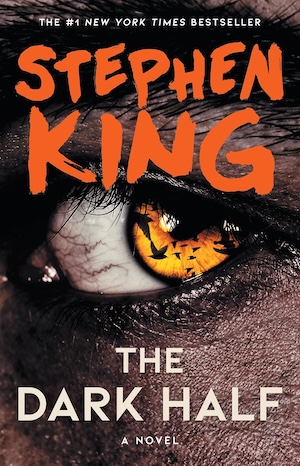
1. The Dark Half by Stephen King (1989)
Stephen King’s The Dark Half serves as a bridge between the classic psychological double and the visceral, physical threats of modern horror. The protagonist, Thad Beaumont, is a writer who finds success only when publishing under the pseudonym George Stark—an ultra-violent crime novelist. When Thad attempts to retire the persona by staging a mock funeral, he discovers that Stark has no intention of staying buried.
Stark begins a murderous rampage, effectively haunting Thad. What makes this conflict particularly insidious is the biological link; because they share DNA and fingerprints, the law views them as the same person. King, drawing from his own experiences writing under the alias Richard Bachman, crafts a narrative that is as much about the ownership of identity as it is about a supernatural struggle for survival. It remains an underrated masterpiece in King’s catalog, offering a gritty, grounded look at what happens when the parts of ourselves we try to destroy fight back with lethal intent.
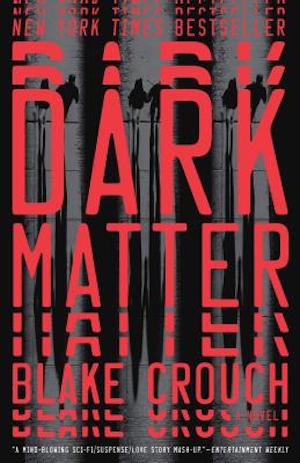
2. Dark Matter by Blake Crouch (2016)
If King’s work deals with the internal shadow, Blake Crouch’s Dark Matter explores the vast, terrifying implications of the multiverse. The story follows Jason Dessen, a physics professor who is abducted and thrust into an alternate reality where his life took a drastically different path.
Crouch masterfully utilizes the "double" trope to interrogate the "what-ifs" that plague every human life. By pitting Jason against versions of himself who made different choices, the book moves beyond a simple physical fight. It becomes a harrowing exploration of the roads not taken and the cost of the lives we actually choose. The reader is pulled into a breathless, fast-paced thriller that forces the protagonist—and the audience—to question whether a person is defined by their innate nature or the sum of their decisions.
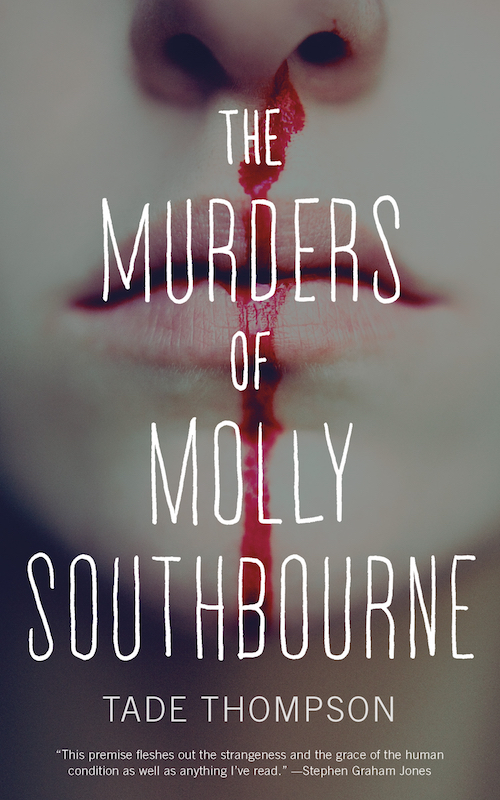
3. The Murders of Molly Southbourne by Tade Thompson (2017)
Tade Thompson’s novella offers a biological twist on the double trope. Molly Southbourne suffers from a condition where every instance of her bleeding results in the creation of a clone—a "molly"—that possesses her memories and a singular drive to kill her.
This is not a battle of ideologies; it is a brutal, perpetual survival horror. The "mollies" represent the inescapability of one’s own history. As Molly tries to navigate her life, she is constantly hunted by her own biology. The brilliance of Thompson’s work lies in the claustrophobia of the premise; when your enemy is literally made of you, there is no place to hide and no way to outthink an opponent who shares your every instinct.
4. Such Lovely Skin by Tatiana Schlote-Bonne (2024)
In this recent contribution to the genre, Schlote-Bonne explores the intersection of digital identity and demonic possession. Viv, a teenager grappling with the guilt of an accidental crime, finds her life unraveling when a "mimic"—a supernatural doppelgänger—latches onto her after a slip-up during a livestream.
The mimic acts as a dark reflection of Viv’s suppressed trauma. The horror here is both external and social; as the mimic causes chaos, Viv finds herself isolated, unable to prove her innocence. The book uses the mimic as a conduit for the "monsters" we allow into our lives when we fail to address our own internal demons. While the protagonist’s self-centered nature provides a complex focal point, the visceral, imaginative horror imagery solidifies the novel as a standout in modern genre fiction.
5. The Other by Annie Neugebauer (2026)
Neugebauer’s The Other returns to the classic, isolated horror setting: the deep woods. A married couple on a retreat encounters their own doubles, who quickly transition from eerie reflections to hostile usurpers.
The terror in this story is grounded in the fragility of relationships. Elise and Logan are already at a breaking point, and the presence of their "others" forces them to define what it means to be a partner and an individual. The realization that their doubles are attempting to replace them—and return to their "real" lives—creates a pressure-cooker environment. It is a terrifying meditation on how easily one’s life could be stolen, and how much of our identity is held in the eyes of the people who know us best.
Implications: Why Do We Fear Ourselves?
The persistence of the double in literature is not merely a gimmick; it addresses fundamental human anxieties.
- The Loss of Control: The idea that a version of ourselves could act against our interests or replace us entirely strikes at the core of our desire for autonomy.
- The Externalized Conscience: By giving our flaws a physical form, authors are able to literalize internal struggle. When Thad Beaumont fights George Stark, he is fighting his own violent impulses.
- The Unreliable Nature of Memory: As seen in Dark Matter, the double challenges the stability of our past. If another version of me exists, is my memory of "self" authentic, or is it just one version among many?
From a narrative perspective, these stories force characters to achieve a level of self-knowledge that is rarely required in other genres. To defeat an enemy that knows your tactics, your weaknesses, and your history, the protagonist must evolve—or be destroyed.
Conclusion: The Final Mirror
As these five books demonstrate, the battle against the self is the ultimate test of character. Whether through the lens of multiverse physics, biological horror, or psychological thriller, the double acts as a mirror that reflects the worst of our potential.
While the "hero’s journey" is often defined by conquering external foes, the "doppelgänger’s journey" is defined by the necessity of confronting one’s own shadow. Whether the hero wins or loses, the encounter leaves them fundamentally changed. As we continue to navigate a world increasingly obsessed with digital personas and fragmented identities, it is likely that the "battle against the double" will remain one of the most compelling and terrifying narratives in literature.
Have you encountered a book that captured the horror of the double in a unique way? Are there classic tales or modern thrillers that you believe should join this list? Please share your recommendations in the comments below, and join the ongoing conversation about the dark, reflective corners of genre fiction.